It’s a Surfin’ Safari Costa Rica style!

My son and I left Dallas Wednesday morning February 8, with a stop in Houston where we met one of his friends, Jeremy, who is a wedding photographer in Austin.  The three of us flew to Liberia, Costa Rica where we met up with two other couples…their friends from the Outer Banks.

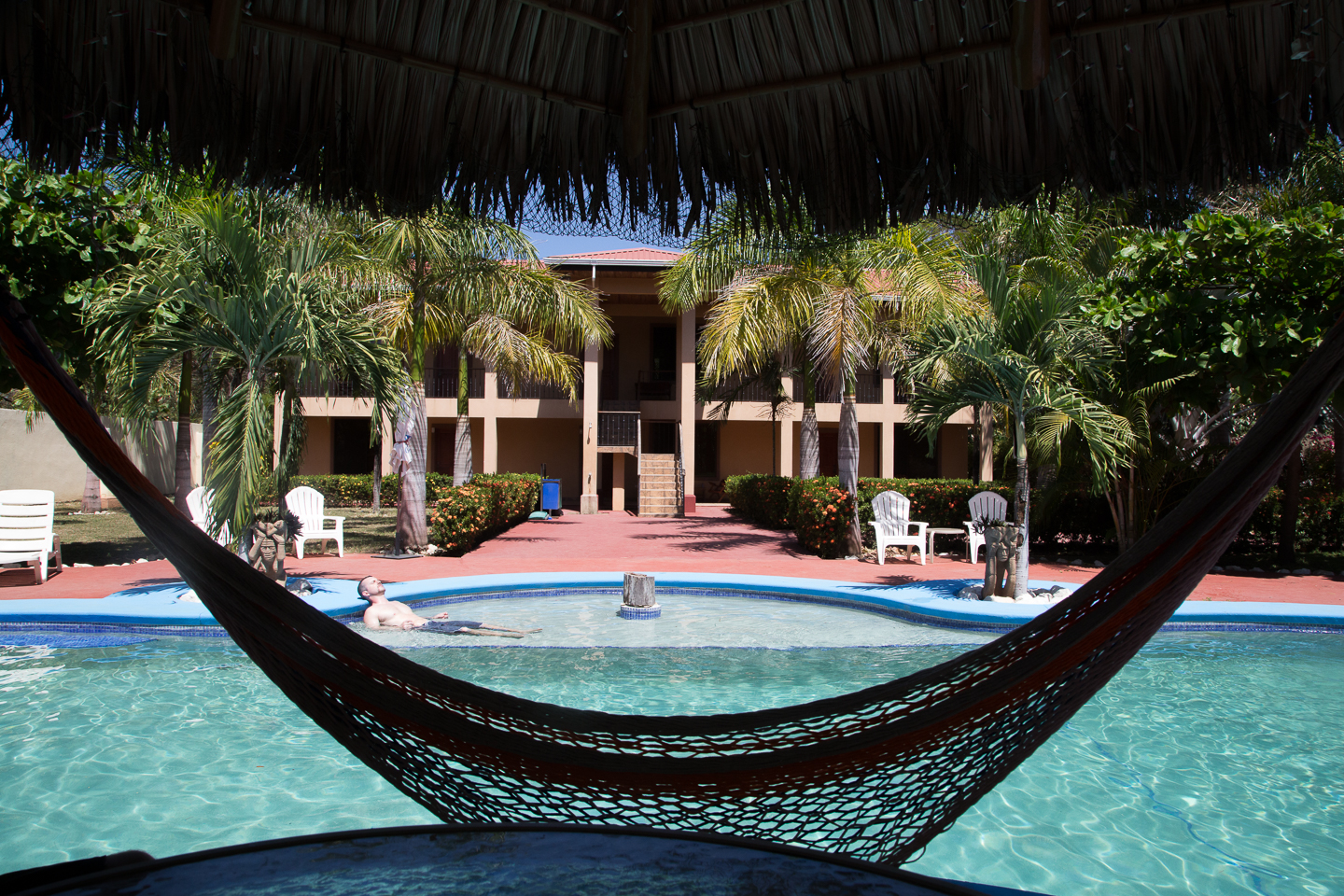
We are staying at the Marbella Surf Inn, a six-room hotel about a mile from the beach.  There is not much else around.

20170211-_i3a7321

It has a nice pool, gazebo, and bar/dining room.

20170211-_i3a732020170211-_i3a7326

The food is good…expensive…but good.  Cokes and water are about $1.75, a beer is 2000 colones or $3.75US.  There are seven of us. Four surfers, two photographers and two spouses, one of whom is a surfer.

On Thursday, I had made reservations to go to a national park about an hour-and-a half north of here to see and photograph Leatherback turtles.  They come ashore to lay eggs in a hole they dig in the sand at high tide after sunset.  On Thursday, high tide was 2am.  We had to be a the park ranger station at 10:30pm and if a turtle came ashore, we’d pay our $27US and they would guide us to the location on the beach.  First, we had to watch a video about all things Costa Rican…including the turtles.  At that point they informed us that you could not take cameras to the location.  Everything I’d read said “no flash” but nothing said no cameras.  I discussed it with the head ranger but he said it was the law and he couldn’t do anything about it.  So no pictures.  I had specifically selected this night because it was a full moon and it would photos possible.  Visibility was good for the walk.

There was about 30 of us that departed the ranger station about 1 am.  We hiked about 1.5 miles to find one turtle.  It was about 5ft long.  There was a group of researchers there measuring the turtle, taking samples of parasites off the shell and counting the eggs that were deposited into the hole.  There were 71 eggs.  It takes about 60-65 days for the hatchlings to come out and make a run for the sea.  Very few make it to adulthood.  The ones that do leave for at least 20 years before they are able to have their own eggs.  They then return to the same beach that they were born at to deposit their eggs.  Often travelling up to 4000 miles.

It was an interesting trip but I was disappointed that no one had informed me or mentioned it on their website that cameras weren’t permitted.  We got back to the hotel about 3 am.

We are usually up about 5:30 am to check the surf.  I haven’t made it every morning and the surfers haven’t gone out every morning either.  We usually have at least one other surfing excursion about mid-day.  It’s hot.  Temperatures are in the low  to mid-90’s. Surfing is best, I’m told, just before high tide and the guys all have apps that tell them what tide conditions are and when surfing should be good at our location.   I take some images from near the water then back up to a row of trees for a little shade.

20170210-_mg_6267 20170210-_mg_6299r 20170210-_mg_6334 20170210-_mg_6509 20170210-_mg_6692 20170210-_mg_6743 20170210-_mg_6760

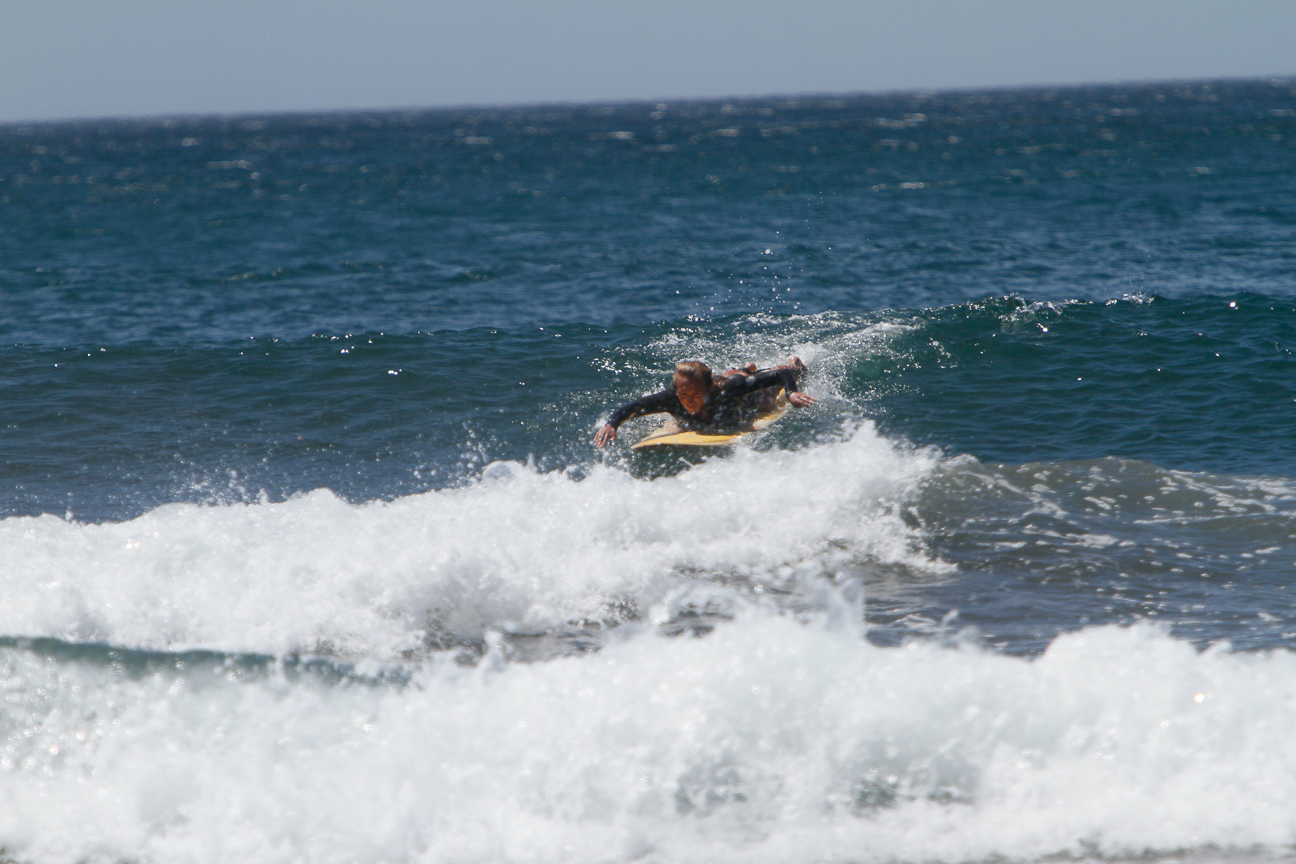
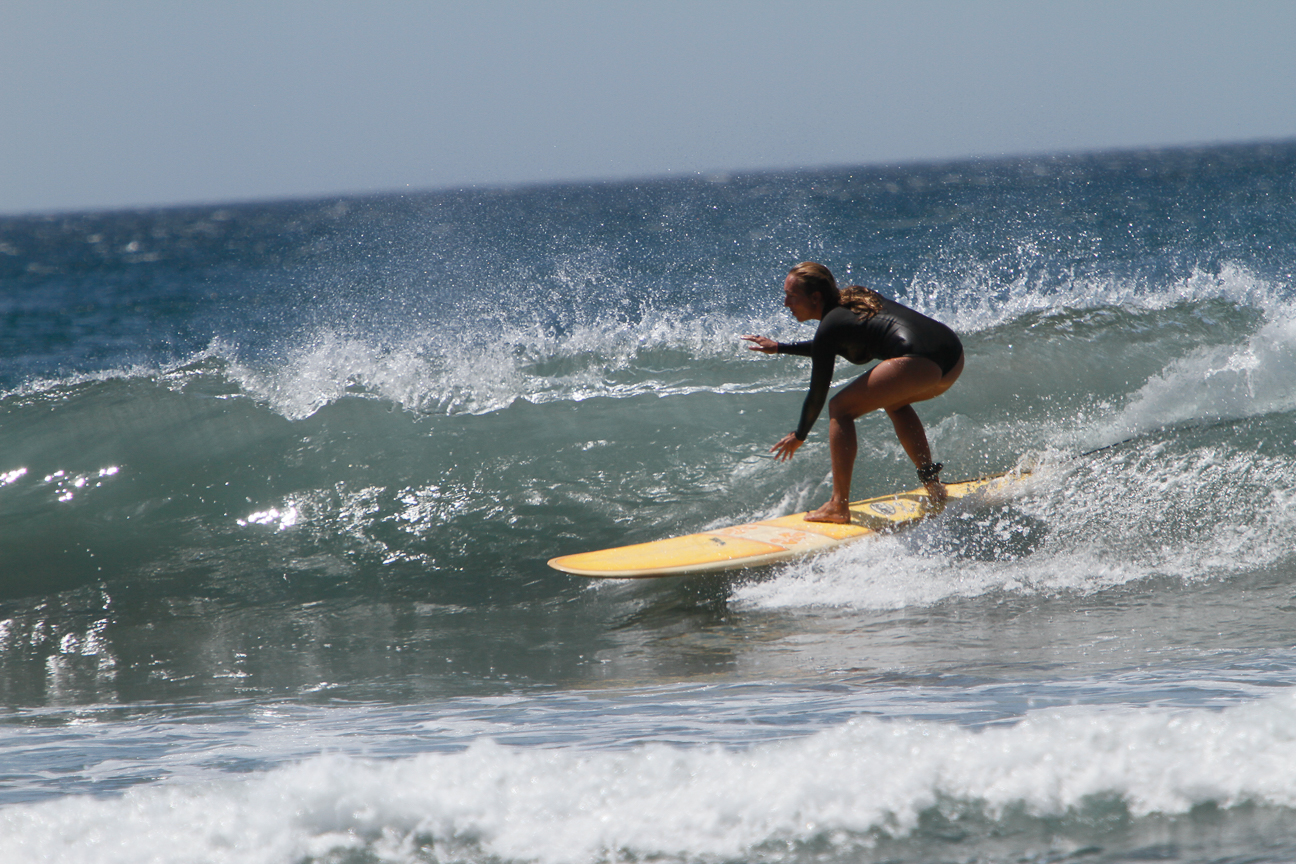
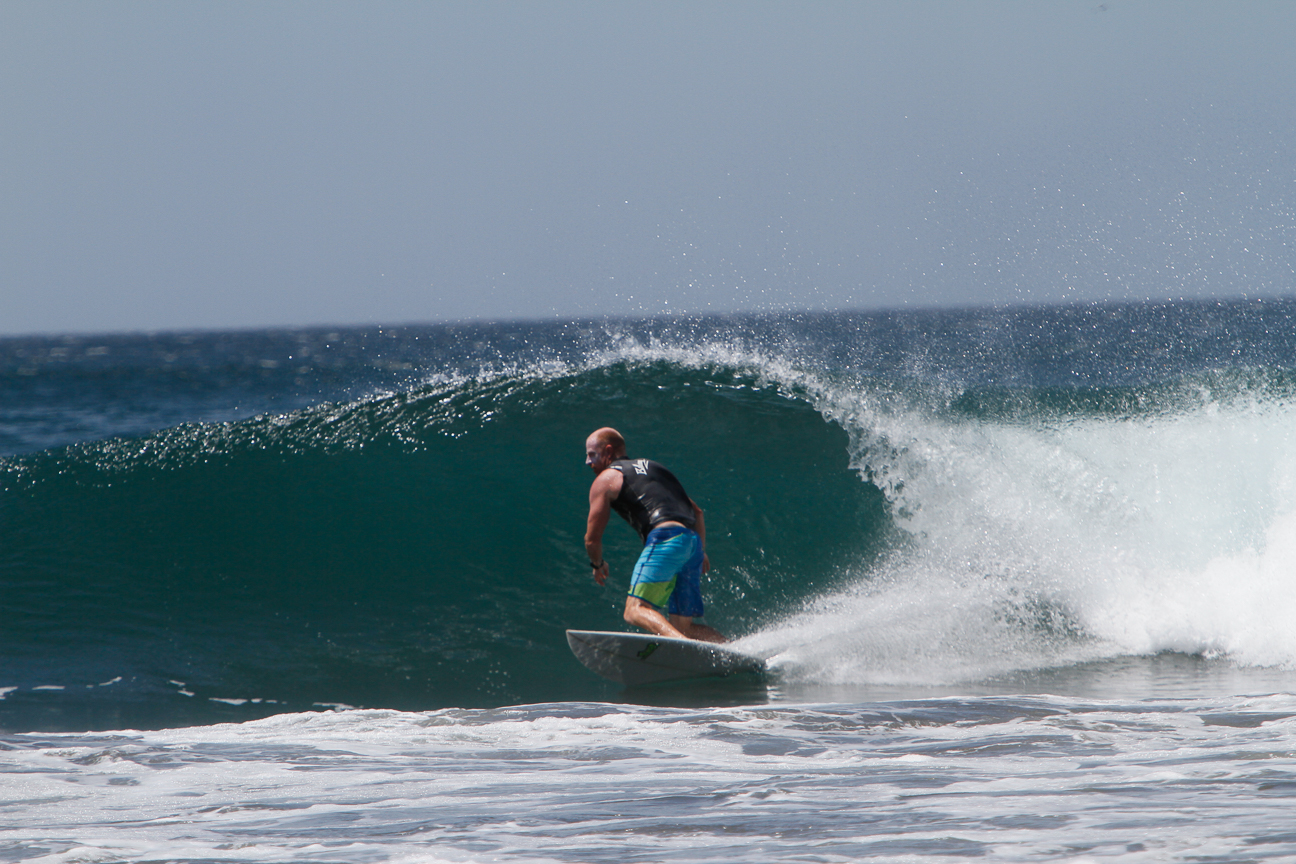
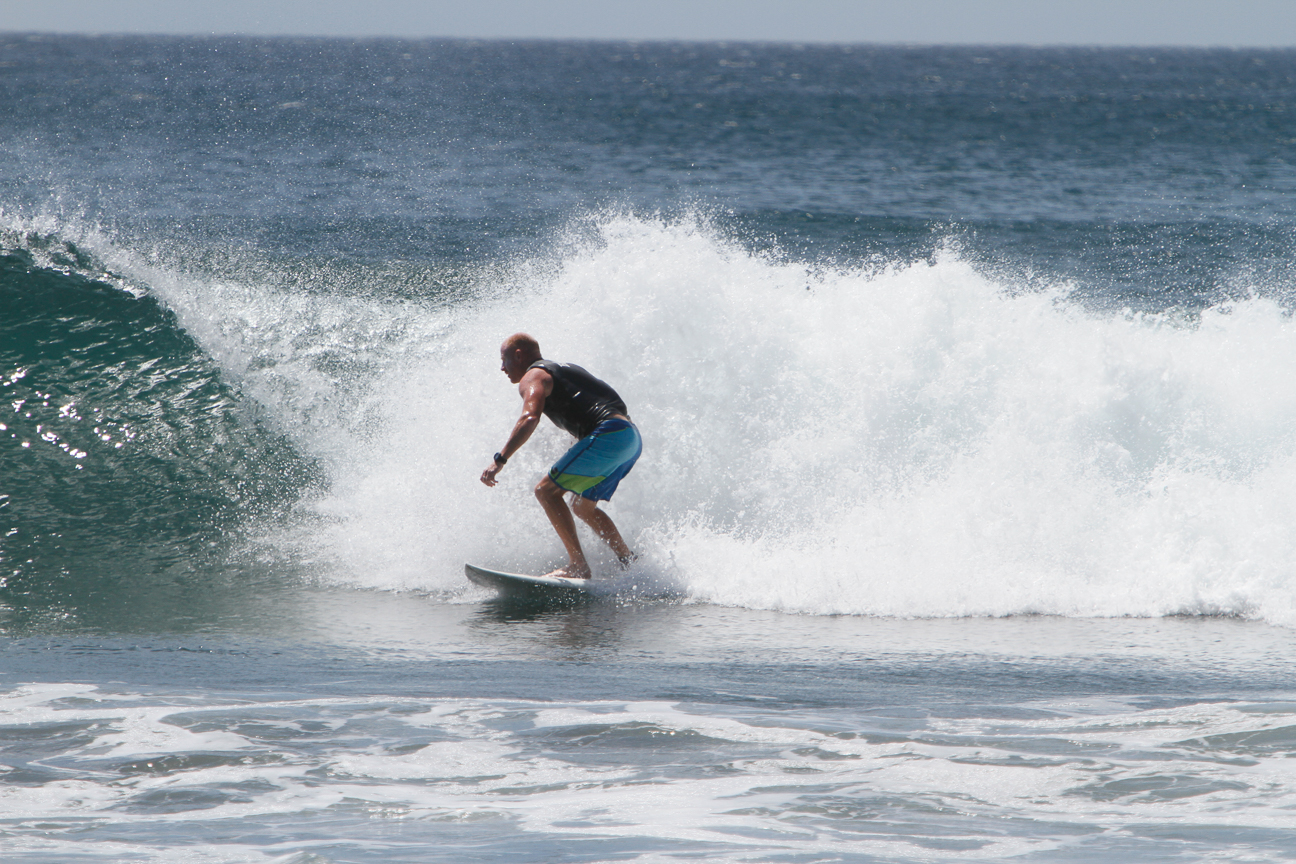
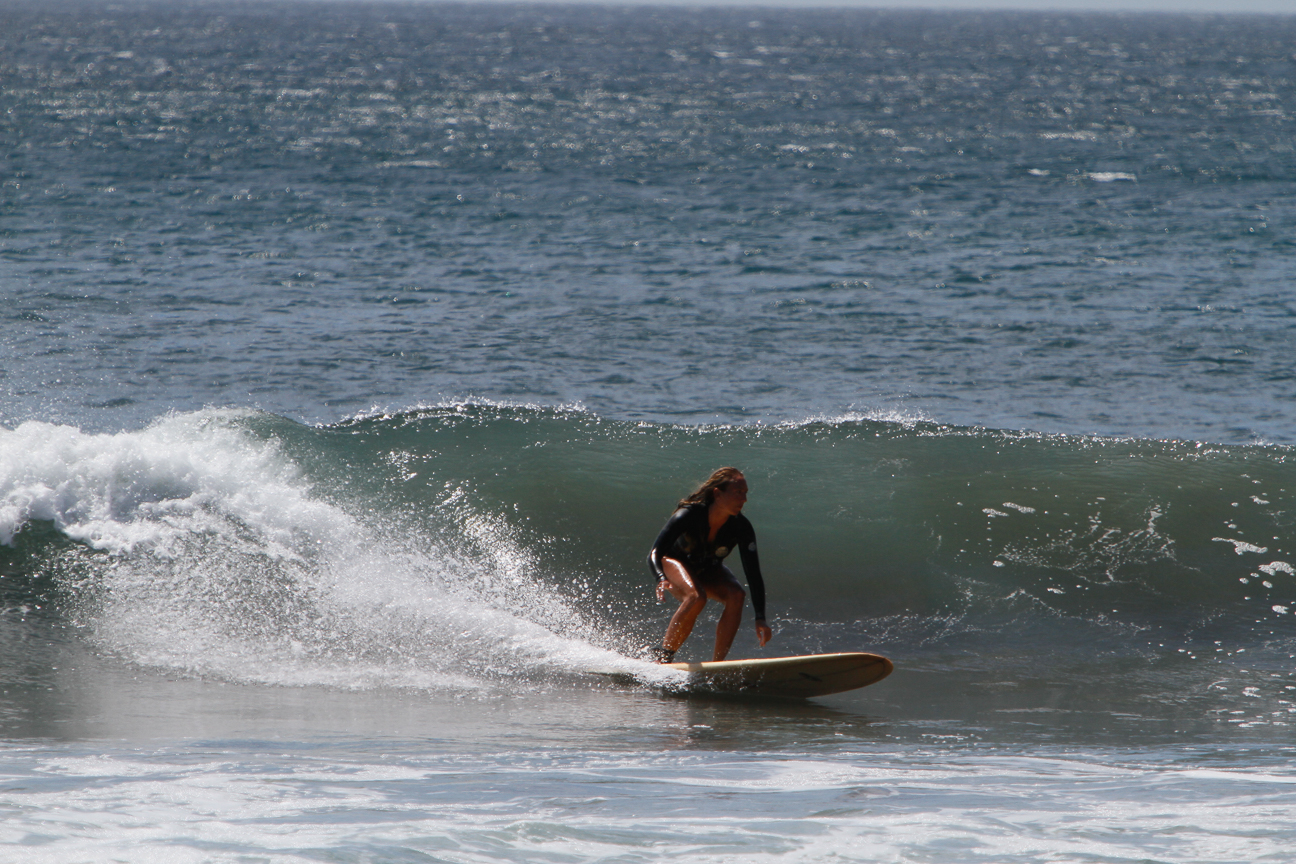
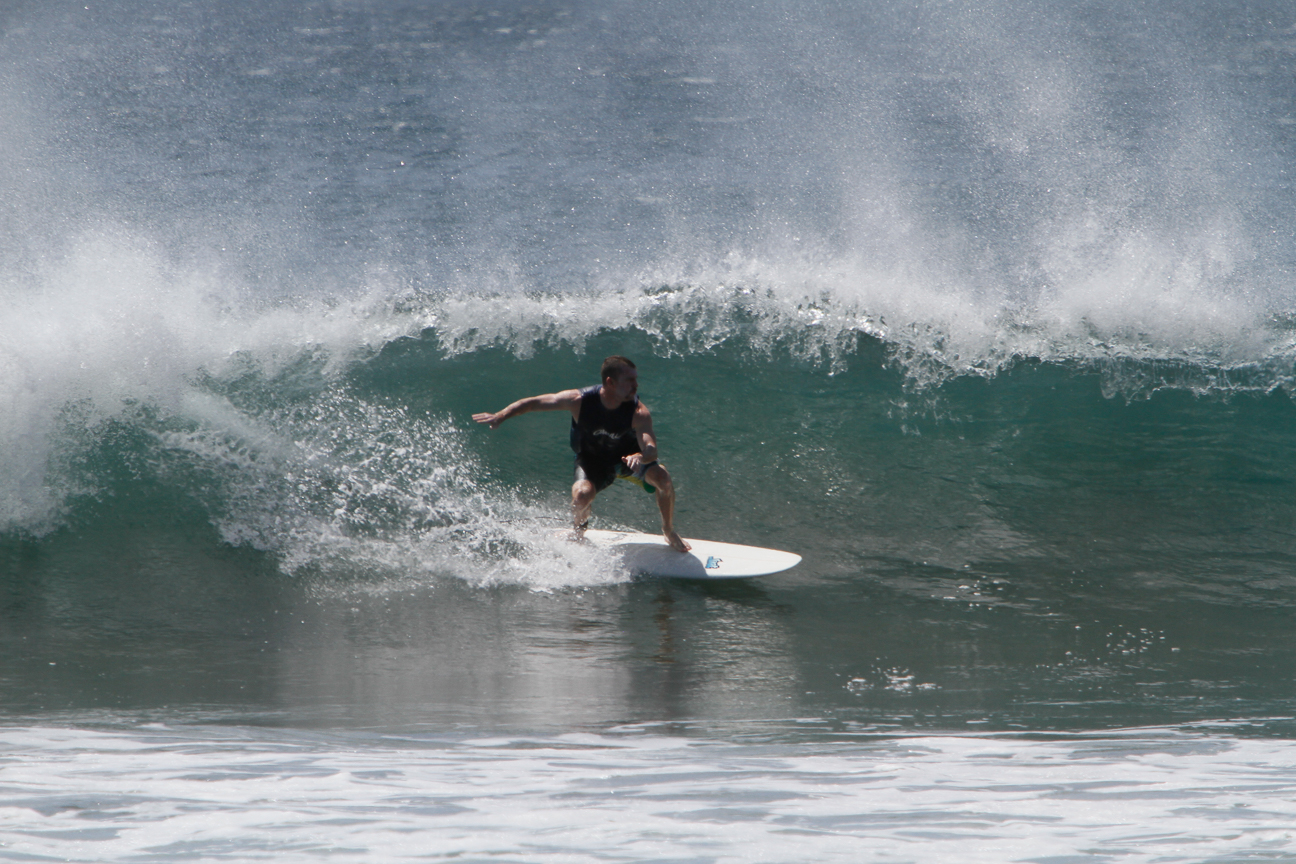
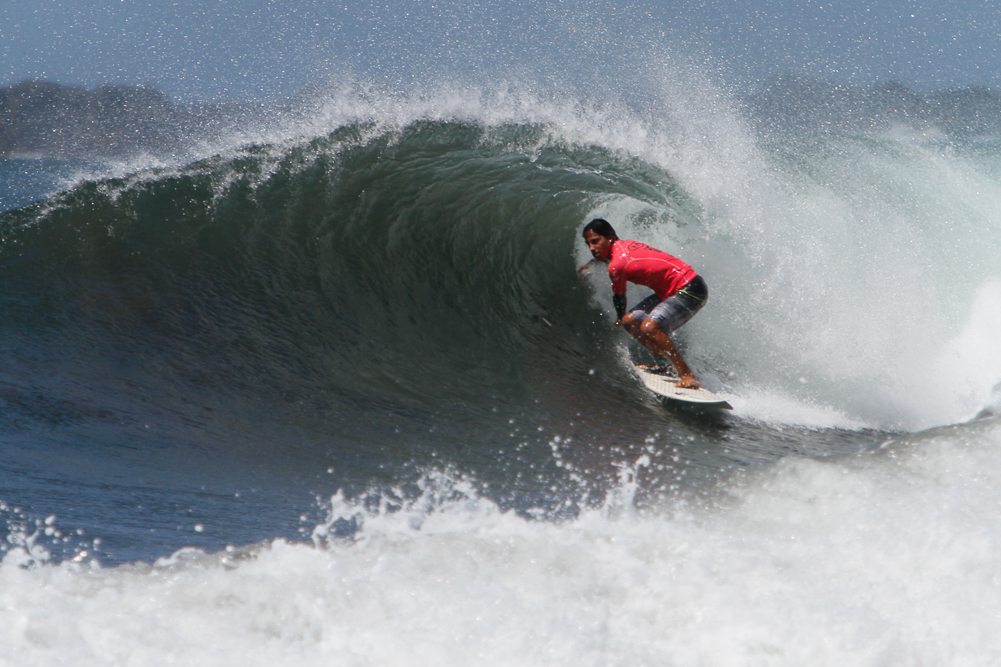
Our folks surfing.  Chelsey, Pat, Derek’s former boss and Derek with mohawk.  His special haircut for this trip.

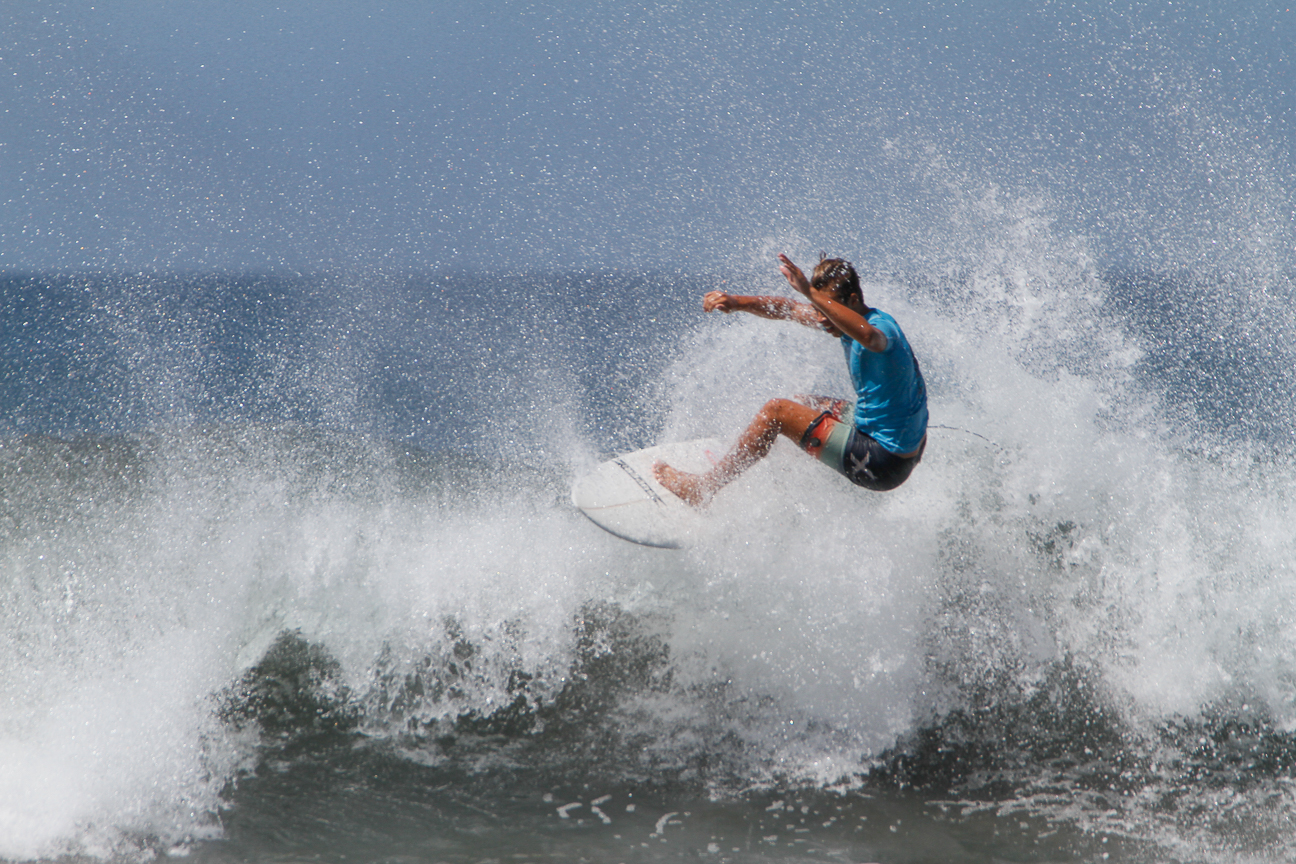
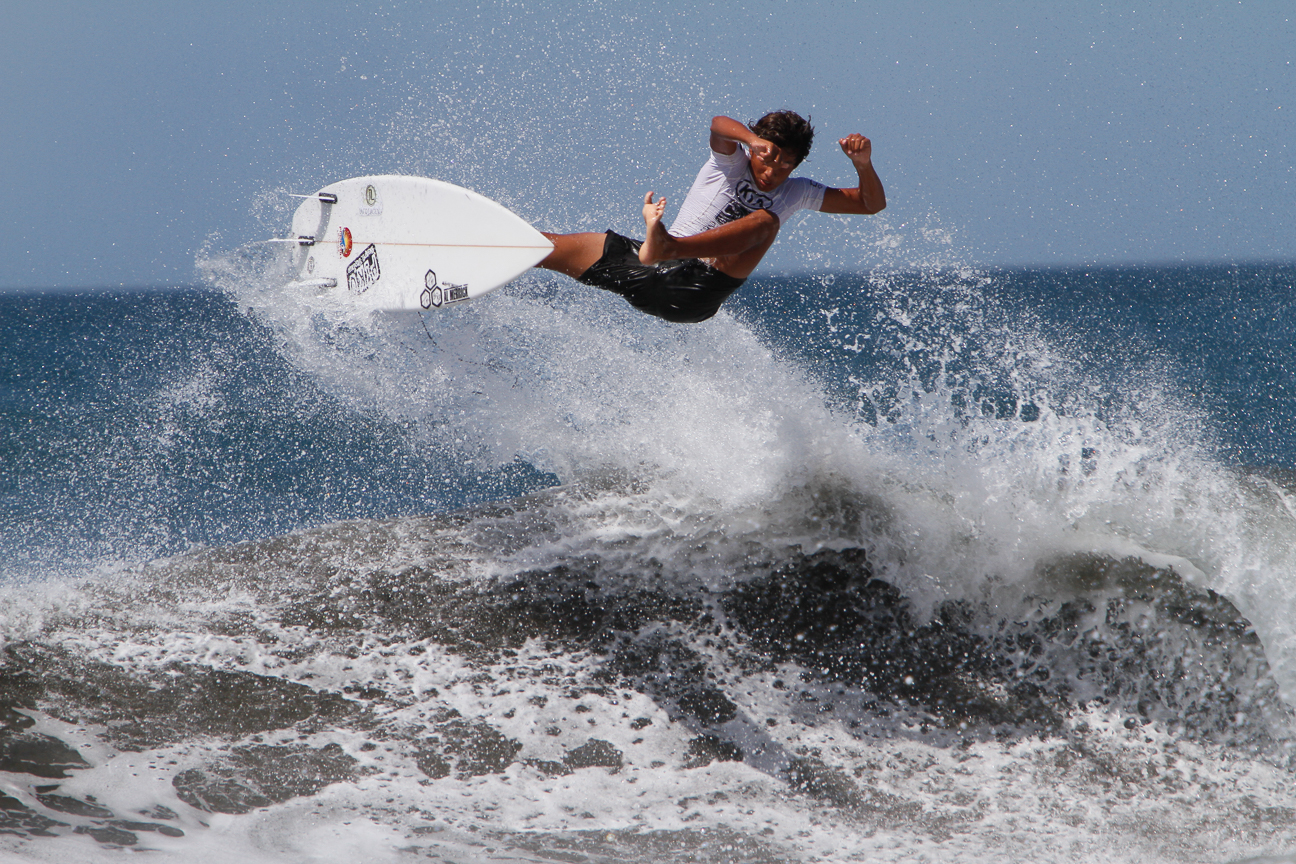
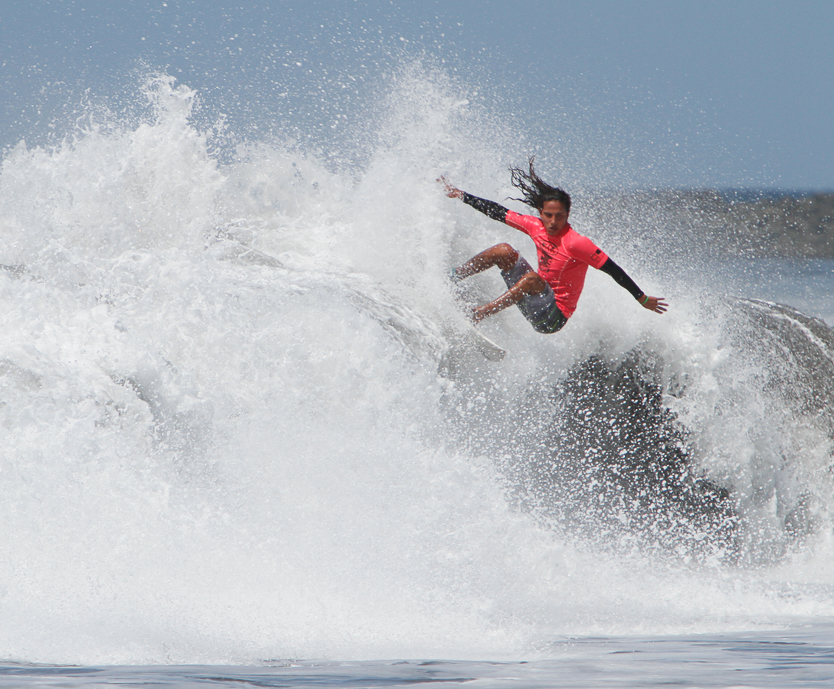
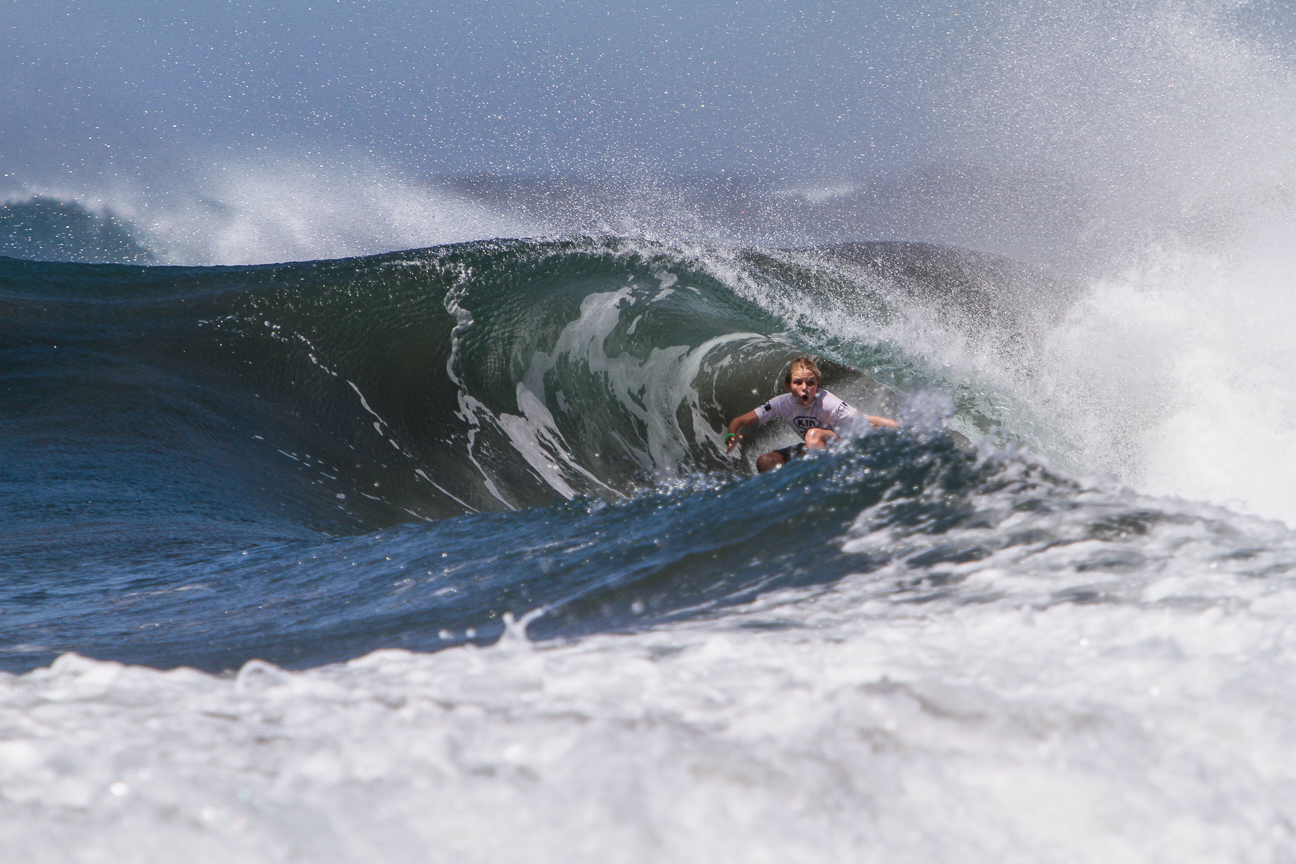
This weekend there’s a surfing contest at the beach we go to.  Here’s an assortment of shots from this morning.  Most of these surfers are 12-13 years old.  It was fun watching them

20170211-_mg_6869 20170211-_mg_6906

20170211-_mg_7124 20170211-_mg_7161-copy 20170211-_mg_697420170211-_mg_7231

20170211-_mg_723120170211-_mg_728420170211-_mg_7290

I’m here until February 20th.  More to follow.

Ron


Posted in Costa Rica Surfing | Leave a comment

My Trip Mapped Out

I left Kansas City on Oct. 20 for Santiago, Chile arriving Saturday morning.  After one night in Santiago, our group flew early Saturday morning to Port Stanley in the Falklands.  Our schedule was to depart Stanley that afternoon but high seas of 30-45 feet and winds gusting to 60 knots kept us tied to the dock for our first night.

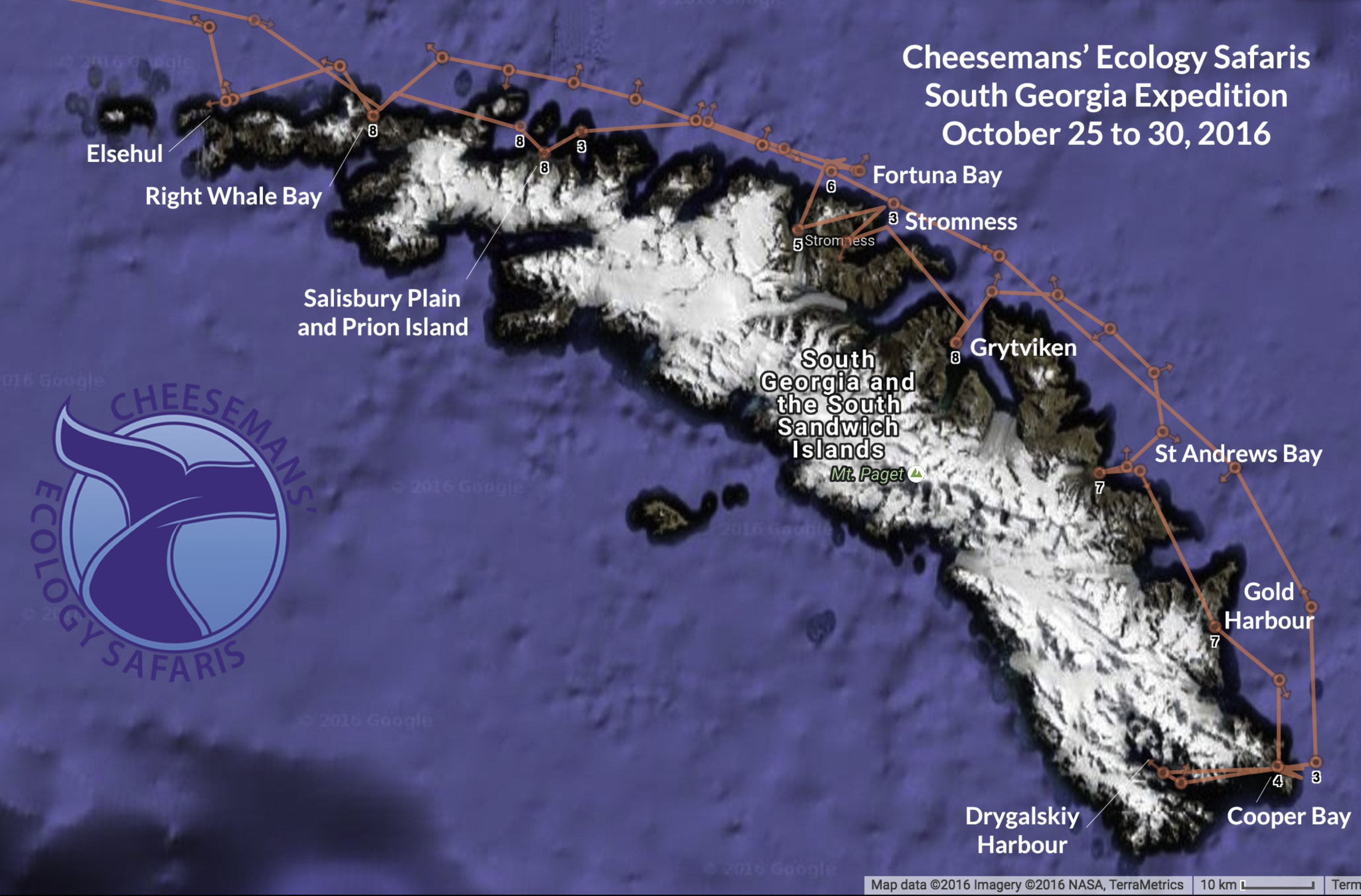
Sunday morning we left for South Georgia Island.  We arrived on Tuesday, Oct. 25 but our first landing at Elsehul was aborted and we moved on the Right Whale Bay.  Here’s our route map for South Georgia.   You’ll want to click on it to enlarge it.

South Georgia route map-Cheesemans.jpg

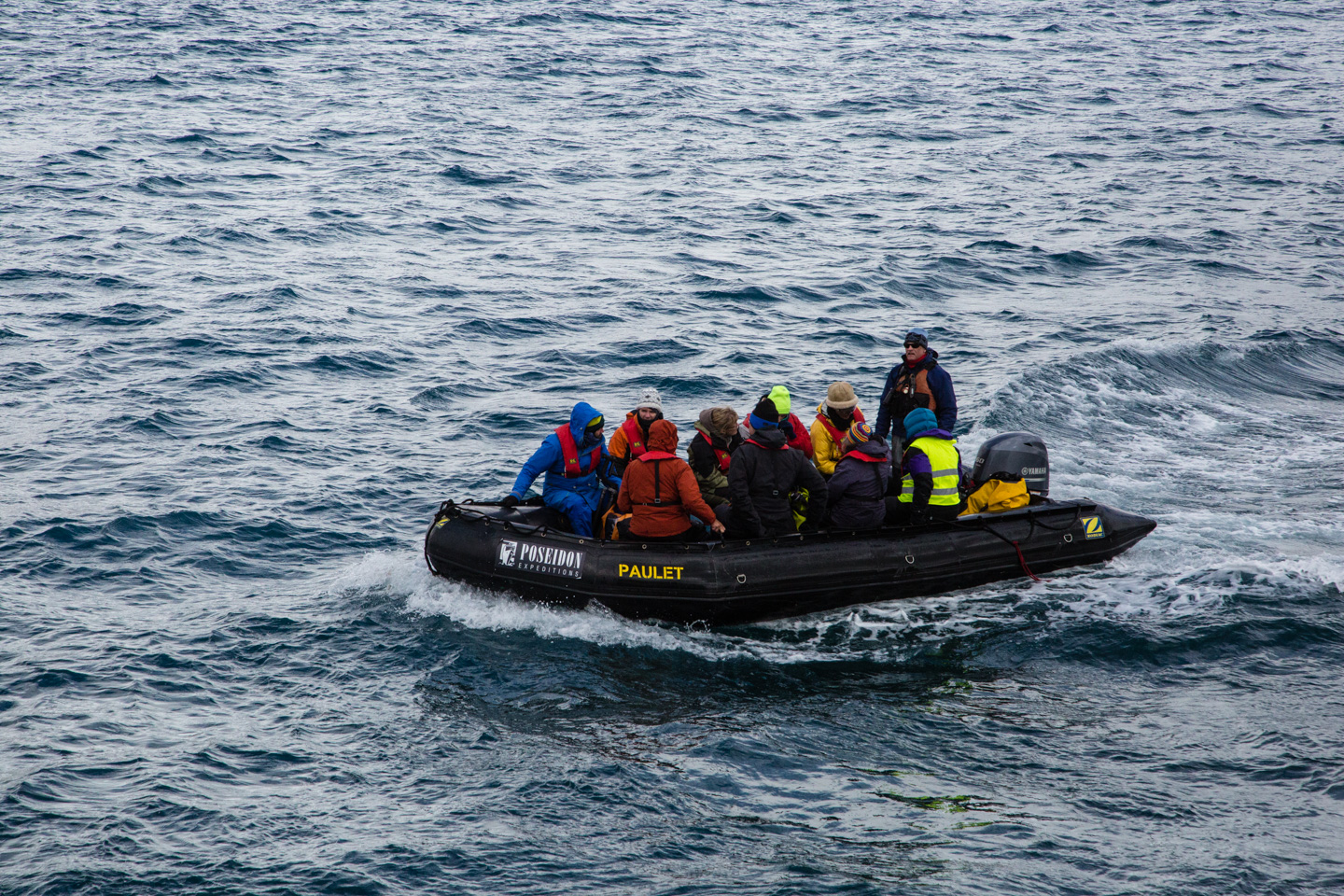
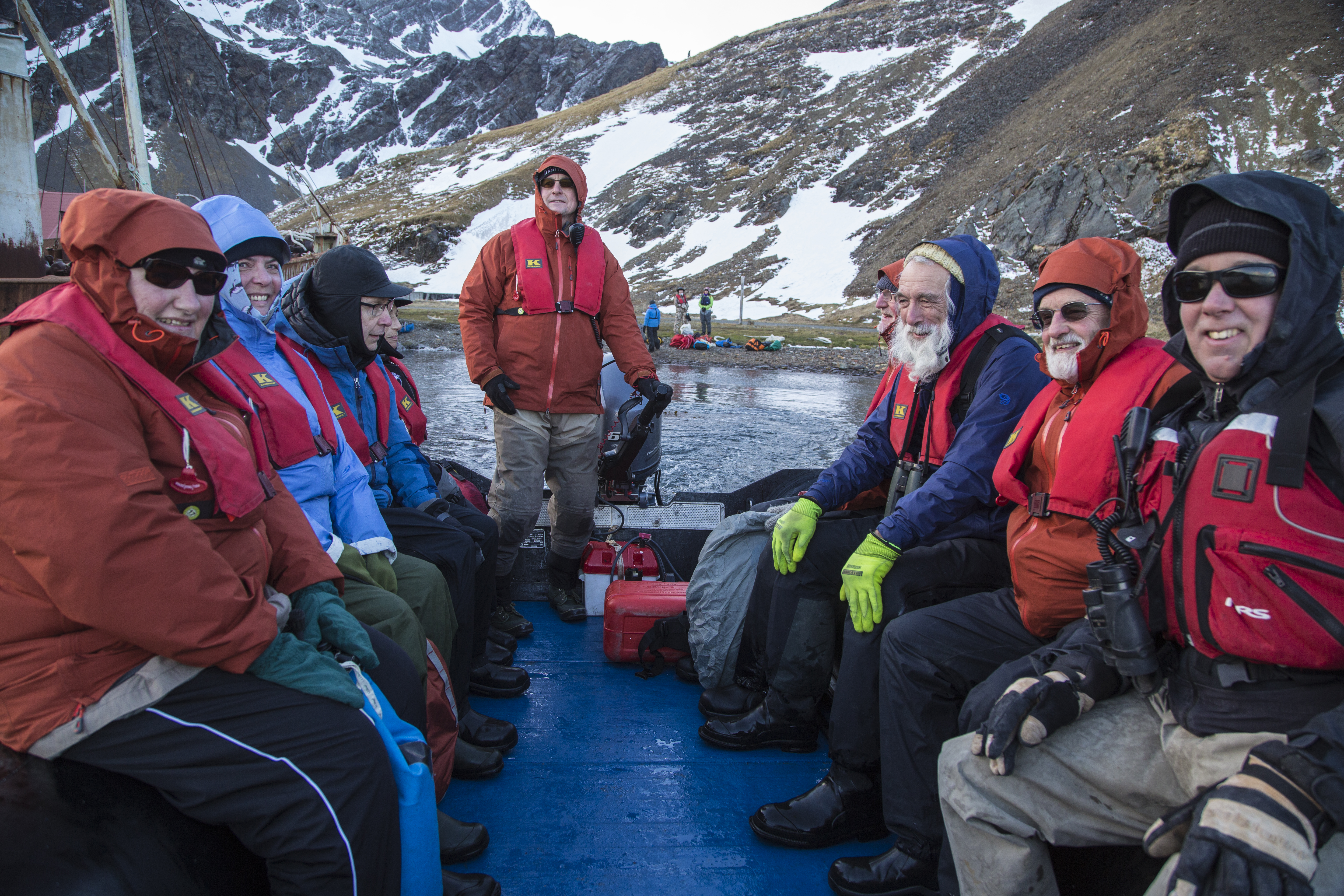
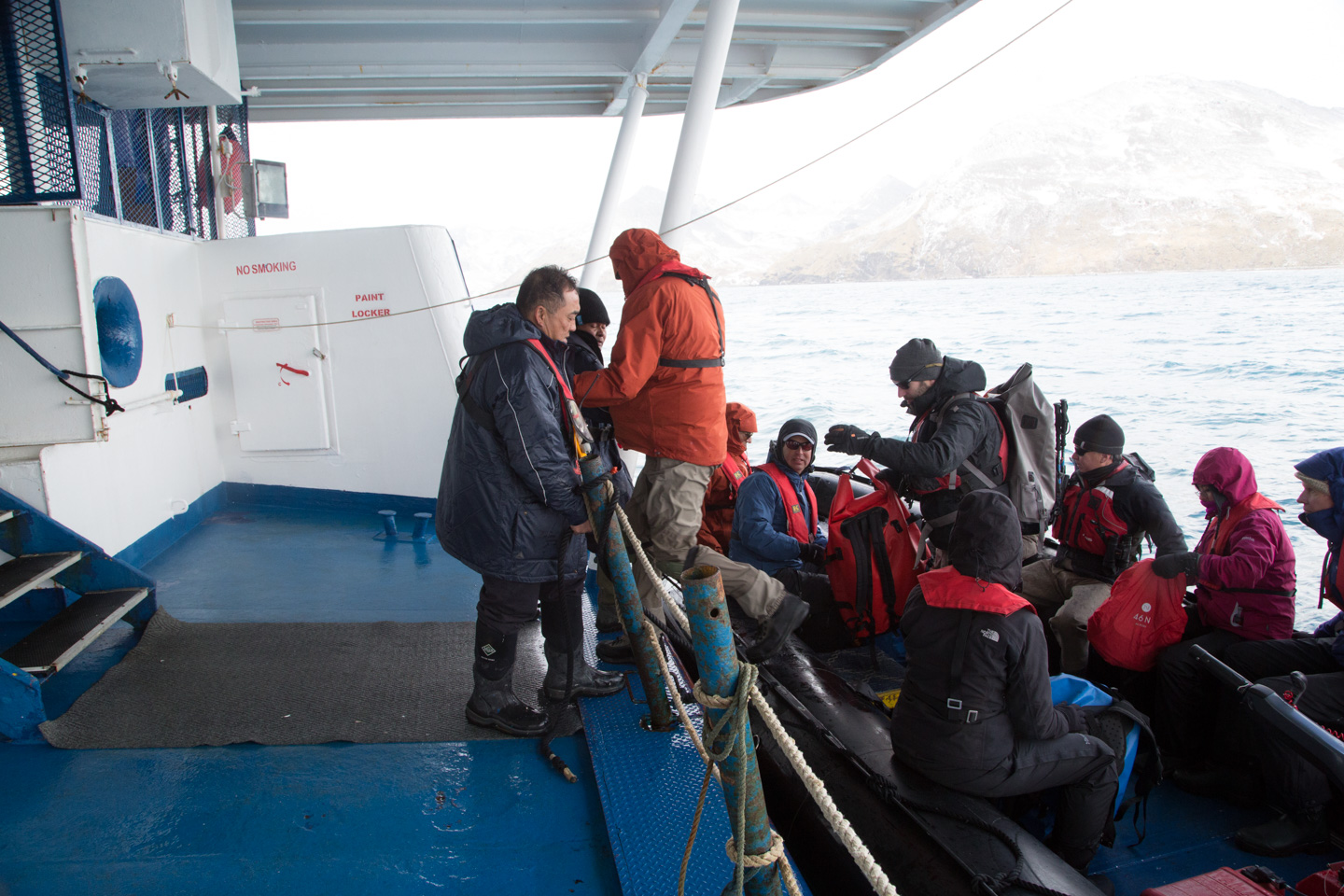
That landing was also aborted for the same reason.  As you can see, we made numerous landings along the north shore of the island.  In every case, our ship anchored out and we rode zodiacs to and from the Sea Spirit.

20161028-_i3a9305-2gatesronpeople5

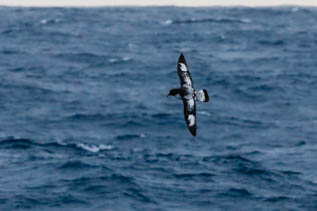
Here’s an image of a Cape Petrel.  I neglected showing in the last post.  I like the look of the top of it’s wings.

20161023-_g6t2234

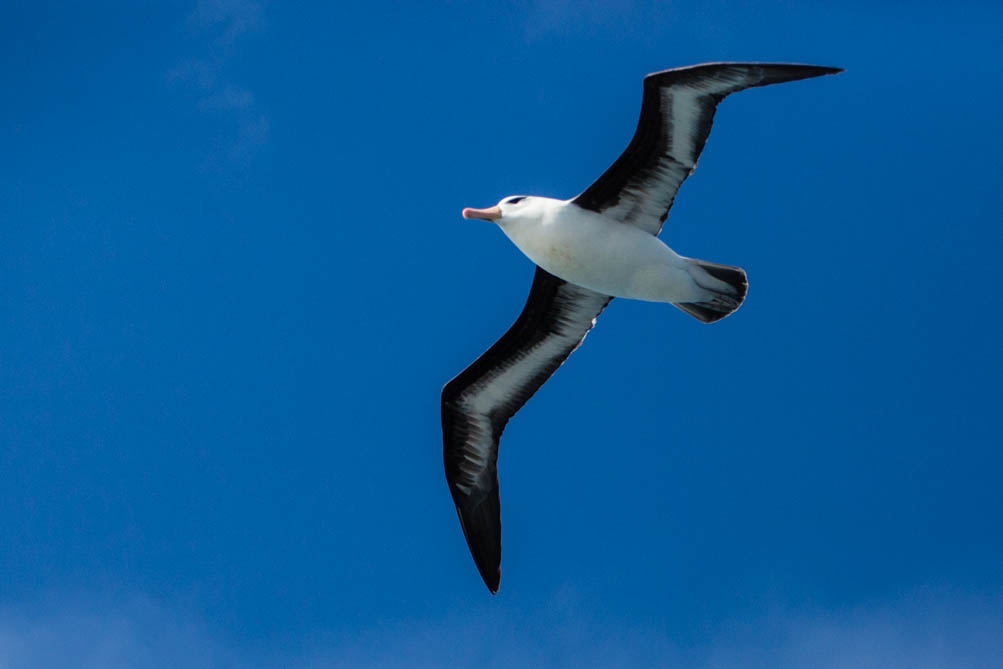
This is the underside of the wings on the black-browed albatross.

20161102-_i3a9962

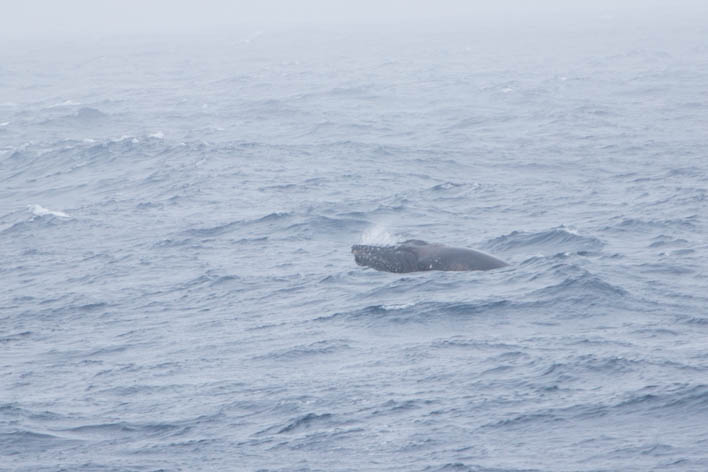
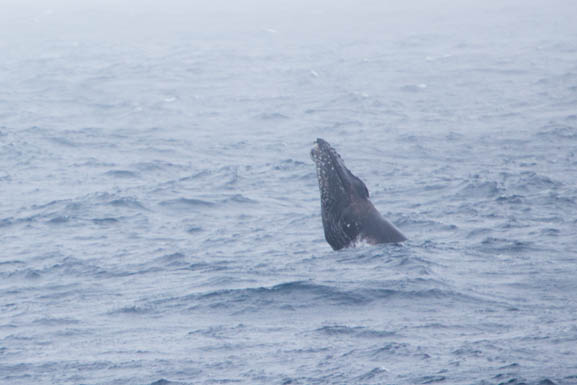
I also saw one humpbacked whale.  I was some distance away when I spotted it between the Falklands and South Georgia on the way south.

20161025-_g6t247720161025-_g6t2476

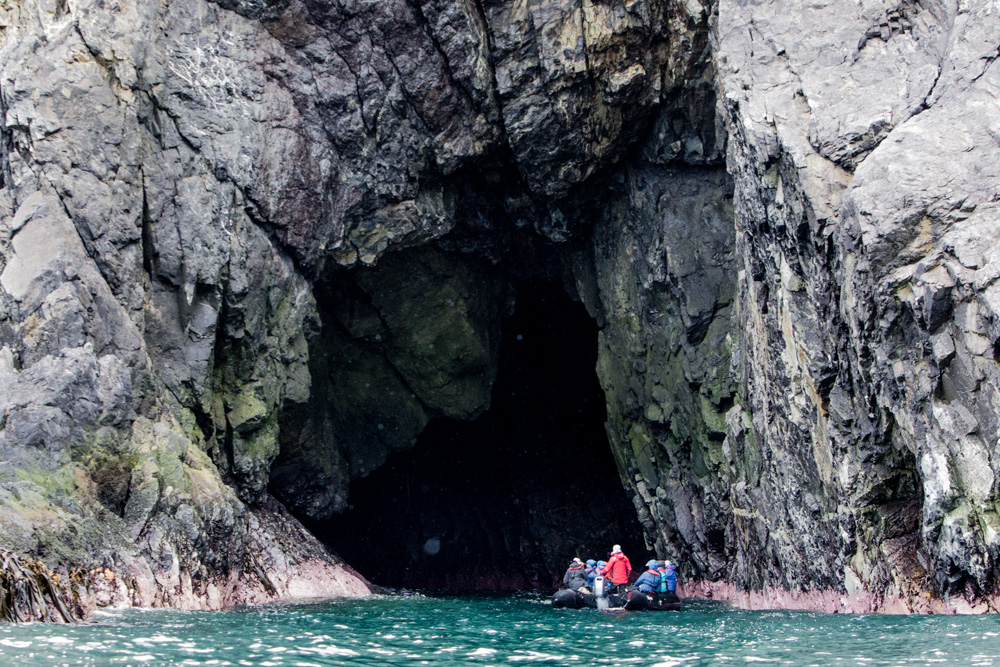
When we were at Cooper’s Island.  There is a restriction allowing only 50 people on shore at a time.  Half the group went ashore and the rest of us went zodiac cruising.

20161029-_i3a951620161029-_g6t4652

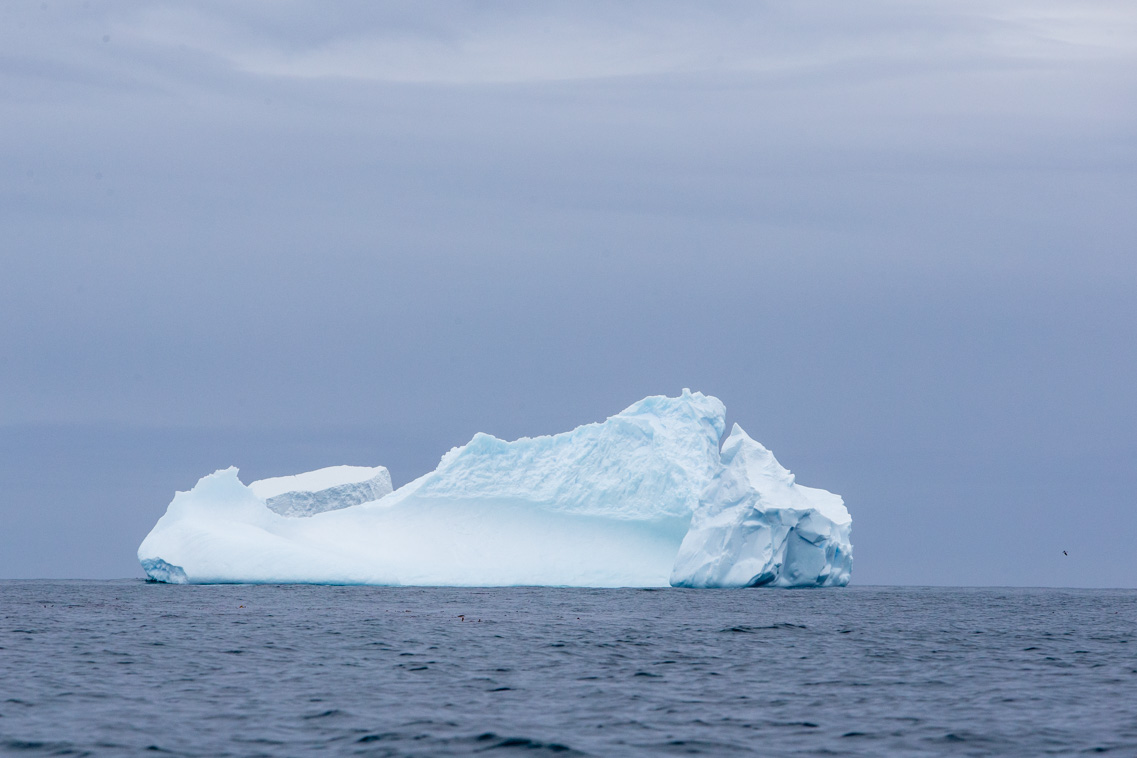
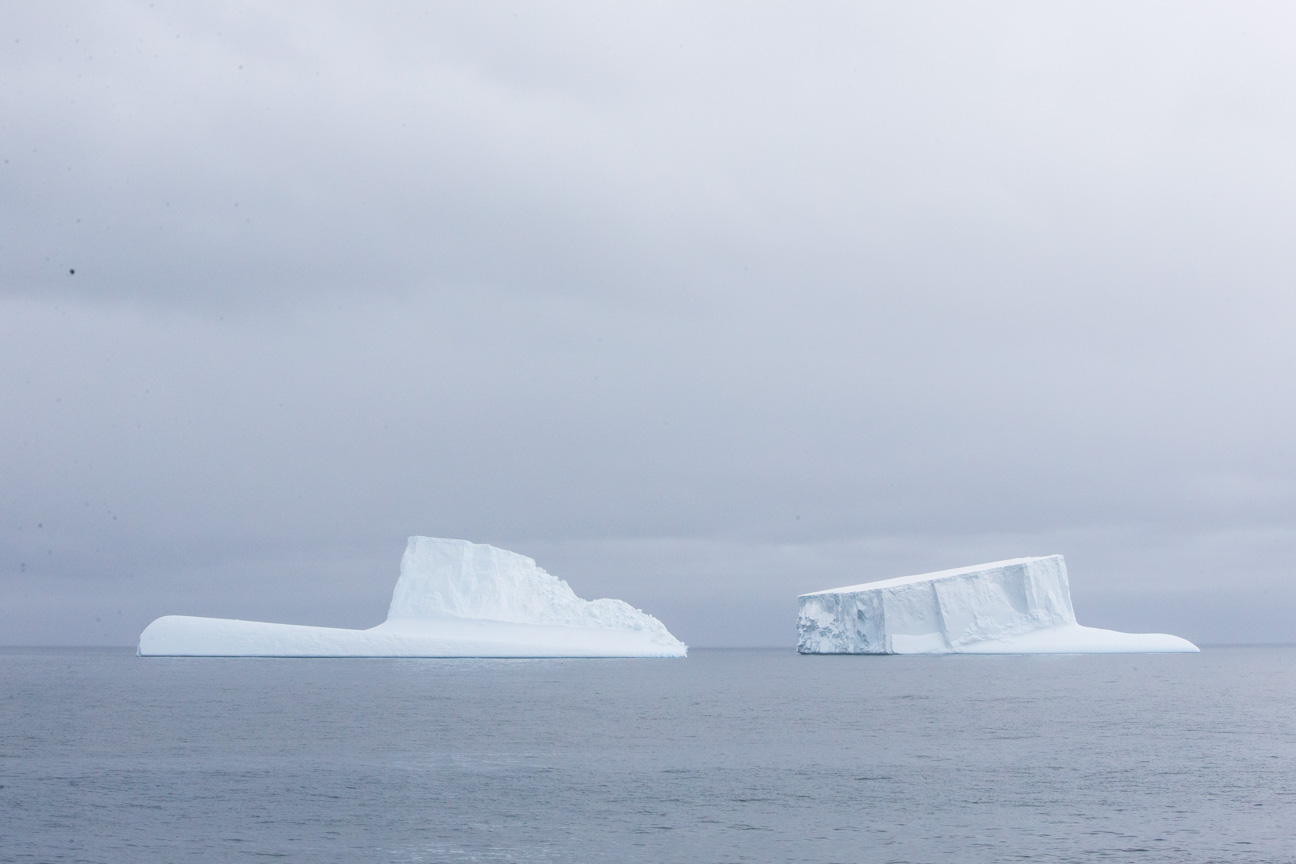
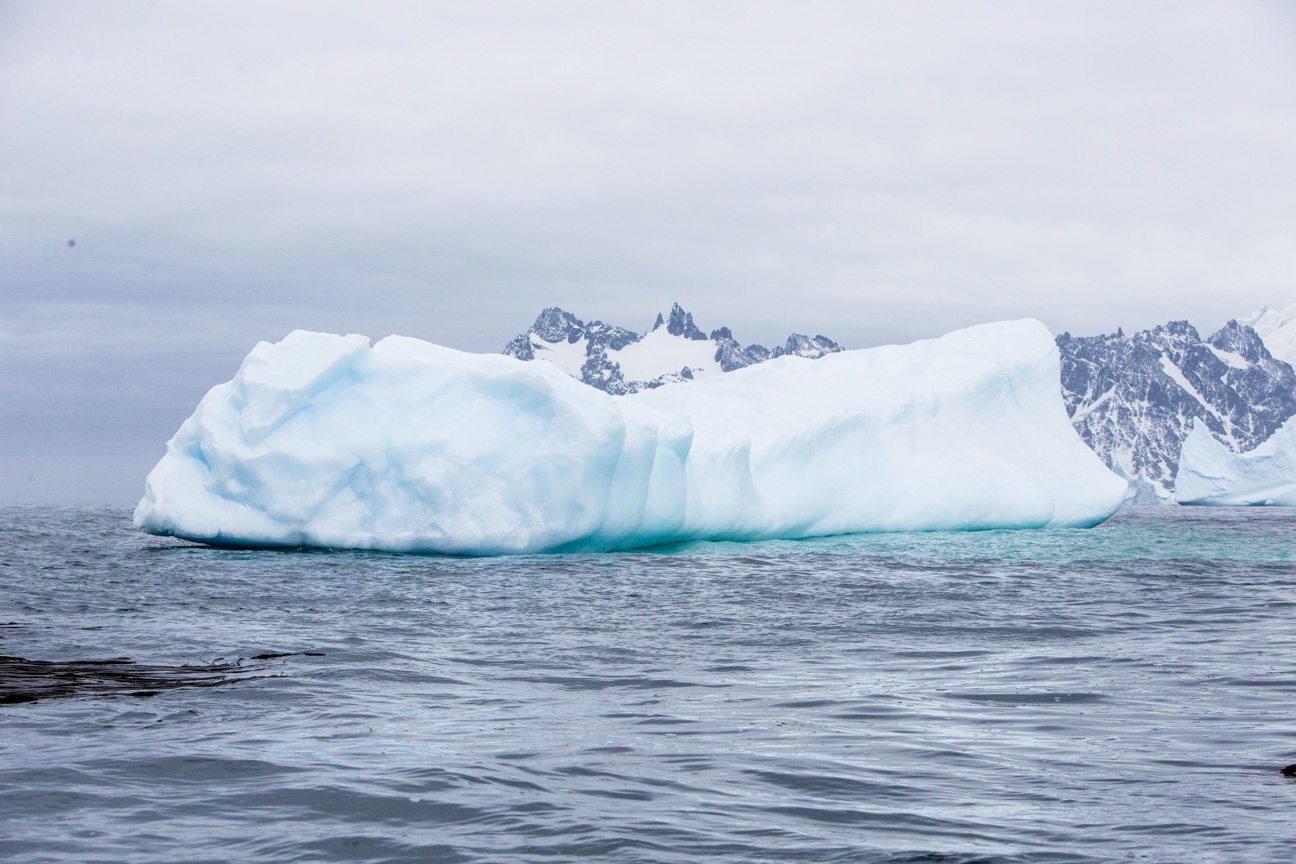
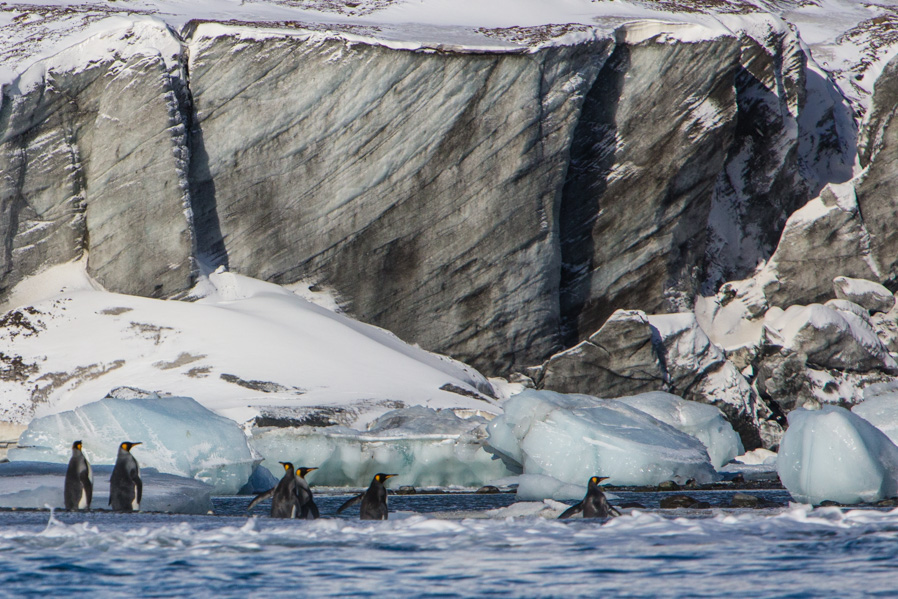
We saw one iceberg near the north end of South Georgia and a lot more as we neared the south end.  None of these icebergs originated on South Georgia.  They are all from the Antarctic peninsula.  They broke off glaciers there and floated north and went aground near South Georgia.

20161029-_g6t468120161029-_g6t4634

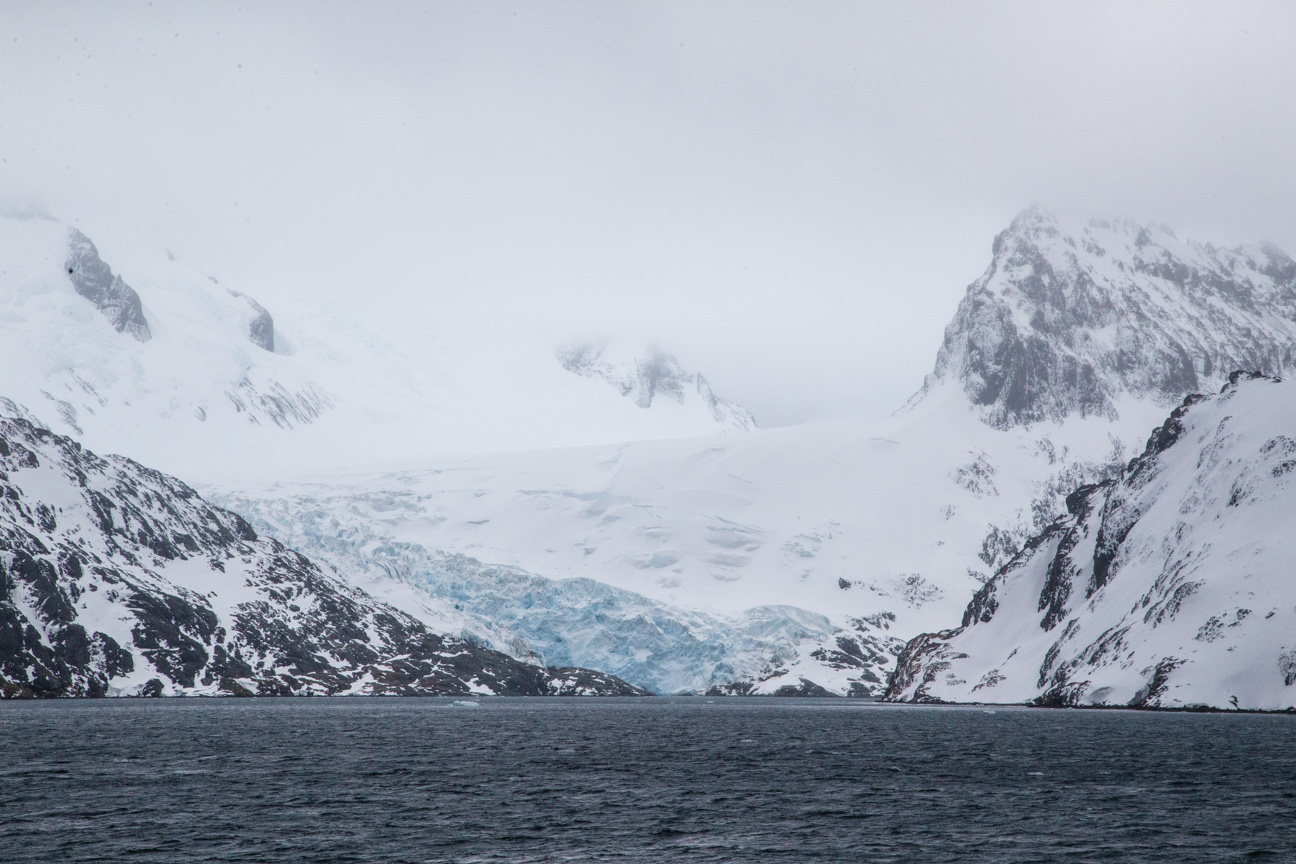
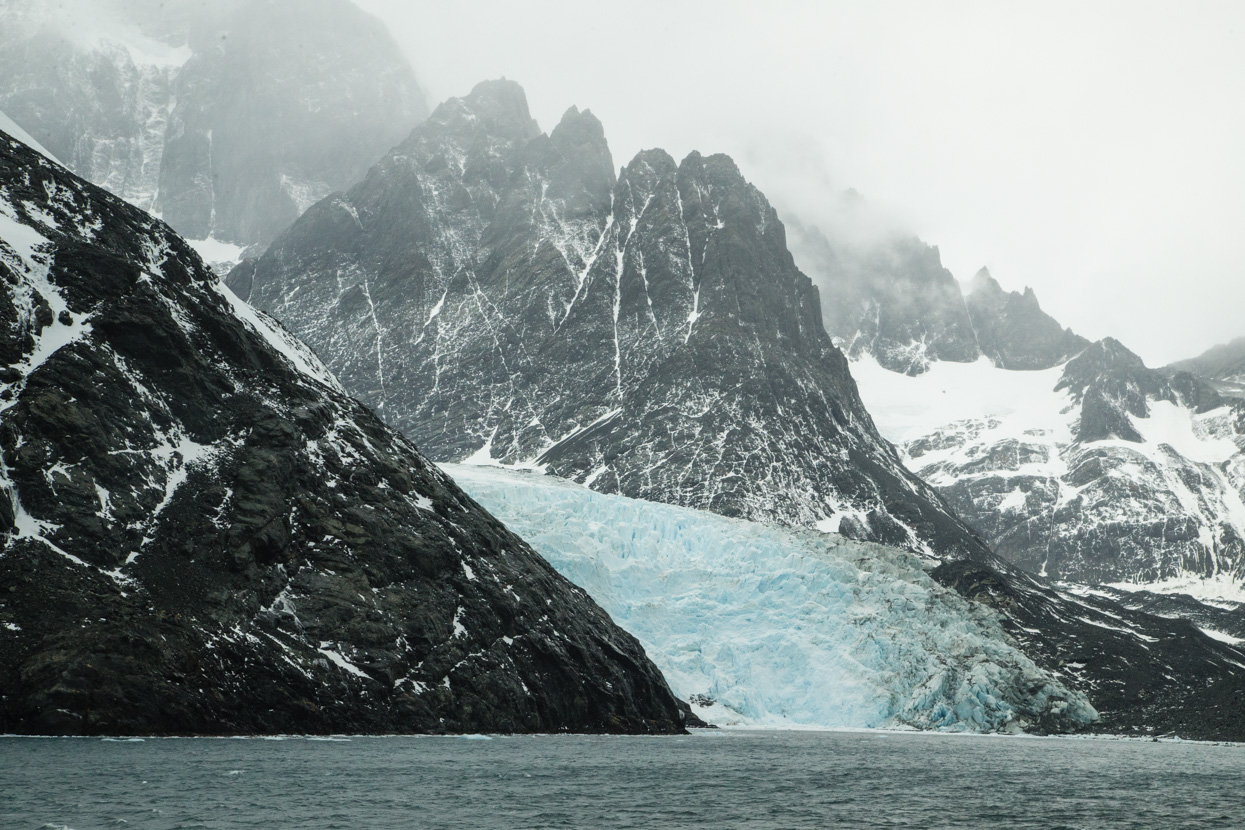
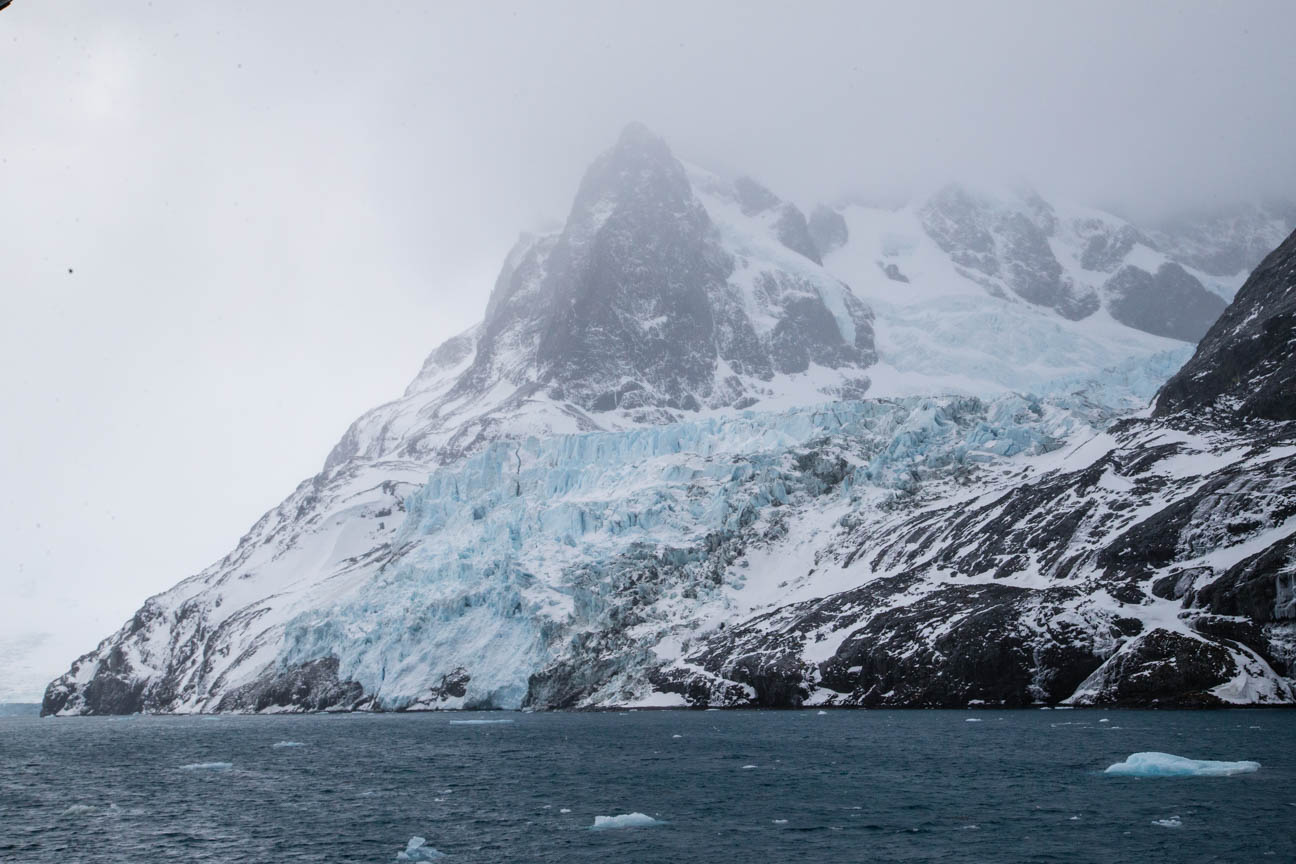
These last images were shot near Cooper’s Bay and Cooper’s Island.  After our morning there we cruised the Drygalski Fjord.  It’s seven miles long.

20161029-_g6t468720161029-_g6t4693

20161029-_g6t4696

The two biggest issues for all of us on this cruise was biosecurity and safety.  I’ve already addressed biosecurity.  Safety was an issue because there is no sea or air rescue available.  We were constantly reminded of “one hand for the ship”.  While we had a doctor for the cruise and the ship had a doctor on board for the crew, any serious injury or illness would require the ship to head for the Falklands.  That was a two plus day trip and it would impact every passenger on the ship.  We did have a helicopter drill the first hours out of Stanley but South Georgia is 700+ miles southeast of there.

We had one near miss on the safety issue.  After returning to the Falklands, we were to spend a full day on Sea Lion Island.  The largest of the many islands in the Falklands.  As was normal, a scout party from the expedition staff in two zodiacs where headed to shore to check the landing site.  About 50 yds off the beach, a rogue wave hit the left quarter of the zodiac and capsized it throwing all six on board into the water.  Luckily, no one was injured although one member of the expedition staff came up under the zodiac.  It, of course, was upside down.  They were able to drag it to shore…it weighs 1700 lbs…and right it but the engine had been overturned in the water.  The zodiac was towed back to the ship but it took almost 4 hours to get the staff picked up and back on the ship.  The landing there was cancelled.

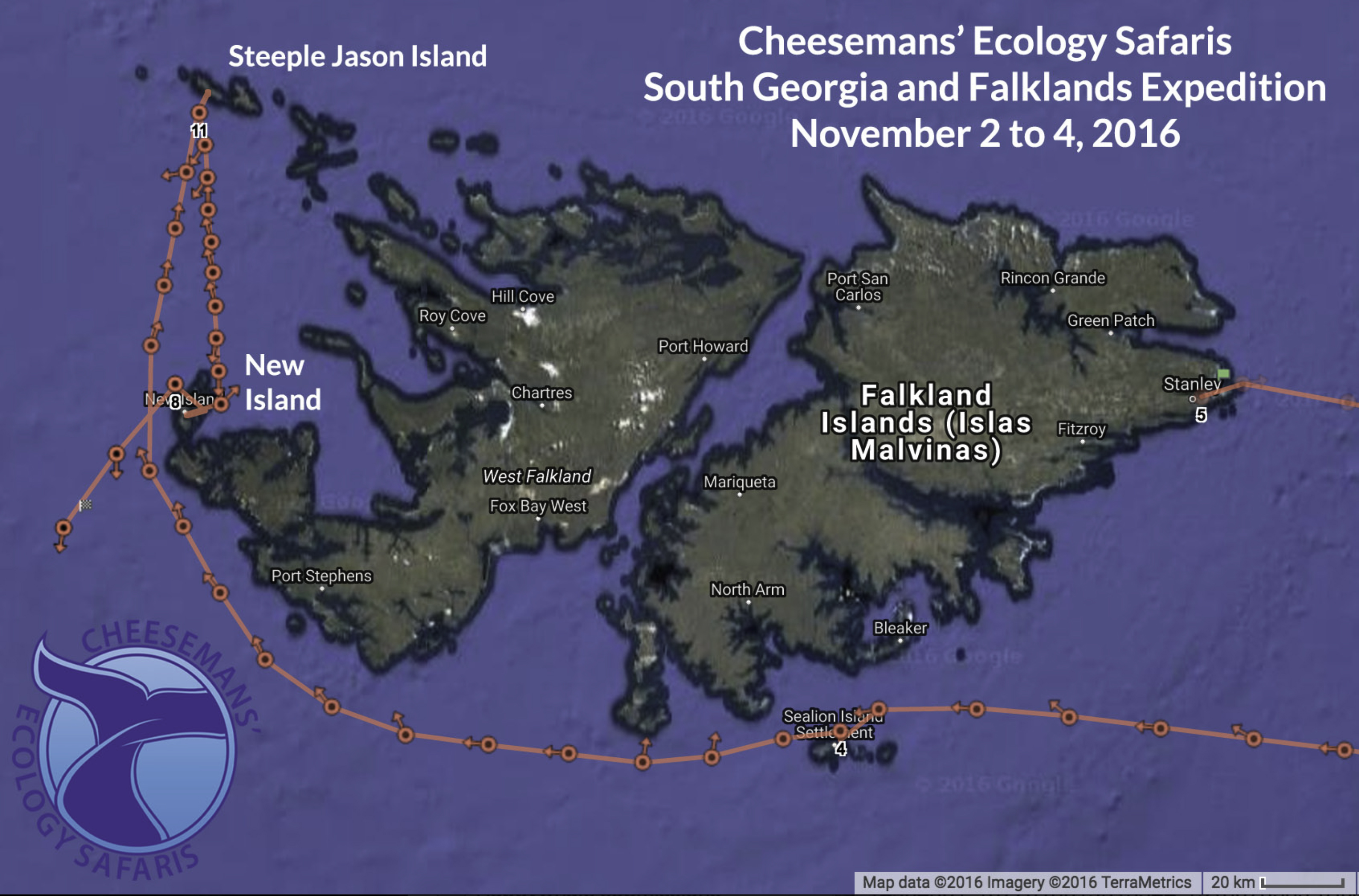
We moved on and ended up making two landings in the Falklands….Steeple Jason and New Island.

Falklands route map-Cheesemans.jpg

The company who ran this trip is Cheeseman’s Ecology Tours.  The owners of the company, Doug and Gail Cheeseman, were on board.  Doug is 79 and a former college professor of ecology and zoology and began by taking students on trips.  His company leads tours to Africa, South America, Australia and the southern ocean, including Antarctica.  This was to be his last trip to South Georgia due to the increasing regulation and landing restrictions.

It was amazing to me the number of people on this trip who’d been, first, on multiple Cheeseman trips and, second, the number of people who’ve made multiple trips to South Georgia and Antarctica.  For one lady I met, this was her fifth trip to the Falklands.  I can understand that for professional photographers who lead trips to this part of the world but for an individual I found it unusual.

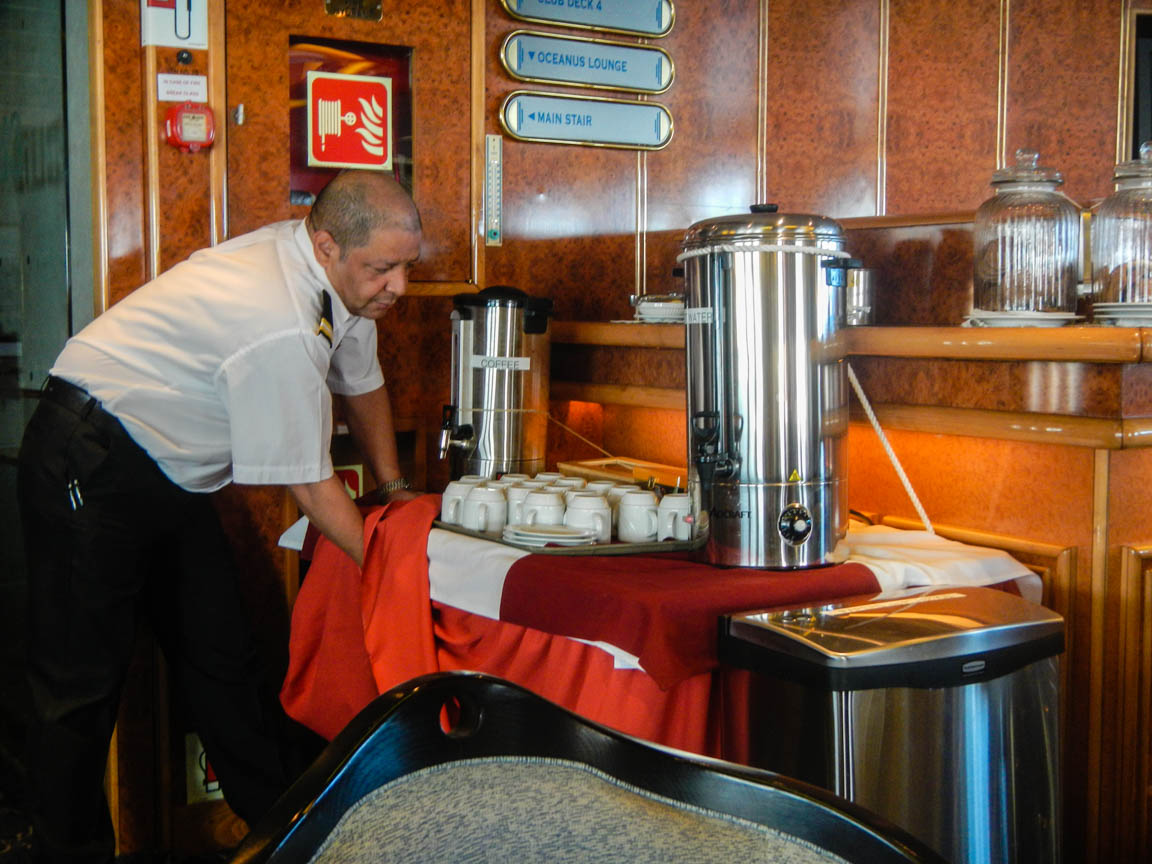
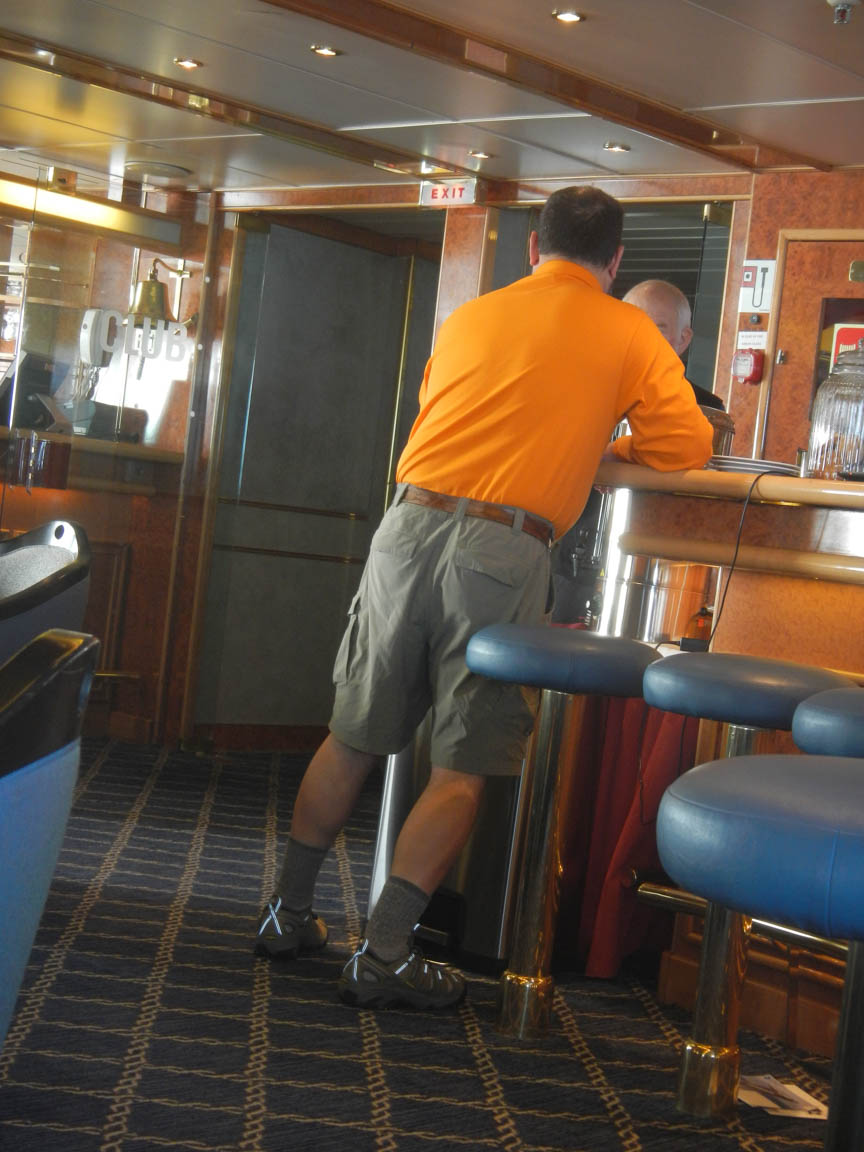
Our last passage was from the Falklands to Ushuaia, Argentina, the world’s southernmost city.  It’s a city of about 70,000 people and the starting point for most cruises to the Falklands, South Georgia and the Antarctic peninsula.  We had seas of 20-30 ft beginning during the night and continuing until about noon on Nov. 5.  At breakfast, not many were in attendance.  Two people were tipped over in the chairs and we ate with our hands trying to hold on to our cups, plates and silverware.  There was more than one breakfast that ended up on the floor that morning.  These pictures don’t adequately show the angle the ship was rolling but you can see the coffee machines were tied down.

20161105-dscn1350 20161105-dscn1342

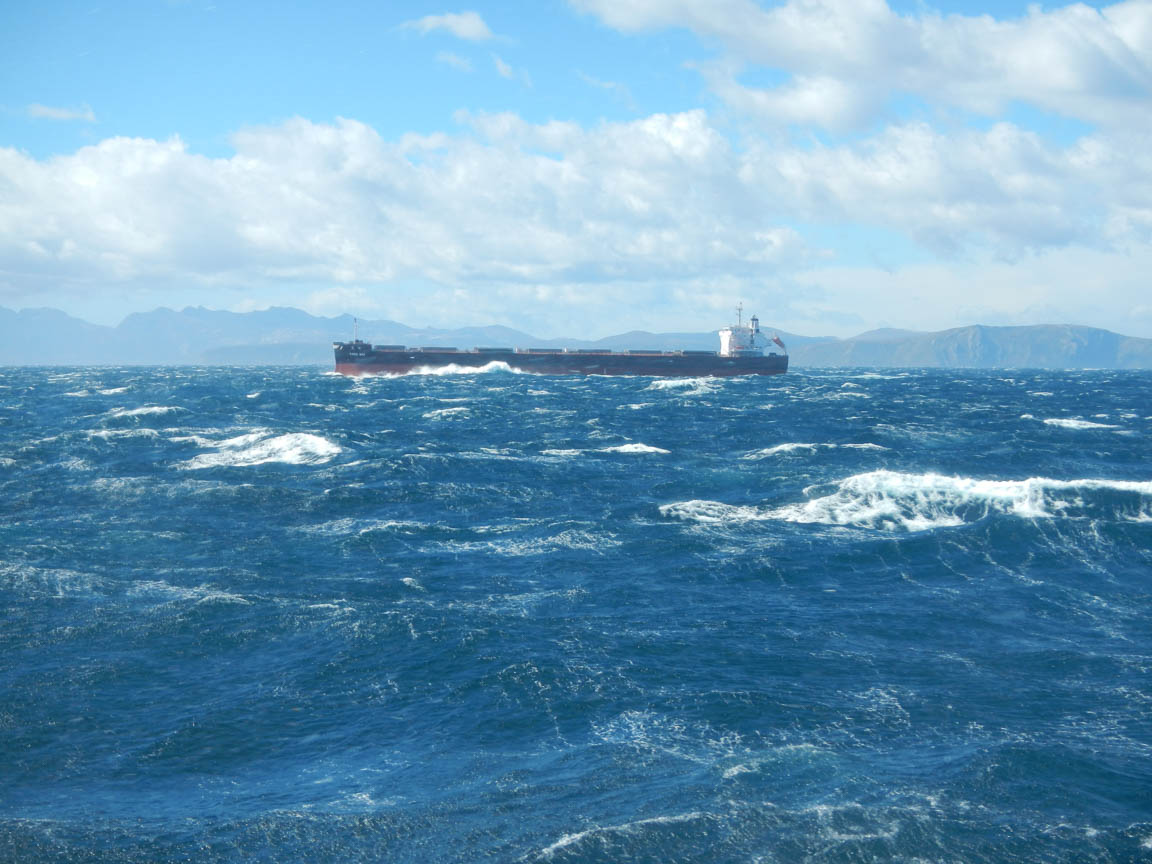
After entering the Beagle Channel, the waves subsided and it became a much smoother ride.  We saw our first ship near Tierra de Fuego….it appeared to be Chinese.

20161105-dscn1351

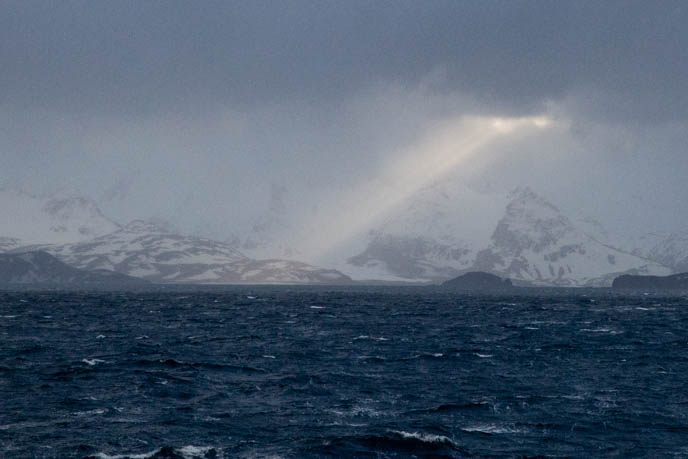
My last two images are kind of unusual.  The first is a “God beam” shot near sunset from the stern of the boat.

20161026-_i3a8852

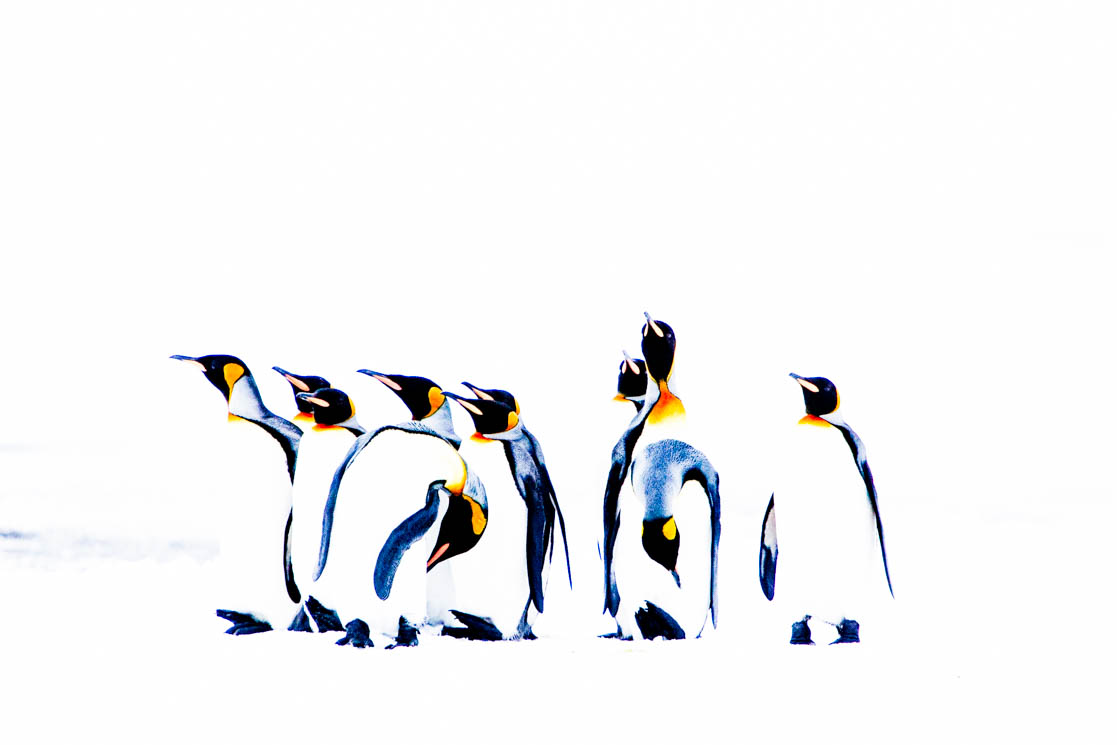
The last is a high key image of some king penguins.  I hope you’ve enjoyed this series of blogs.  Thanks for reading them.  Any suggestions or comments are always welcome!

20161030-_g6t5010

Ron

Posted in South Georgia and the Falklands | 2 Comments

On a Wing and a…..

I not a birder.  I worked on my skill at shooting birds in flight during this trip but I don’t have a “life list” of birds I’m trying to see and/or photograph.  I know a lot of people are birders.  I met a lot of them on this trip.  Some came with lots of powerful and expensive cameras and lens and others with very simple equipment.

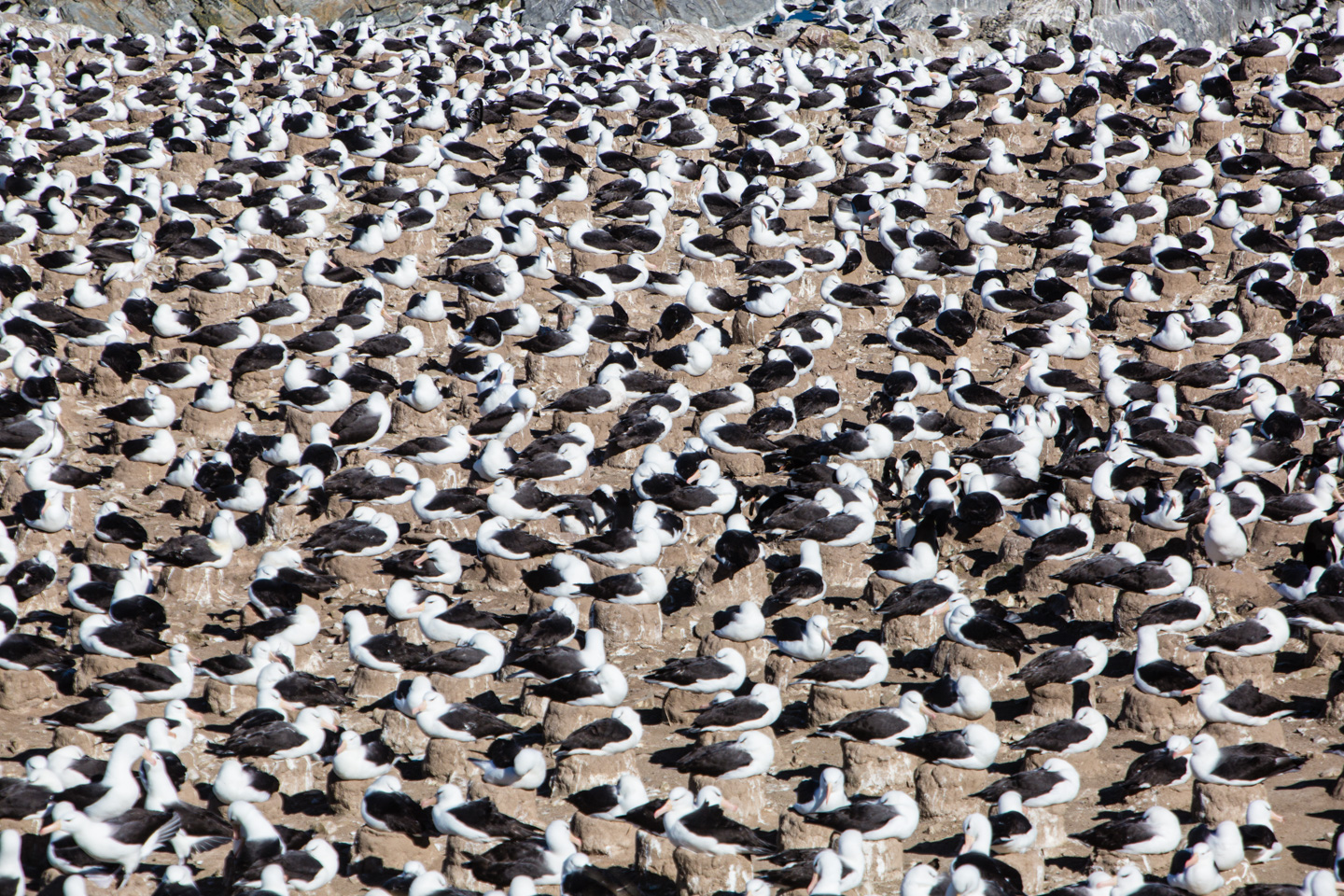
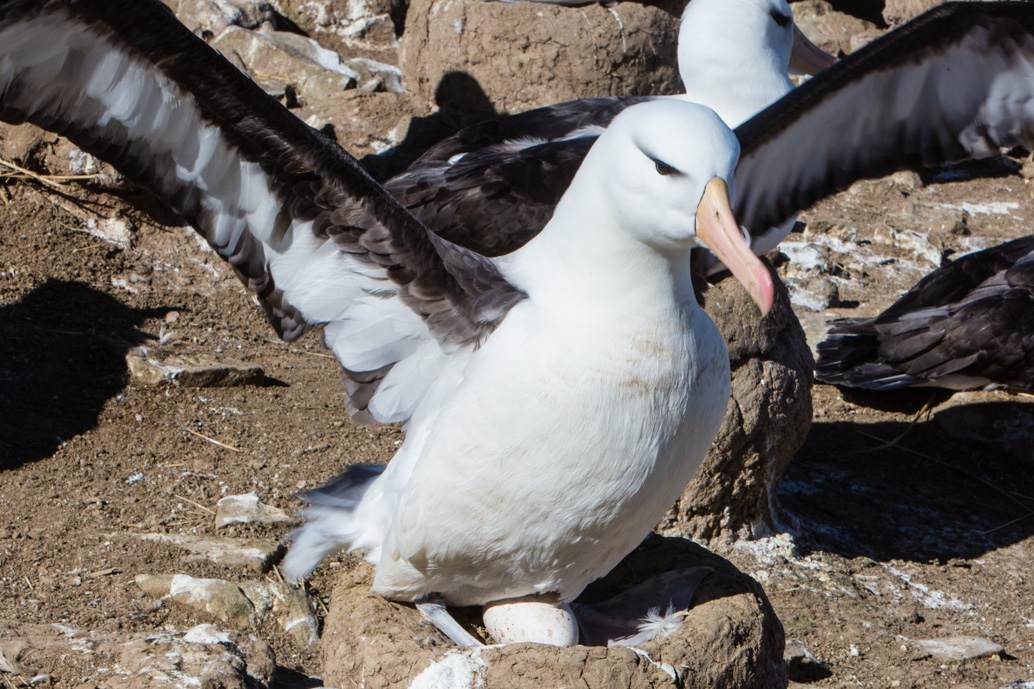
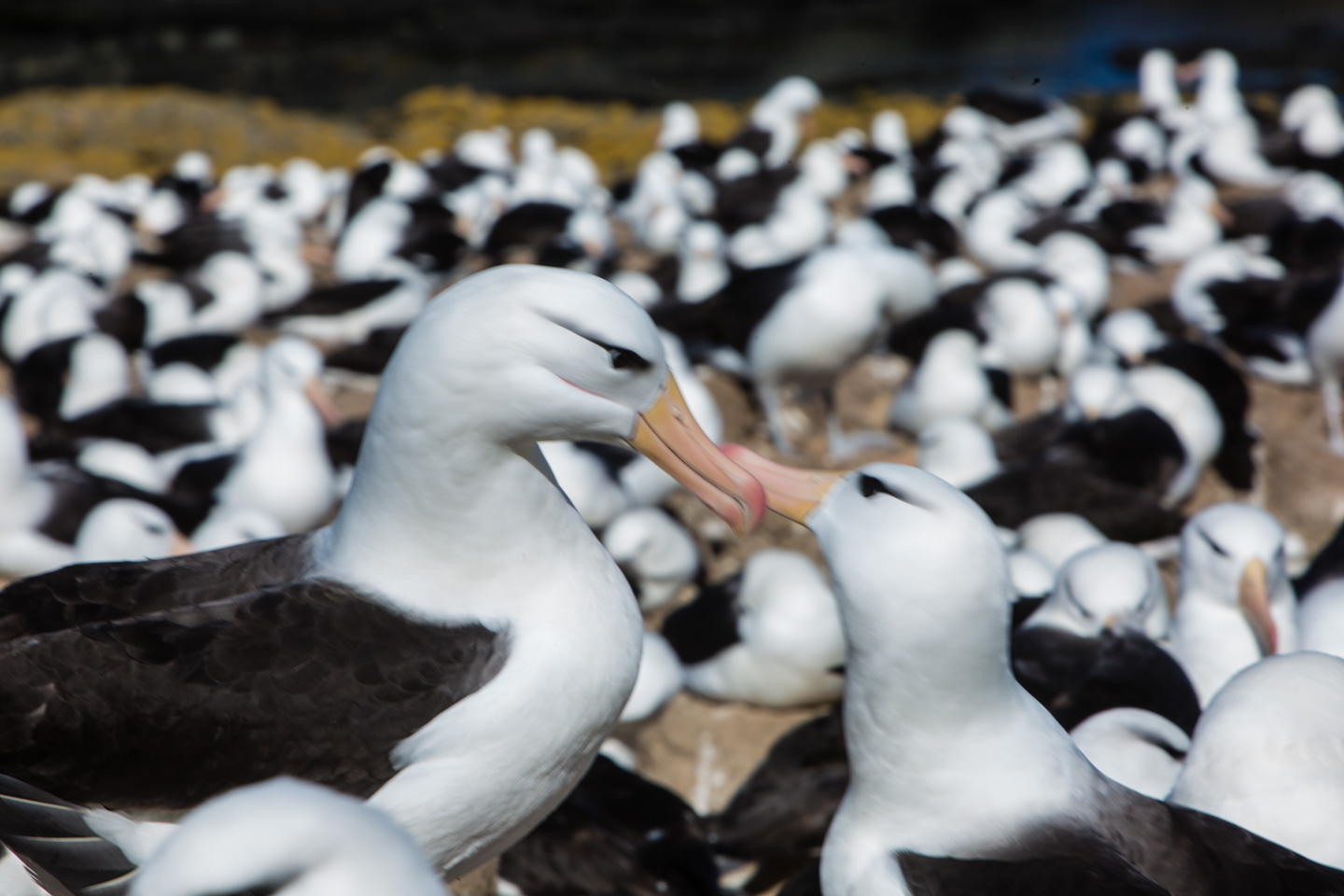
Everywhere I’ve had the good fortune to visit has had birds that were unique to that area.  I like seeing them.  I like photographing them.  Our tour leaders would often tell us that on this island there is a colony of black-browed albatross or northern royal albatross or southern royal albatross.  My heart didn’t skip a beat but I have to admit, seeing approximately 250,000 pairs of black-browed albatross in place one is pretty darn impressive.  This is on Steeple Jason Island in the Falklands.

20161103-_i3a006420161103-_i3a0065

This photo doesn’t show all of them.  It’s still a pretty good crowd!

20161103-_i3a026020161103-_i3a0227v1v1-edit

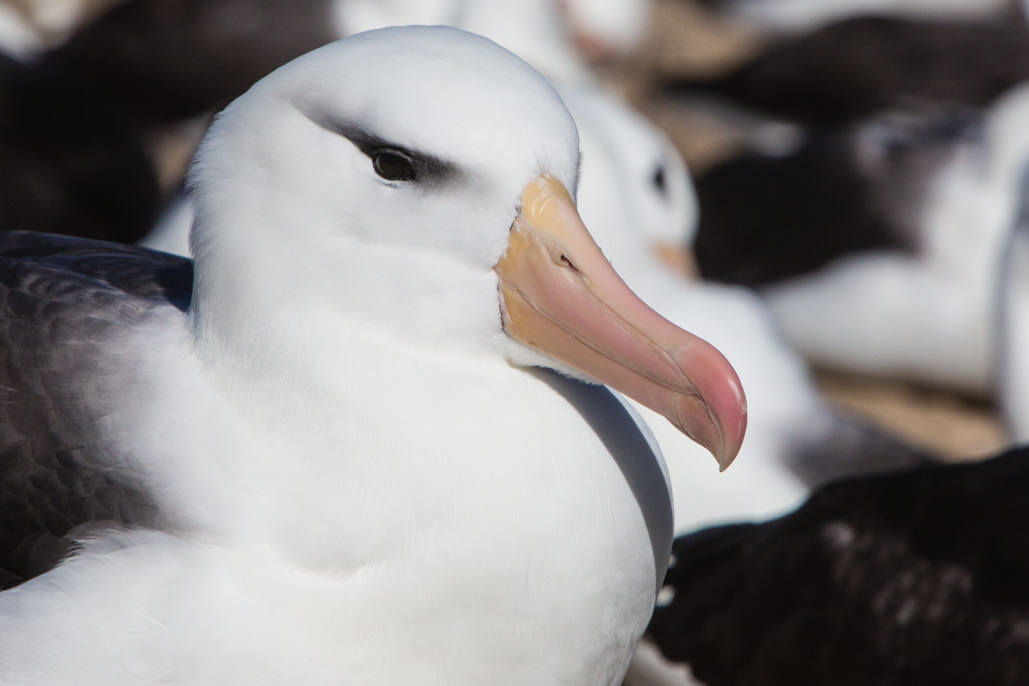
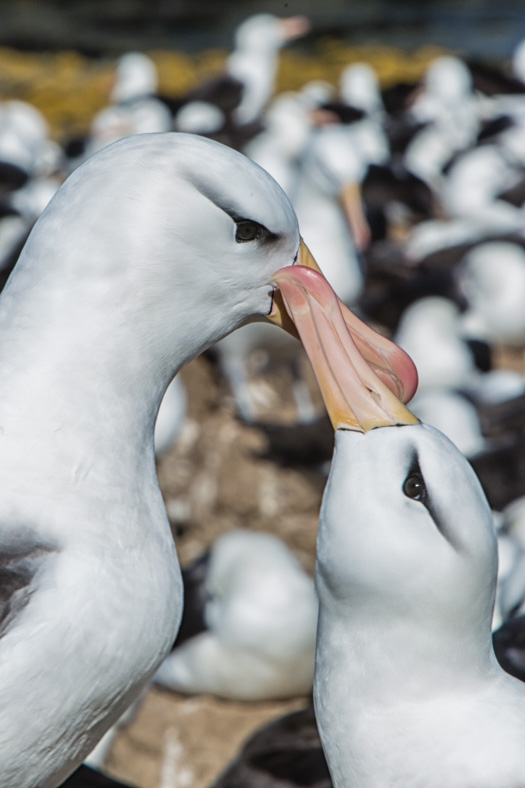
That little bit of black over the eye is how it earned it’s name.  Here’s a couple sitting on eggs.

20161103-_i3a041020161103-_i3a0444

Here are a few that are courting.

20161103-_i3a0102v1v1-edit20161103-_i3a0094

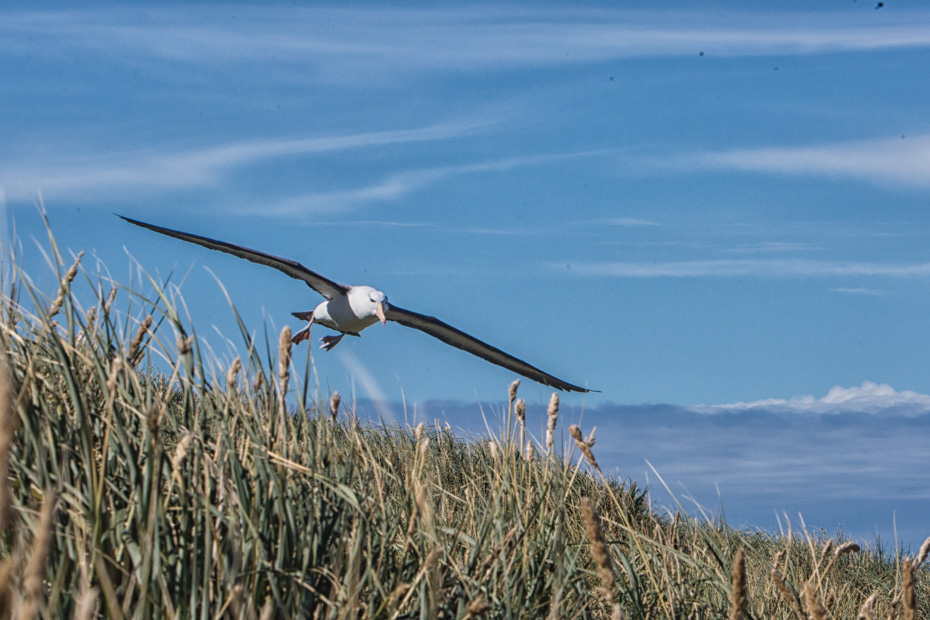
And flying…

.20161103-_i3a0329v1v1-edit20161029-_i3a9556

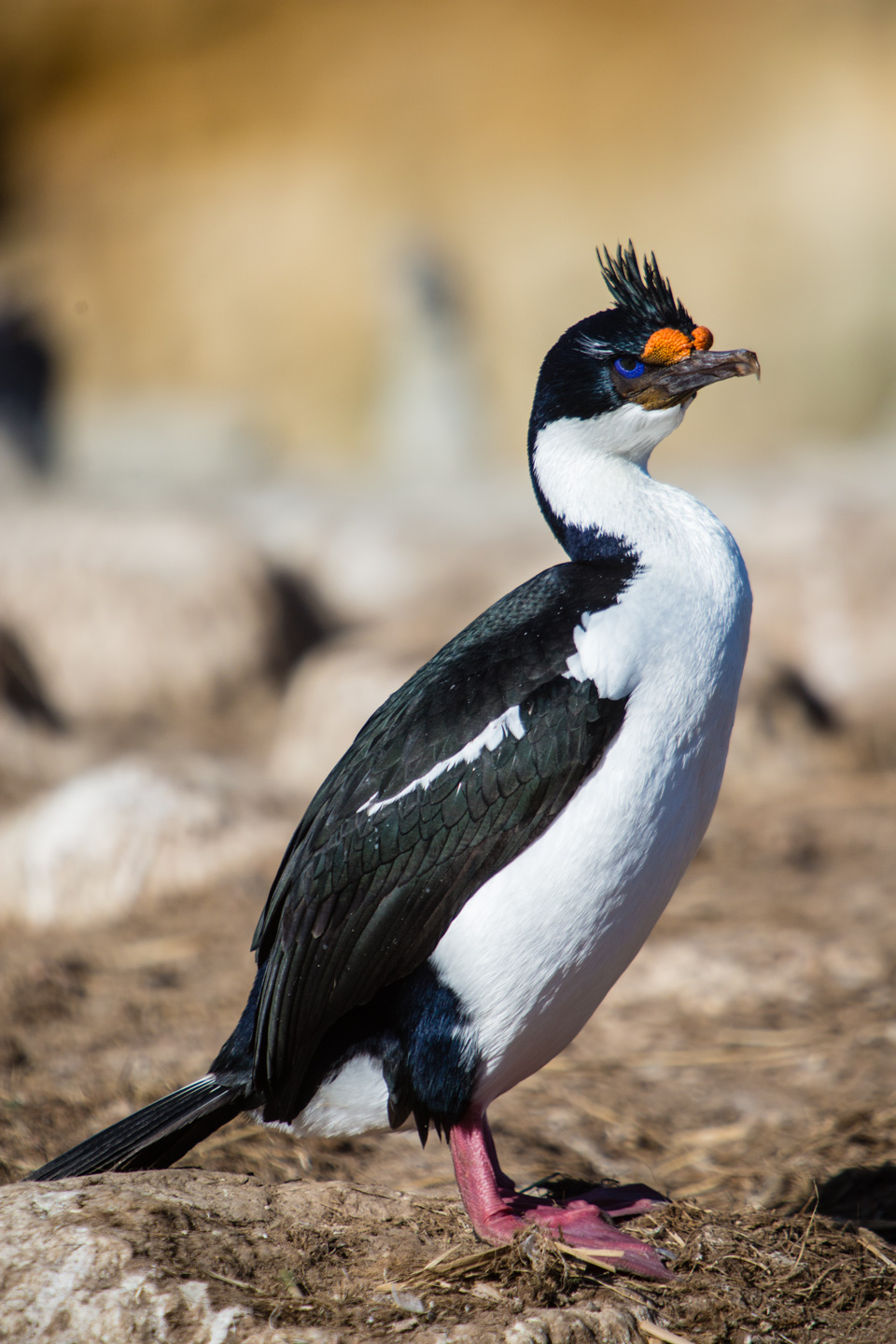
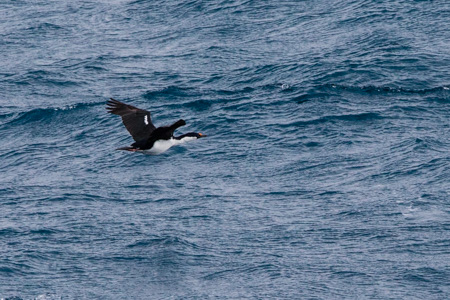
Here’s another interesting looking bird.  It goes by several names including rock shag, imperial shag, blue-eyed shag.

20161104-_i3a089420161104-_i3a0970v1v1-edit20161030-_g6t521020161104-_i3a0925

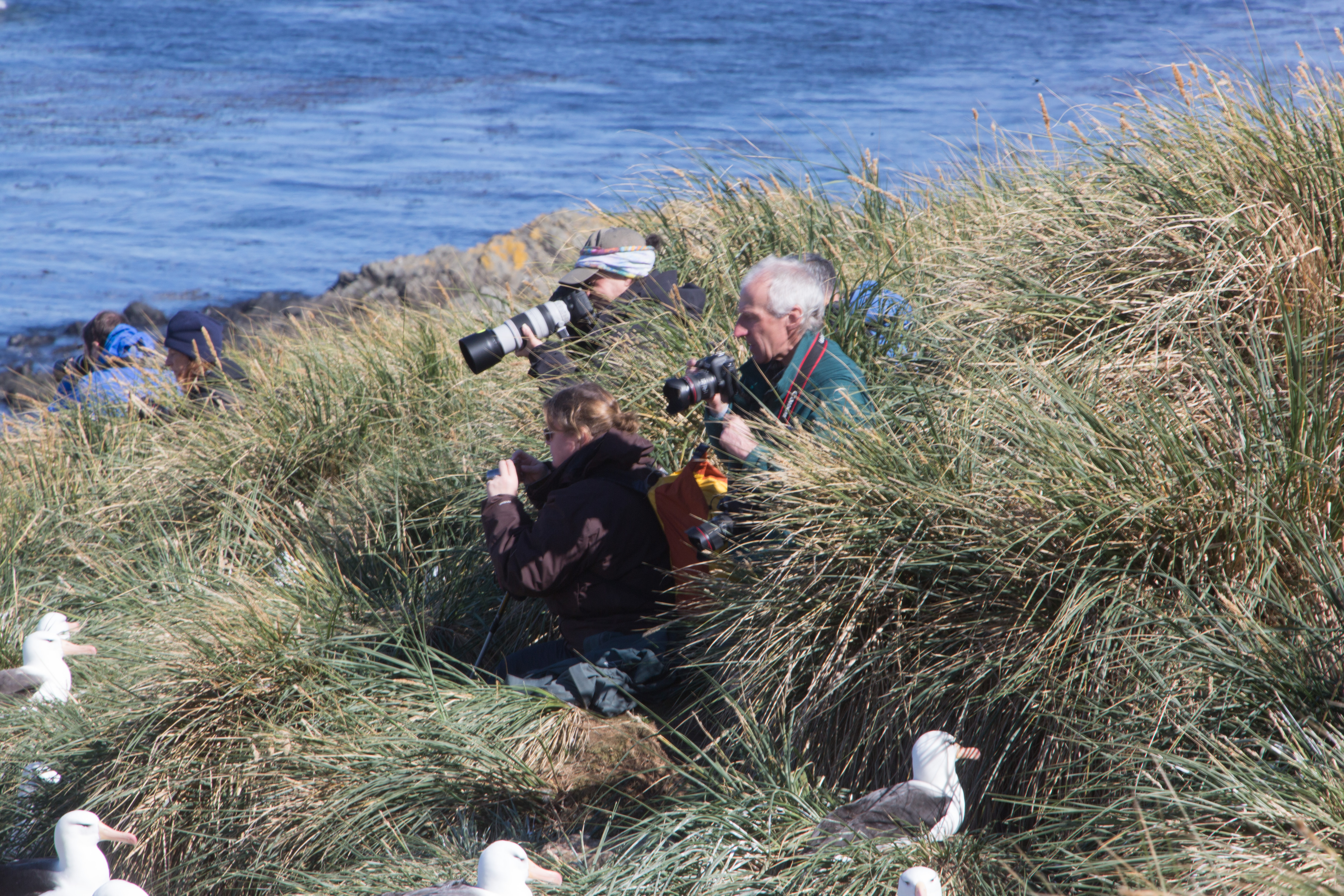
All the birds on South Georgia nest on the ground or underground.  There are no trees.  There is tussac or tussock grass are large clumps or grass, some as tall as 4-5′ that dot the hillside.  Birds often nest in and around them.  That’s what these photographers are working in.  Again these images were captured on Steeple Jason Island in the Falklands.

20161103-_i3a034620161103-_i3a0200

One particular bird, the pipit, nests underground and its existence was threatened by rats.  When supply ships came to the islands years ago, they brought with them rats.  Those rats multiplied.  In 2014, a mass rat eradication program began to rid the island of these creatures.  It cost millions of dollars and involved developing a poison that would not harm the other birds, penguins, etc. but would kill the rats.  It was dropped from helicopters and spread throughout South Georgia.  Today, it is believed that there isn’t a single rat on South Georgia Island.  The pipit population is starting to grow.  Unfortunately, I didn’t get a single picture of one although some others did.

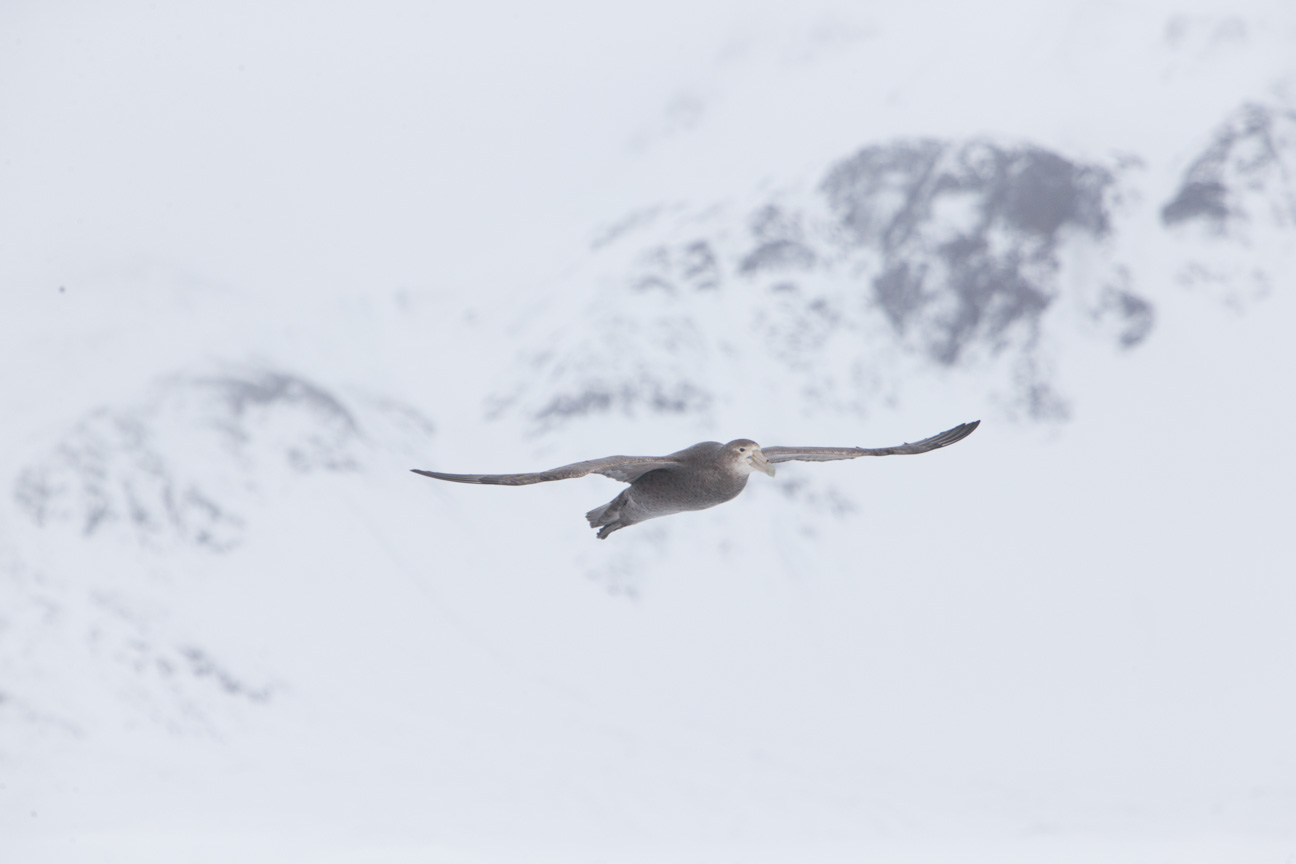
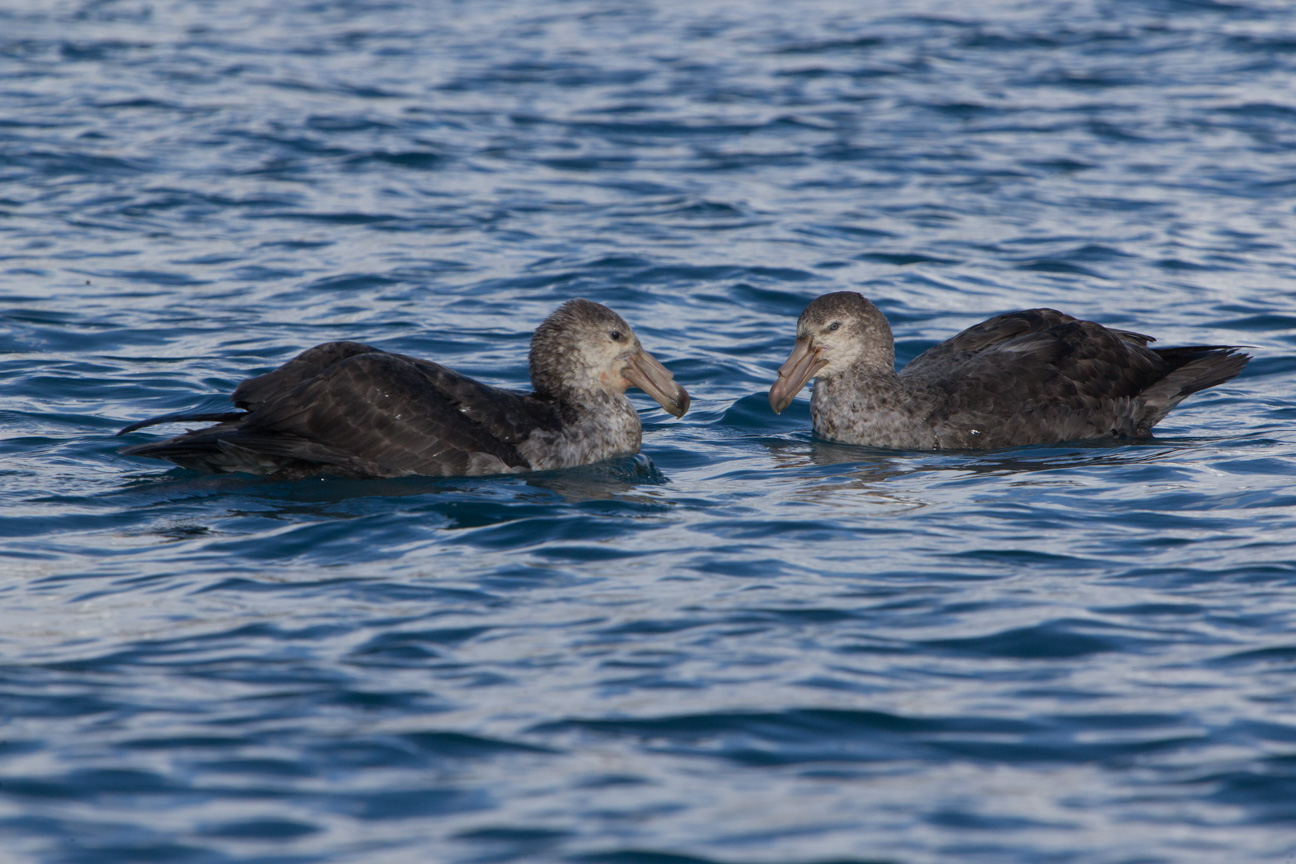
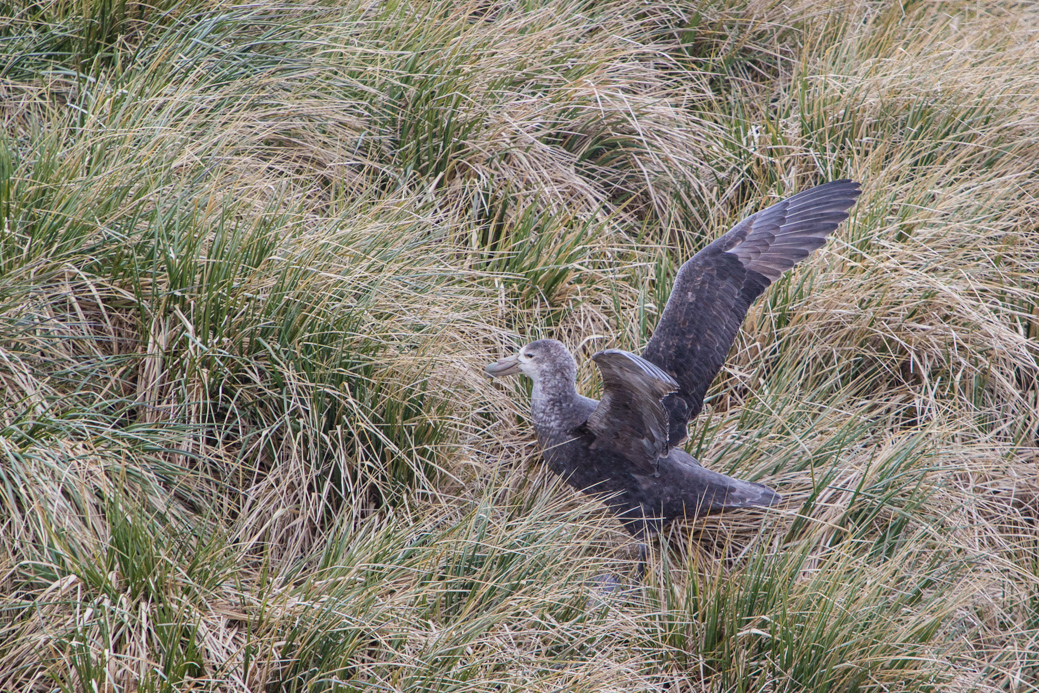
Another scavenger bird here is the northern and southern giant petrel.  The only difference between them is that the northern giant petrel as a reddish color on the tip of it’s beak and the southern giant petrel’s is green.

20161030-_g6t505520161028-_g6t402420161026-_g6t257720161028-_g6t3810

In the picture on the left, it is a northern giant petrel….with a green tipped beak.  The picture on the right shows them eating a fur seal.

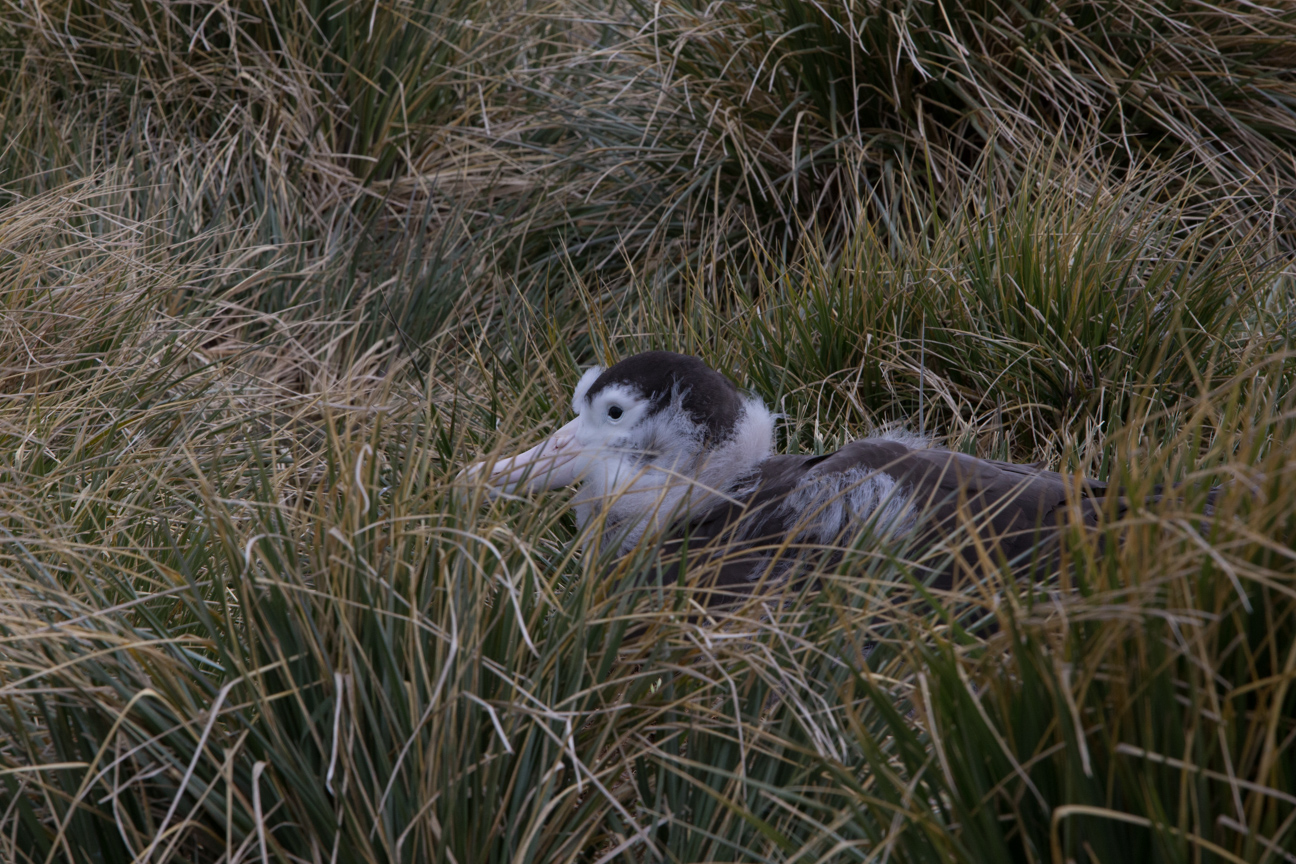
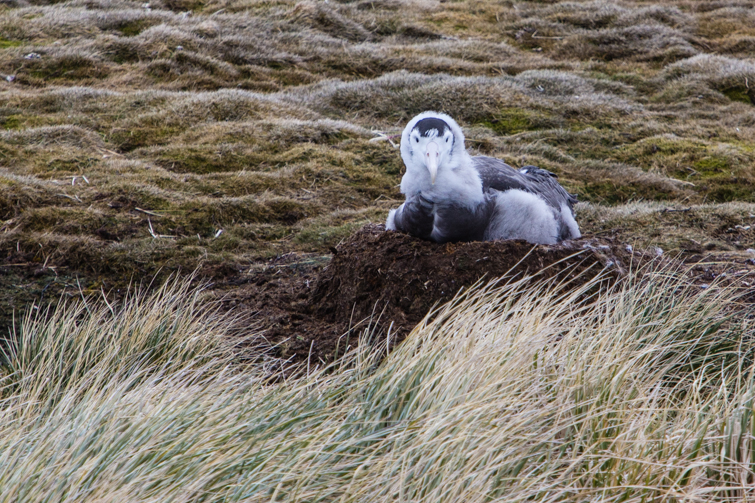
Another bird is the wandering albatross.  They nest in the tussac grass.  Here are a few young ones that are molting.  After birth in the summer they stay on the nest for 278 days (no, I don’t know how they know it’s been 278 days but that’s what I was told).

20161026-_g6t351420161026-_g6t352520161026-_g6t3529

These birds have a wingspan of about 7 feet.

In the next image is the Sooty Albatross.  It’s the bird on the upper left in the tussac grass on the cliffside.20161029-_i3a9409

More coming…..

Posted in South Georgia and the Falklands | Leave a comment

It’s All About the Wildlife

I go on these little jaunts because I enjoy seeing all the wildlife in their natural setting.  It’s a chance to also improve my photographic technique.  Whether I’m capturing images of birds in flight or high school football games, there’s always room for improvement.

When I left on this trip to South Georgia Island I didn’t know a giant petrel from a tank of petrol.  This is a giant petrel.

20161028-_g6t4102

I assume you already know what a tank of petrol looks like.

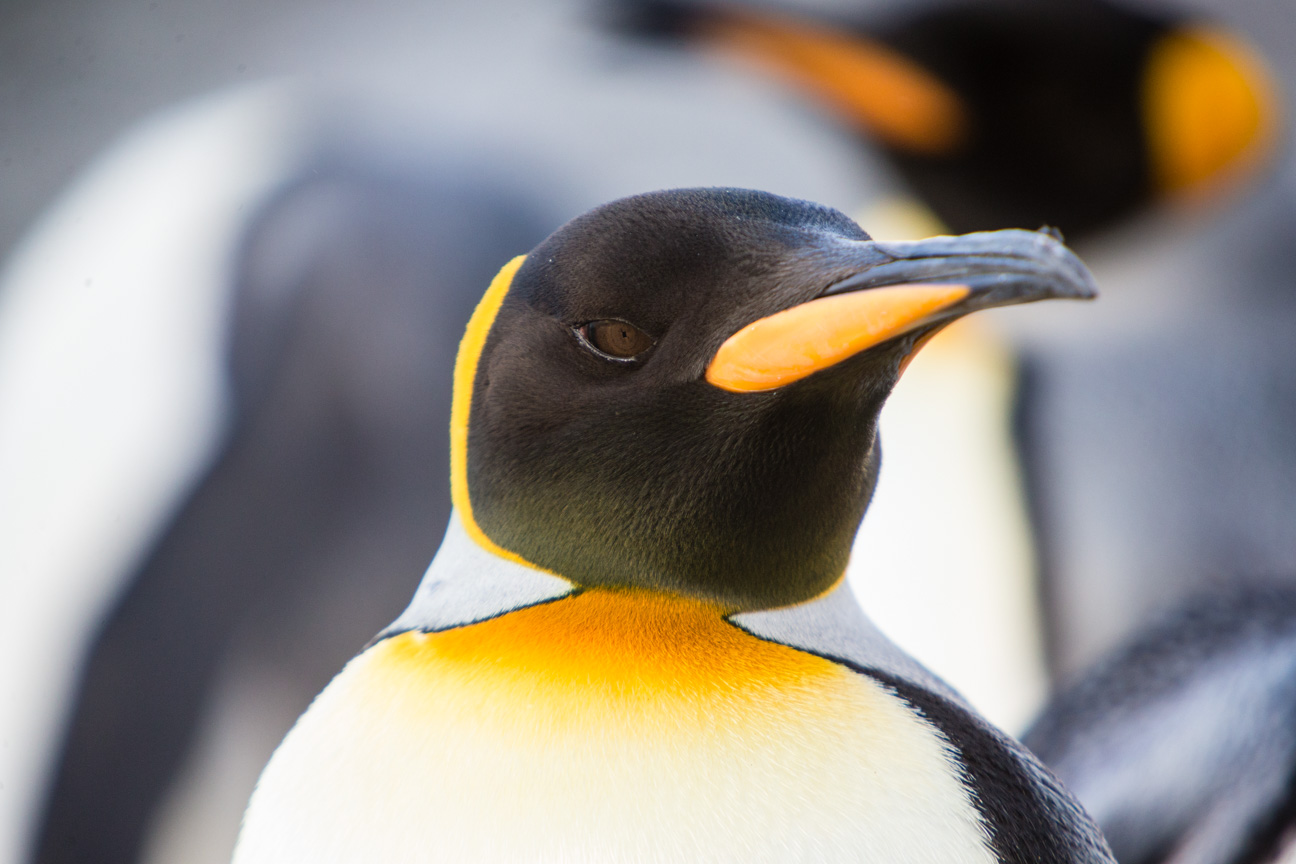
Anyway, South Georgia is the home to hundreds of thousands of penguins.  Their are five different types there.  This is the king penguin.

20161030-_g6t5017

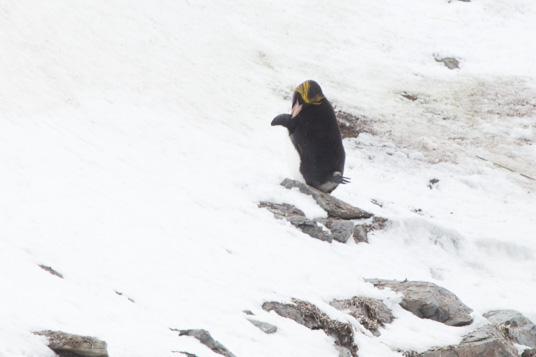
It has a gold pattern on its neck and yellow on its breast and shoulders.  This is a macaroni penguin.  There aren’t many of them here and this one was some distance from me when I photographed it.

20161029-_i3a9308

It has orange braids/hair on either side of its head.  Remember you can click on an image to enlarge it.

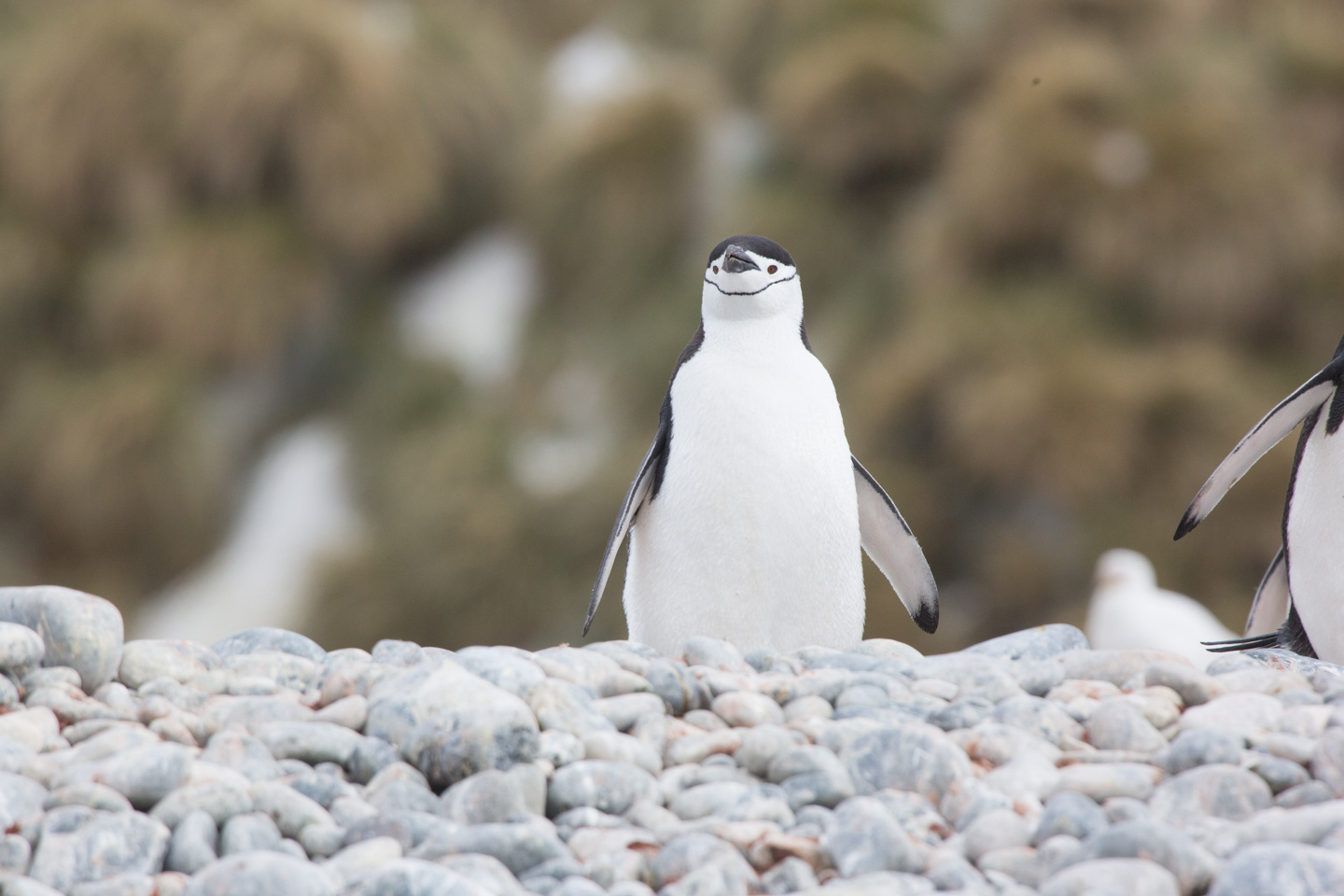
This is a chinstrap penguin.  It gets its name from the black line under its chin.

20161029-_i3a9382

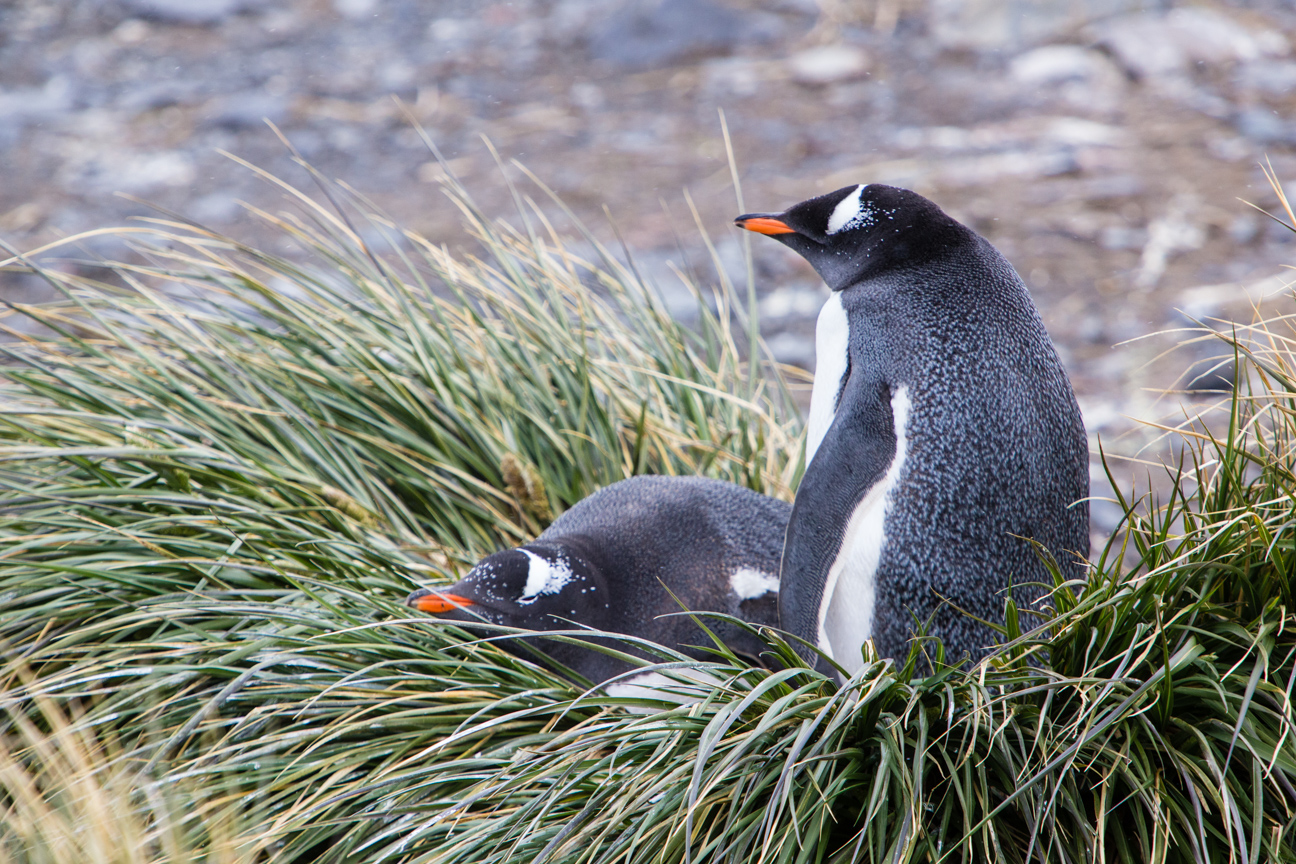
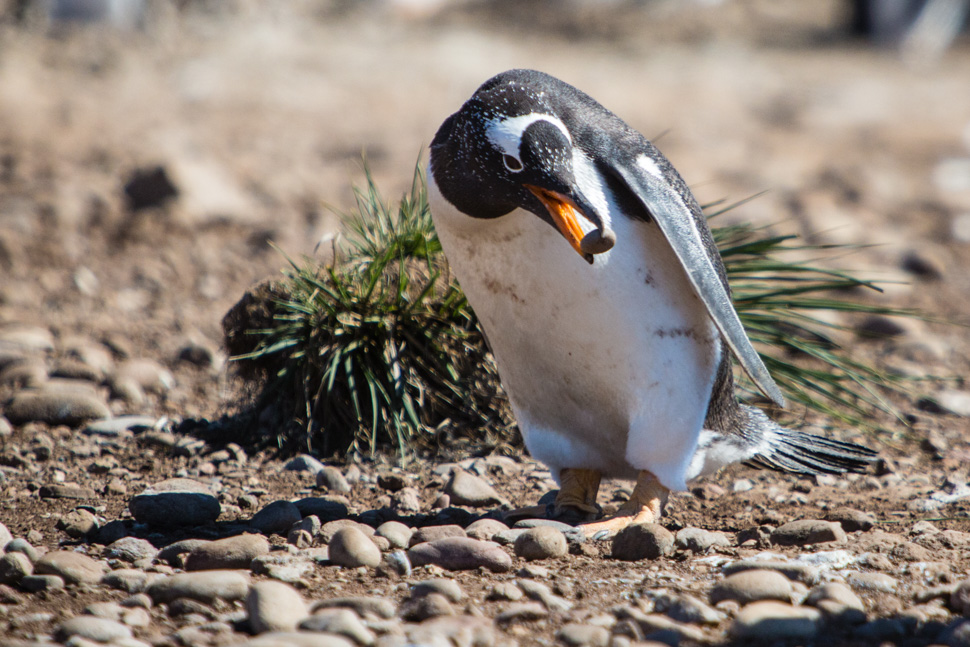
This is the gentoo.  It has an orange bill but no other color.

20161026-_g6t3608

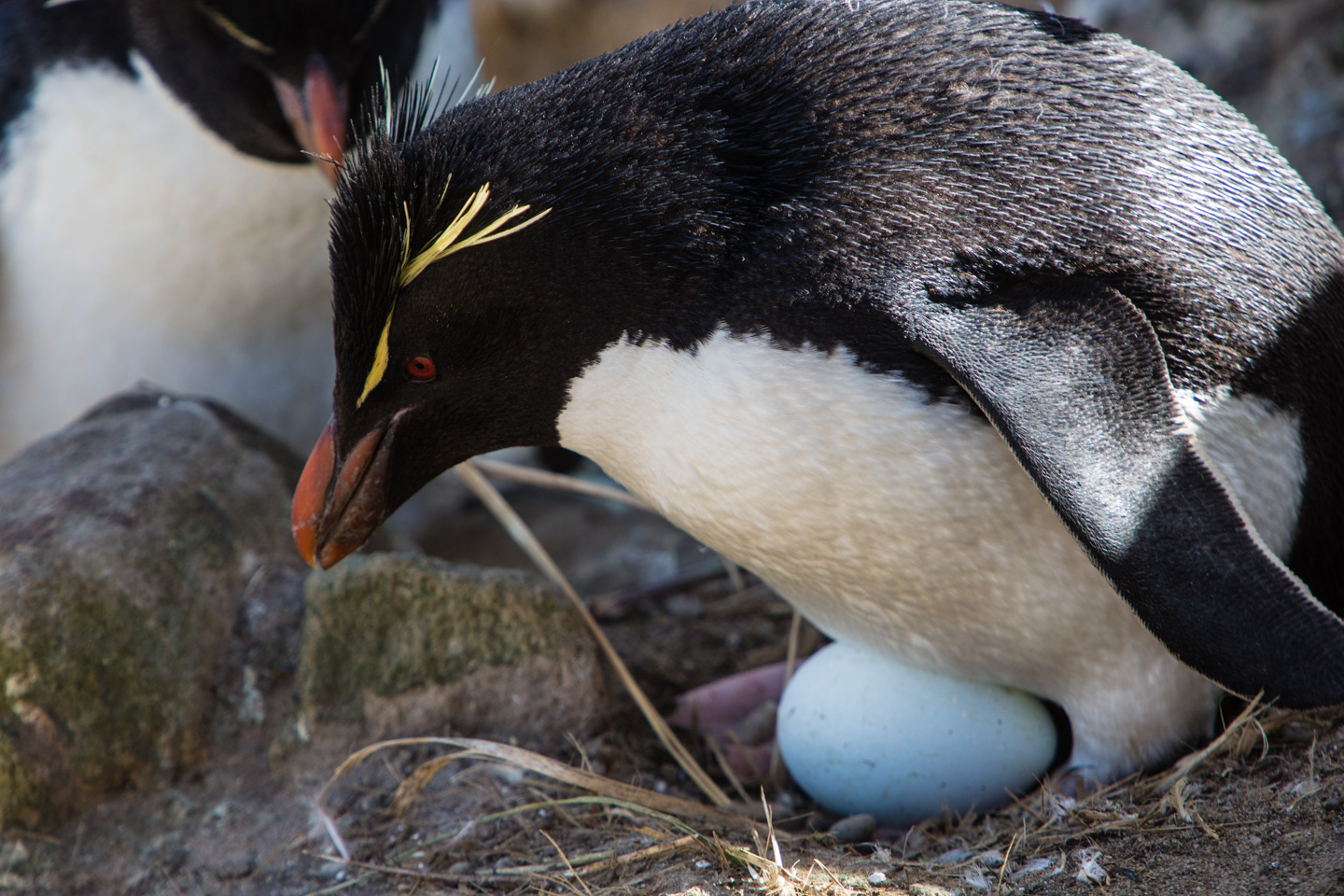
Finally, there is the rockhoppers.  They live on the side of cliffs and get their name from how they get out of the water…hopping up onto the rocks and also how they move around the cliff.

20161104-_i3a0886

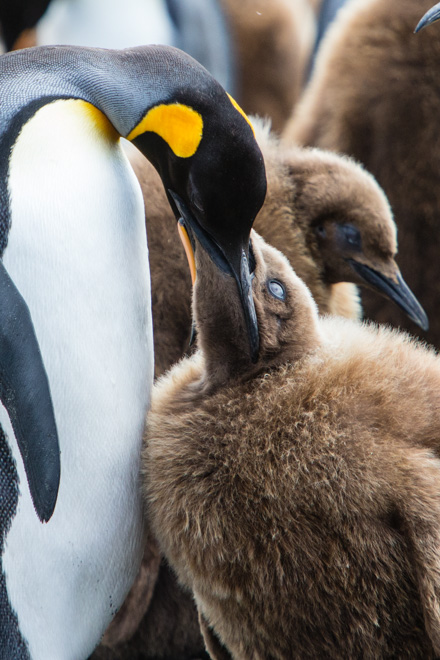
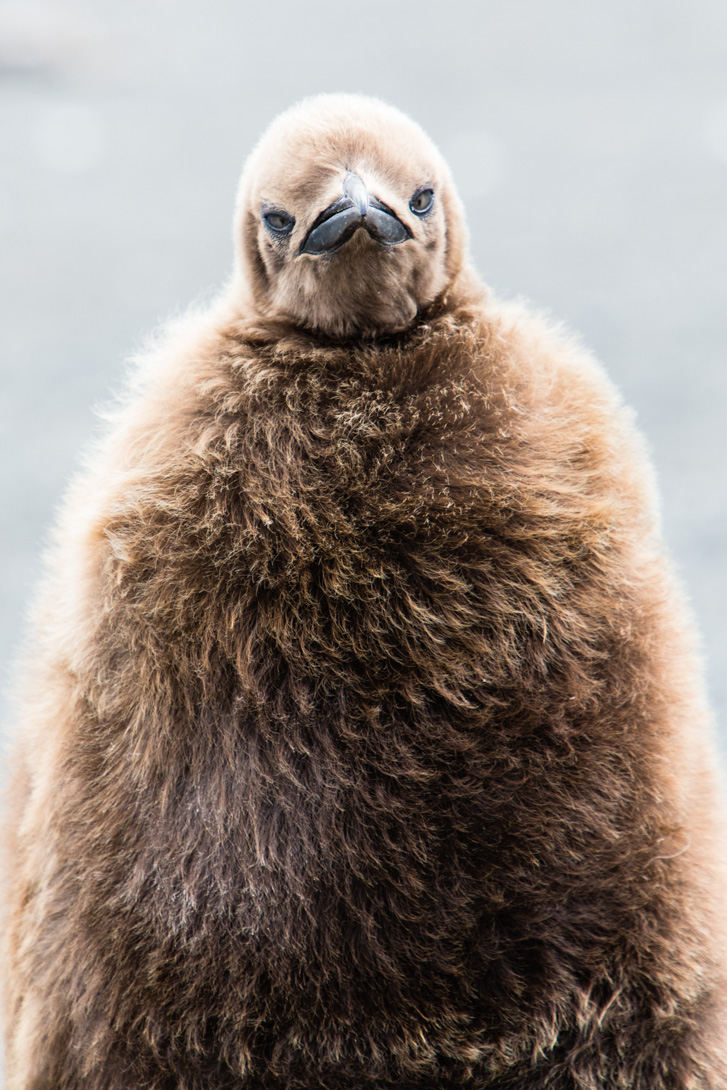
These little guys are about a foot to 18″ tall.  They also have side hairs similar to the macaroni penguin but they are more yellow than gold.  Here are some young king penguins…oakum boys…getting fed by Mom.  In the first image, you can see the food actually being transferred from Mom to oakum boy.

20161028-_g6t4436

Here are a few more images of feeding and groups.

20161028-_g6t444520161028-_g6t4430

20161028-_g6t378520161028-_g6t4352

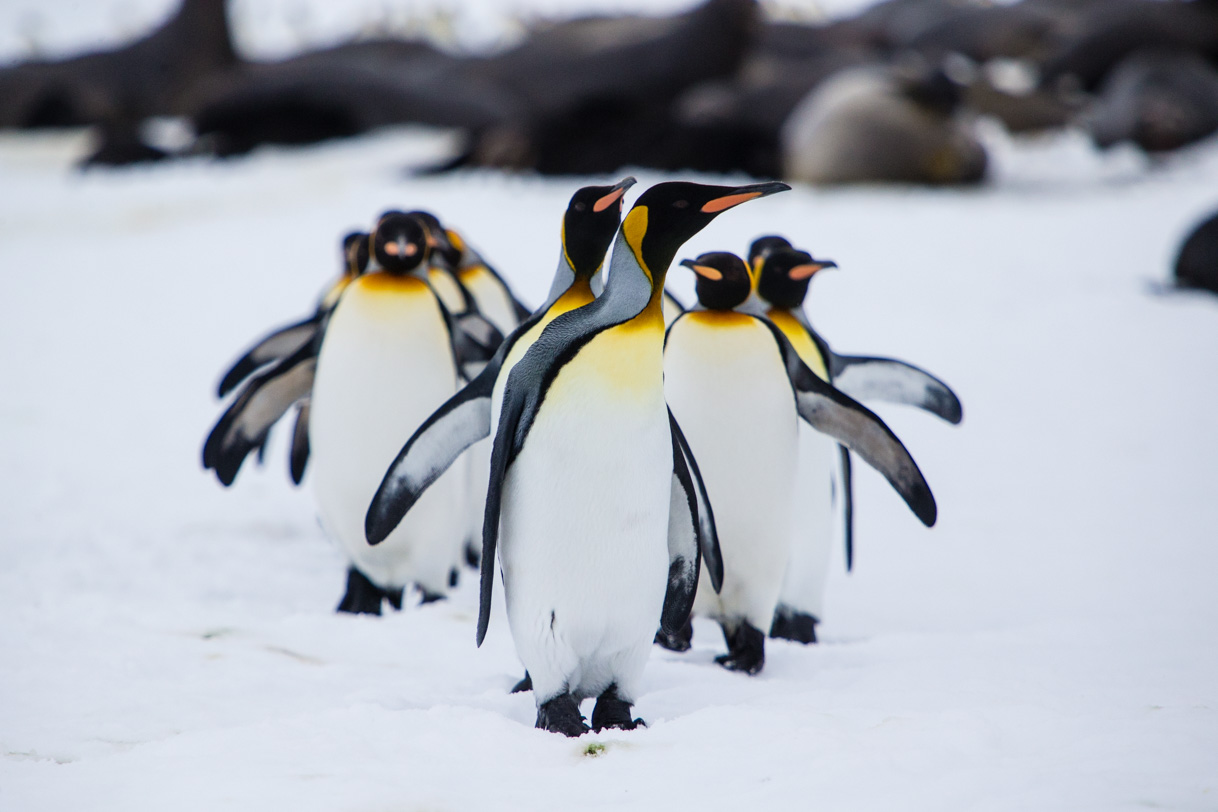
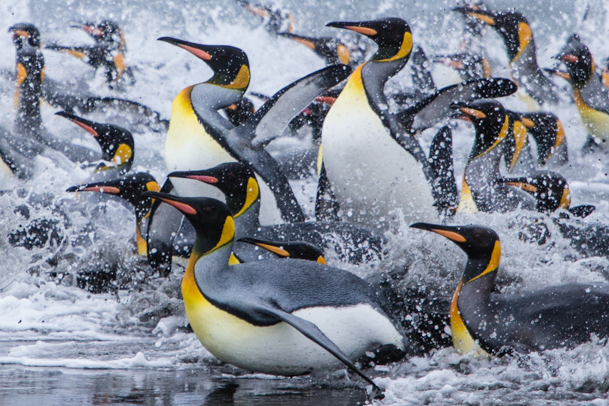
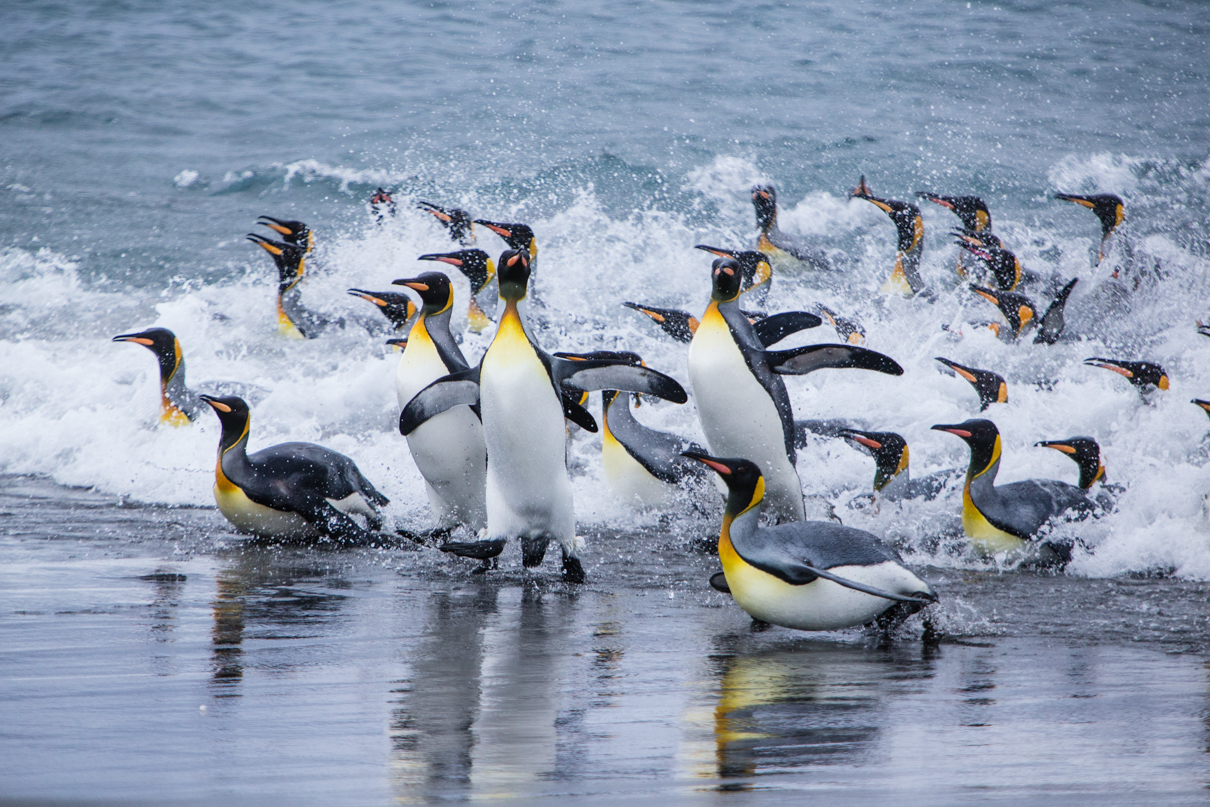
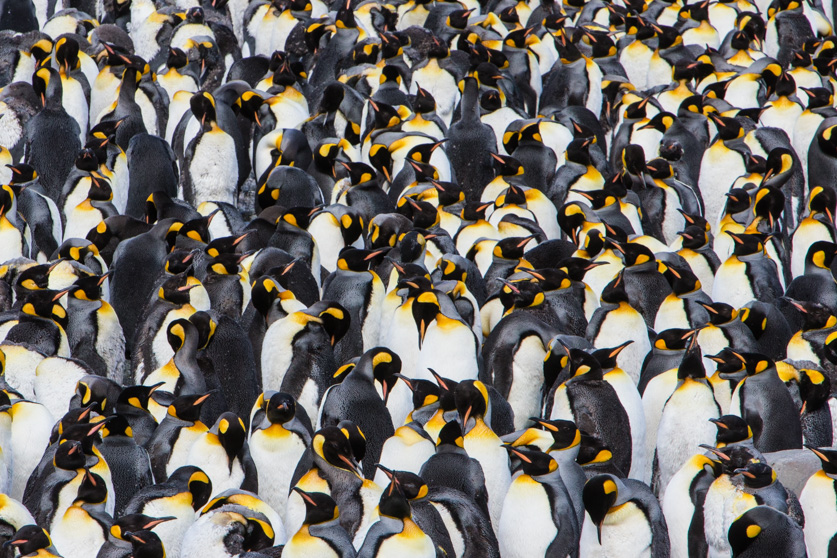
The most abundant penguins are the king penguins.  They tend to move in groups…lines, bunches heading in and out of the surf and just standing around.  Here’s an assortment of images.

20161028-_g6t434920161028-_g6t409220161030-_g6t503320161028-_i3a9063-2v1v1-edit

20161028-_g6t368020161028-_g6t366320161026-_g6t335820161026-_g6t331720161026-_g6t330120161026-_g6t314620161028-_g6t3894

As we moved from landing site to landing site, we found the different kinds.  The rockhoppers were in the Falklands and not in South Georgia.  Here are some at the colony where they were nesting with eggs.

20161104-_i3a119920161104-_i3a1174v1v1-edit20161104-_i3a1168

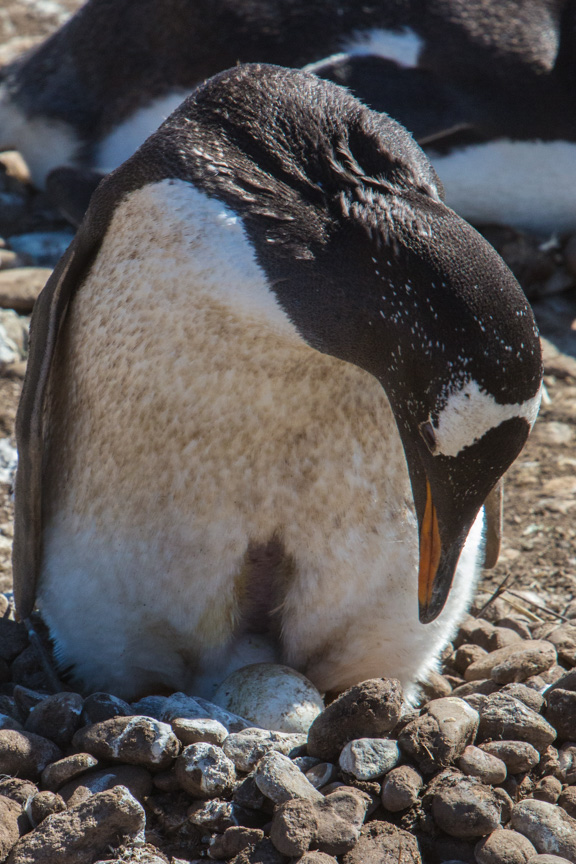
Here’s a gentoo gathering material for his mate’s nest and a gentoo with an egg on the nest.

20161103-_i3a053120161103-_i3a0624

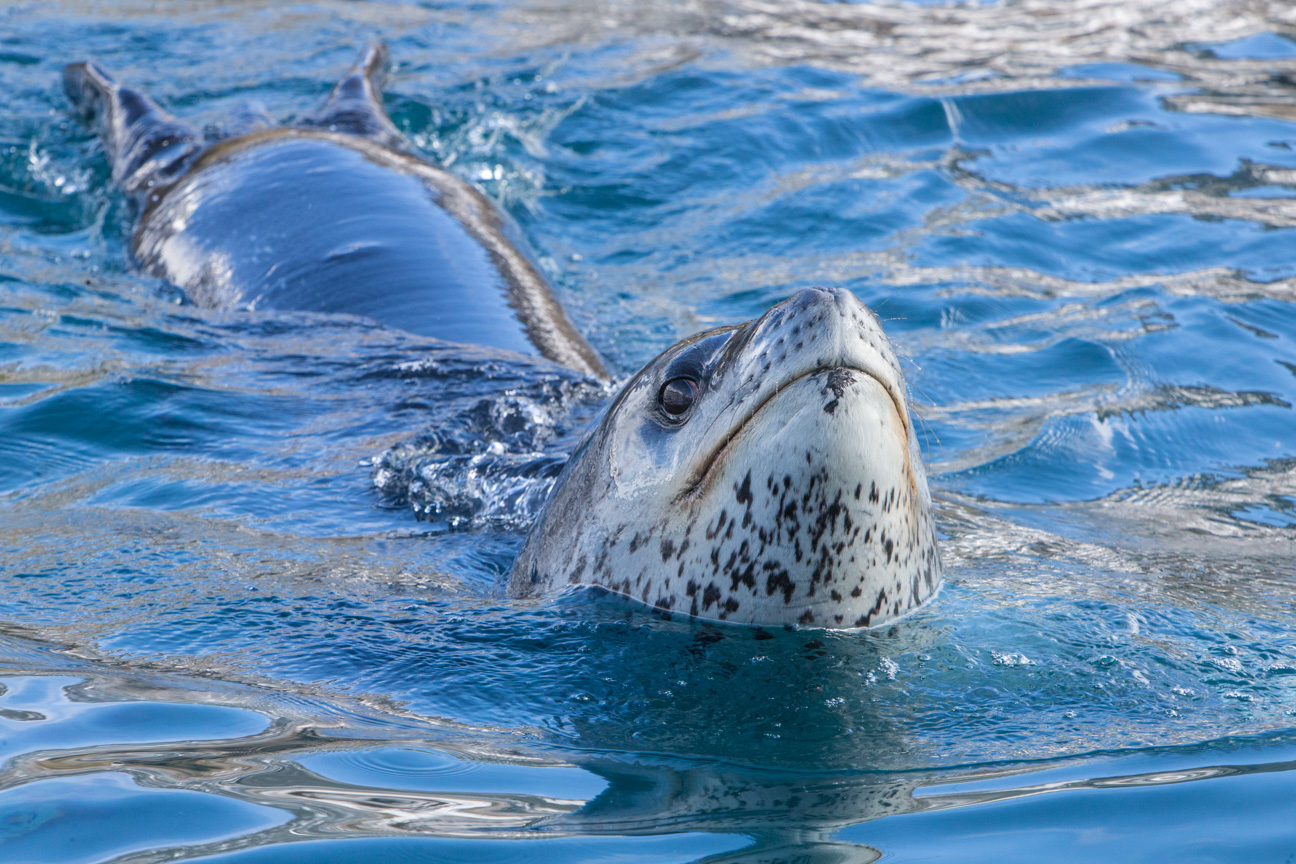
There isn’t a lot of predation but this fellow…a leopard seal… patrols the surf area looking for those penquins that are out of a swim.  They also like to take a nibble out of a zodiac tube on occasion.

20161028-_g6t4237

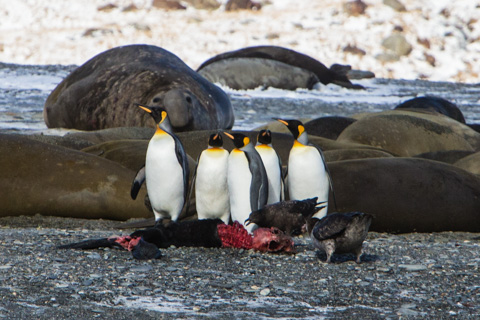
While out on a zodiac cruise along the shore, I saw a couple of penguin and a baby fur seal that had been killed and giant petrels were feeding on them.

20161028-_g6t381020161028-_g6t4181

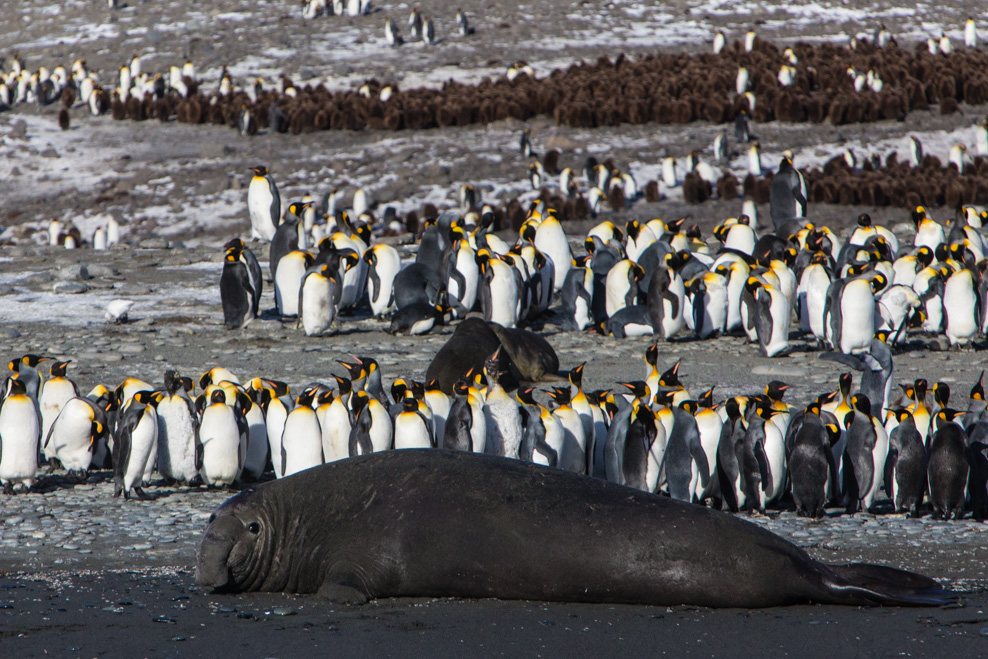
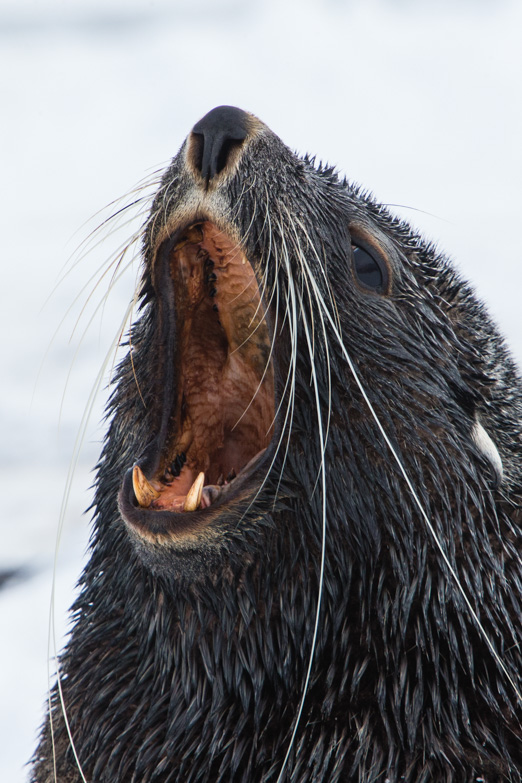
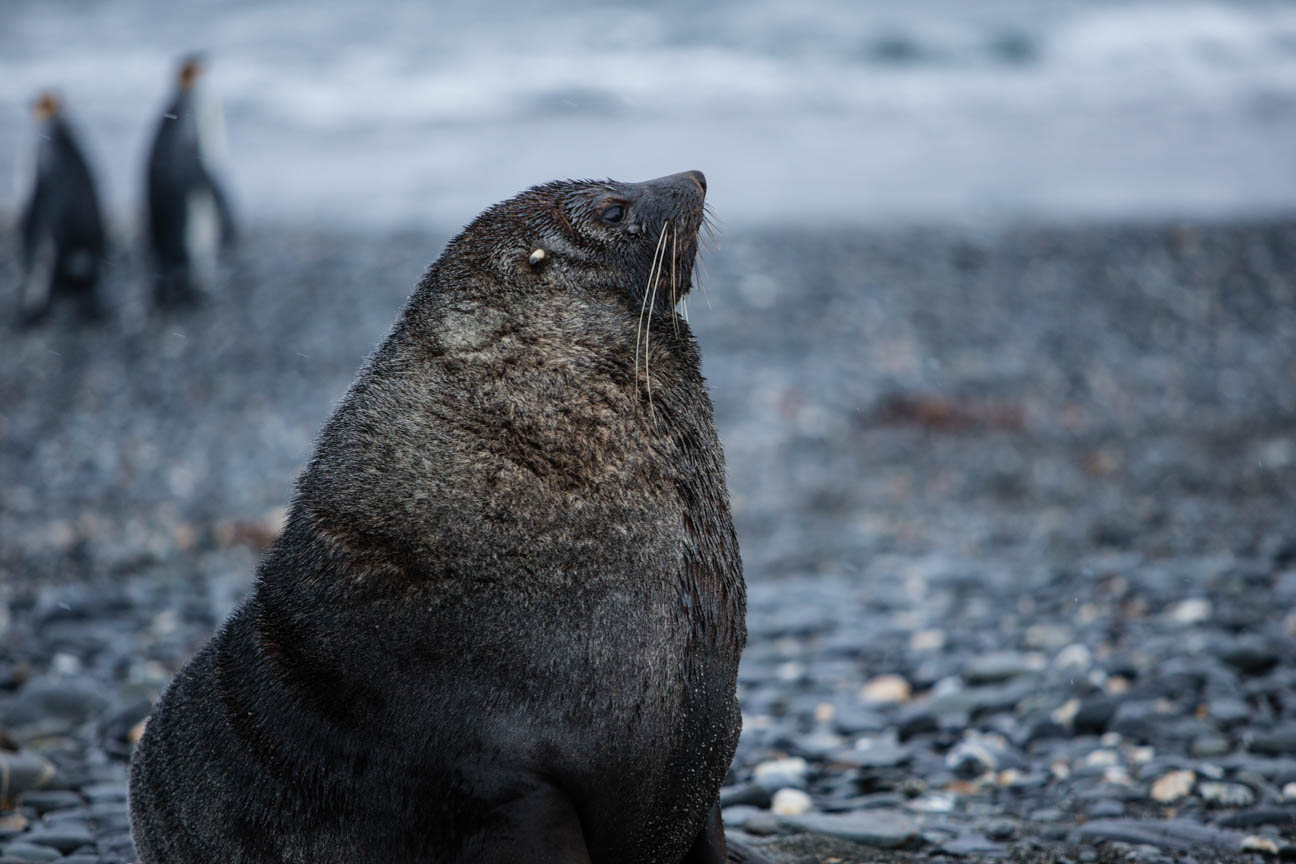
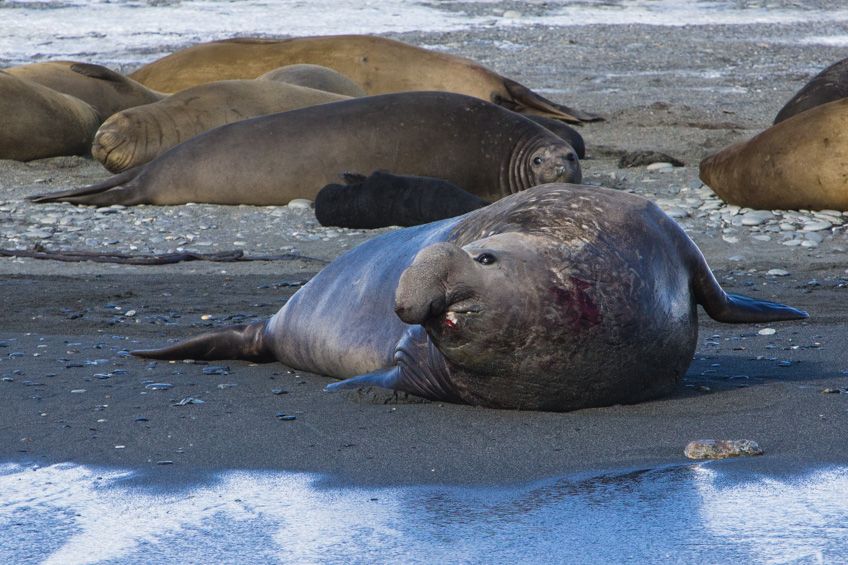
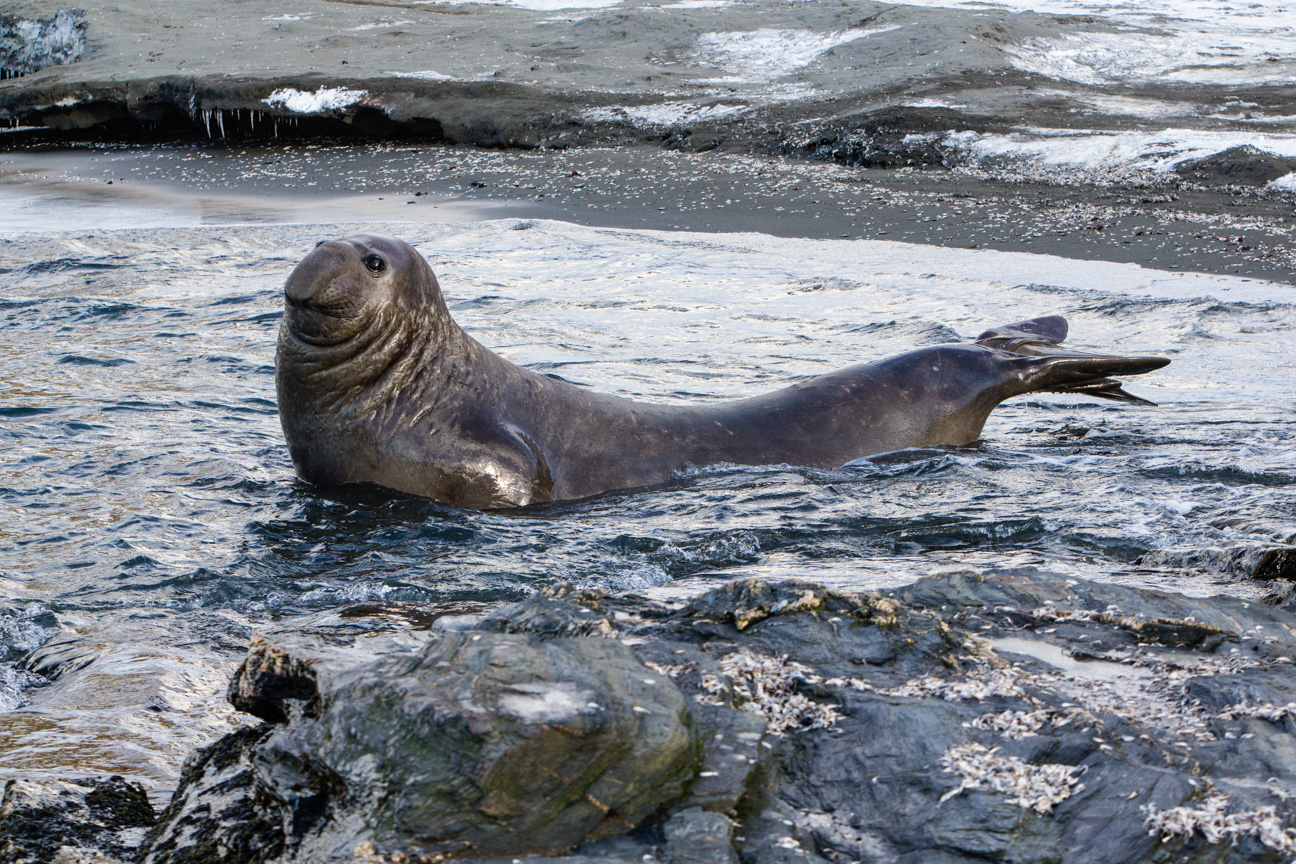
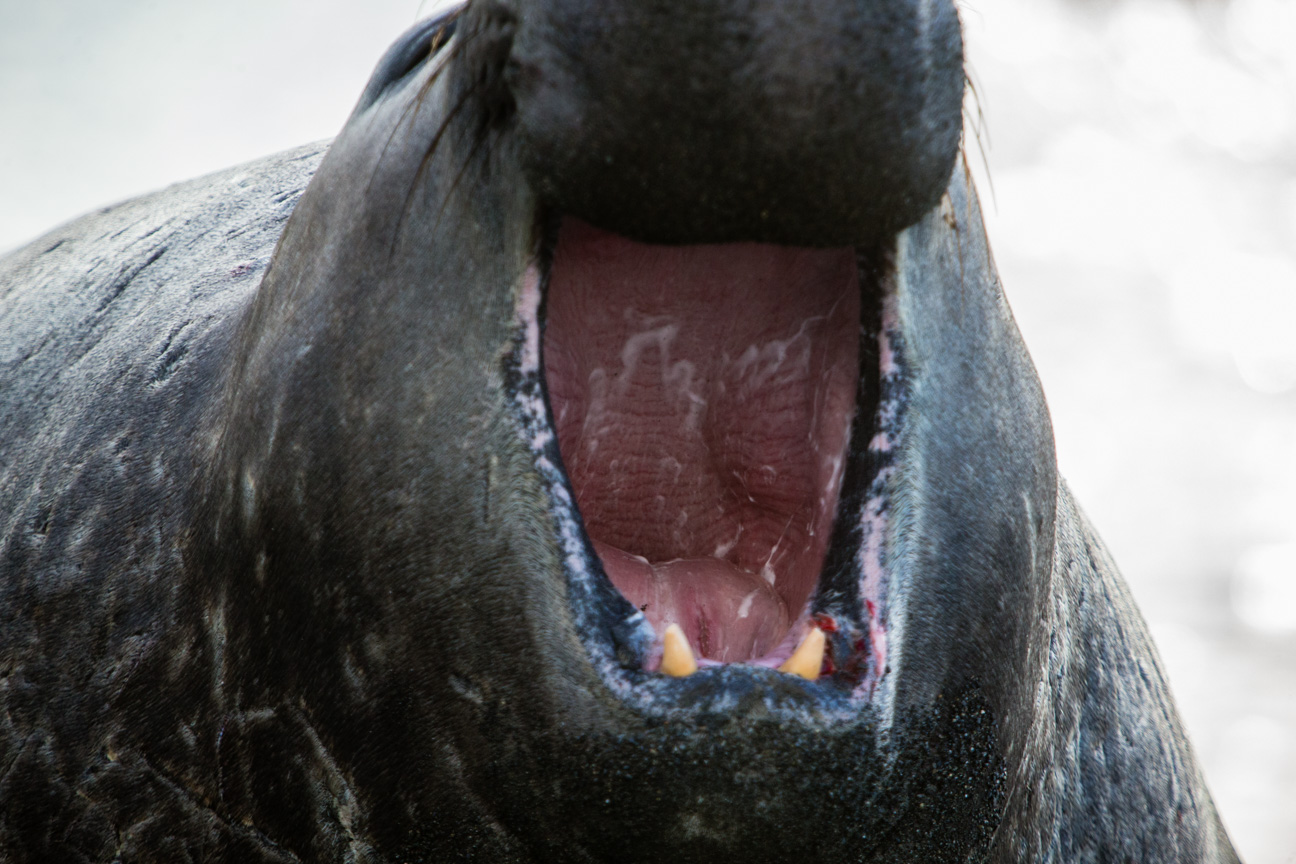
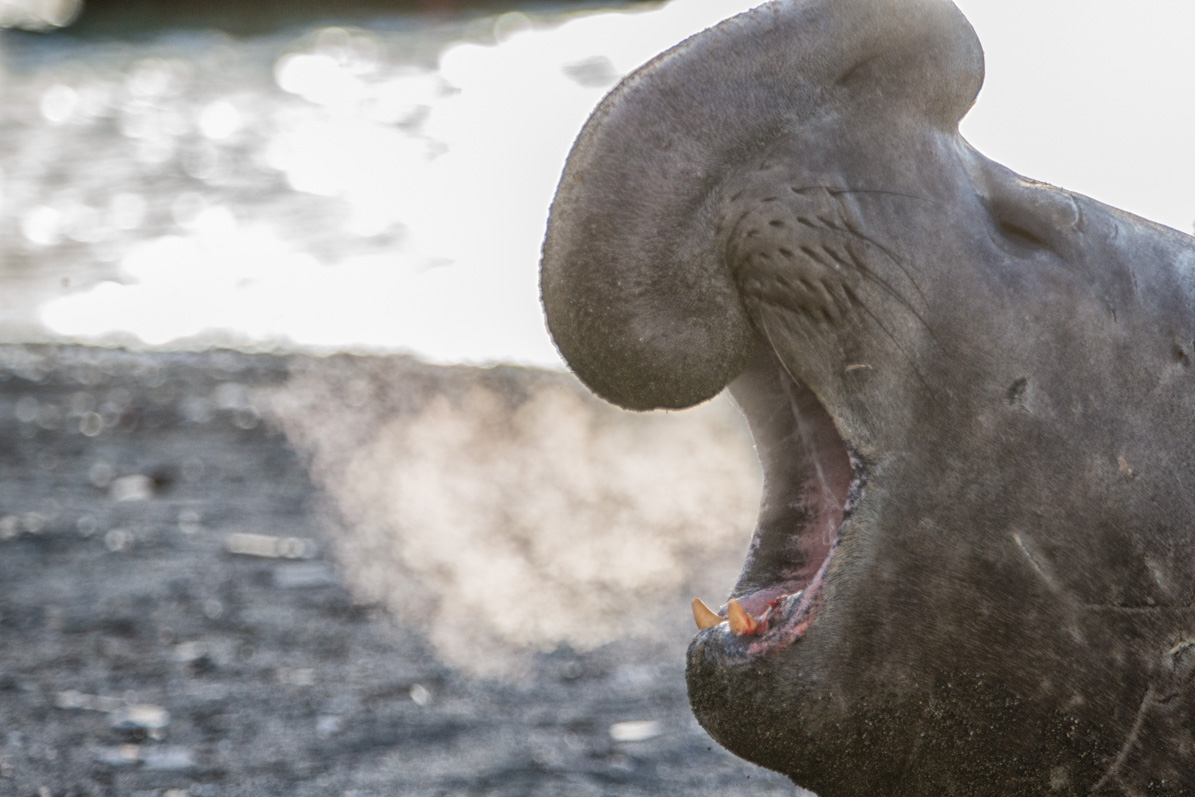
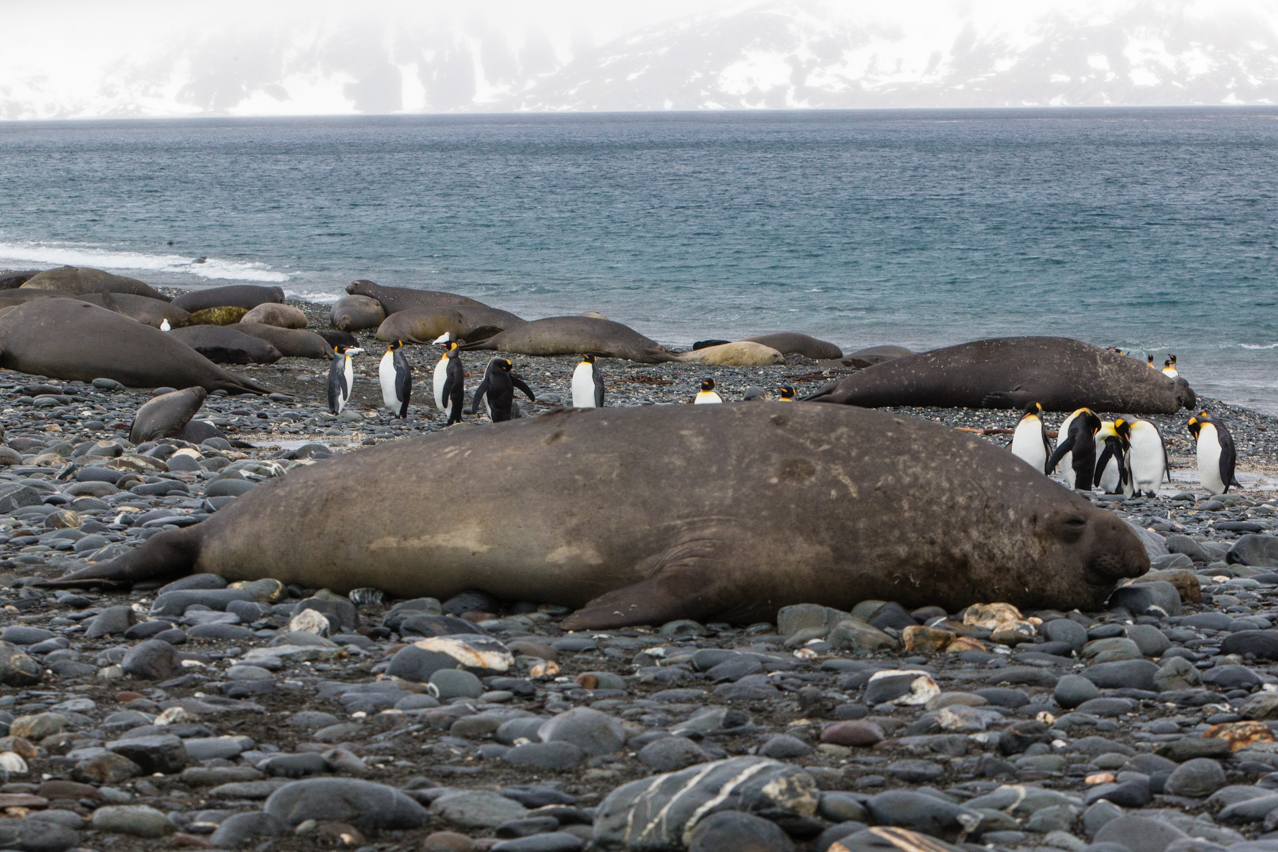
The other common wildlife on the beach are Antarctic fur seals and elephant seals.  Both will charge you if you get too close.  The fur seals are afraid of anything taller that they are so if they come at you you can simply stand up to them and swat them with a tripod leg or walking stick.  Elephant seals are another matter.  The bulls are huge.  They can be as large as 20′ long and weigh up to 5 tons.  If they are moving, you get out of the way.

Here are a few fur seals.

20161030-_g6t509120161030-_g6t509920161026-_g6t2555 20161026-_g6t2587

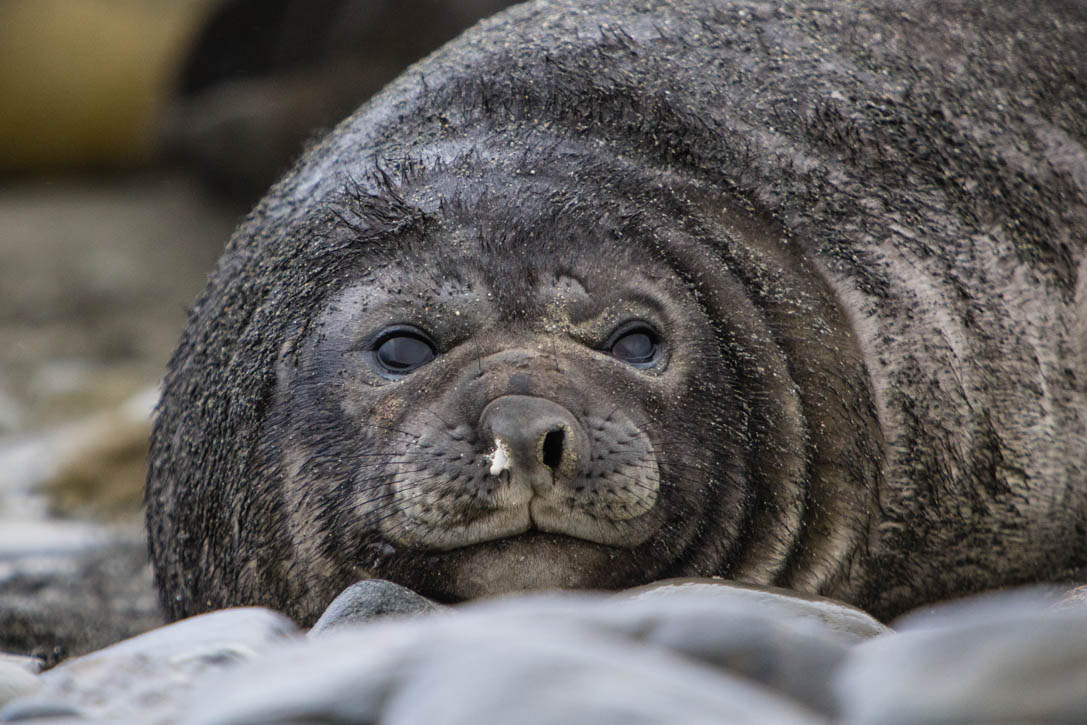
There are rules about how close you can approach fur seals, penguins and elephant seals.  There aren’t any rules how close they can approach you.  Penguins, in particular, are very curious and if you stand still many of them will walk right up to you.  Female elephant seals are smaller…about 10′ in length and only weigh up to one ton.

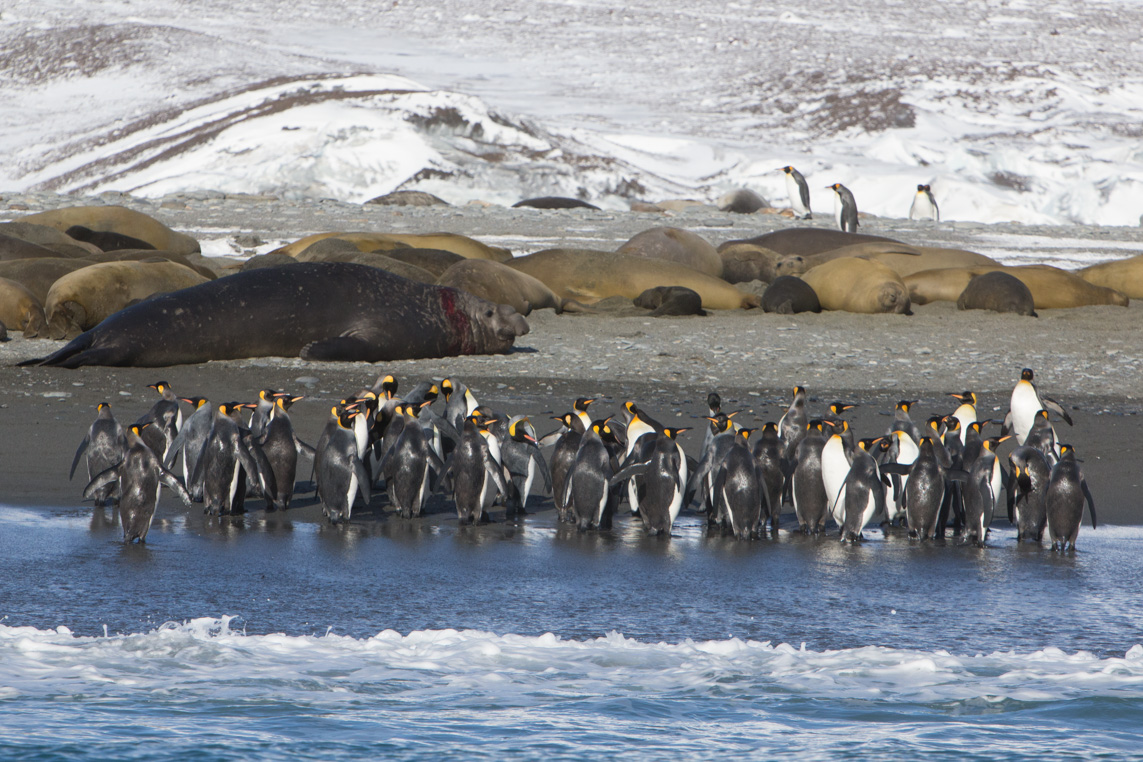
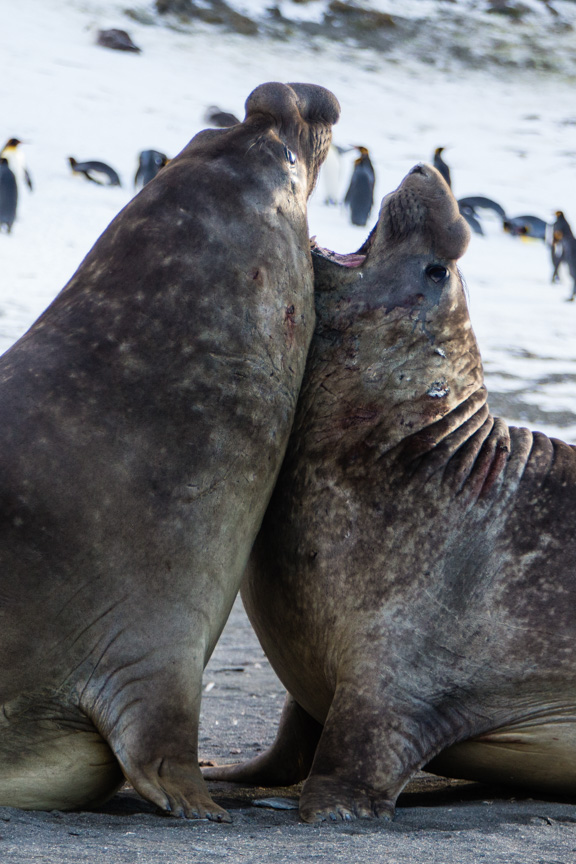
Here’s some of my elephant seal images.  The first one has blood on its side.  It had obviously been in a fight with another bull.

20161028-_g6t3924

20161028-_g6t374820161028-_g6t370220161028-_g6t3714v1v1-editv1v1-editv1v1-editv1v1-edit20161028-_g6t3717

20161026-_g6t2709

Here’s a couple of ladies elephant seals that reminded me of the recent presidential debates.

20161026-_g6t2603

Tomorrow we’re going to the birds.

Ron


Posted in South Georgia and the Falklands | Leave a comment

Sea Spirit, South Georgia and Shackleton

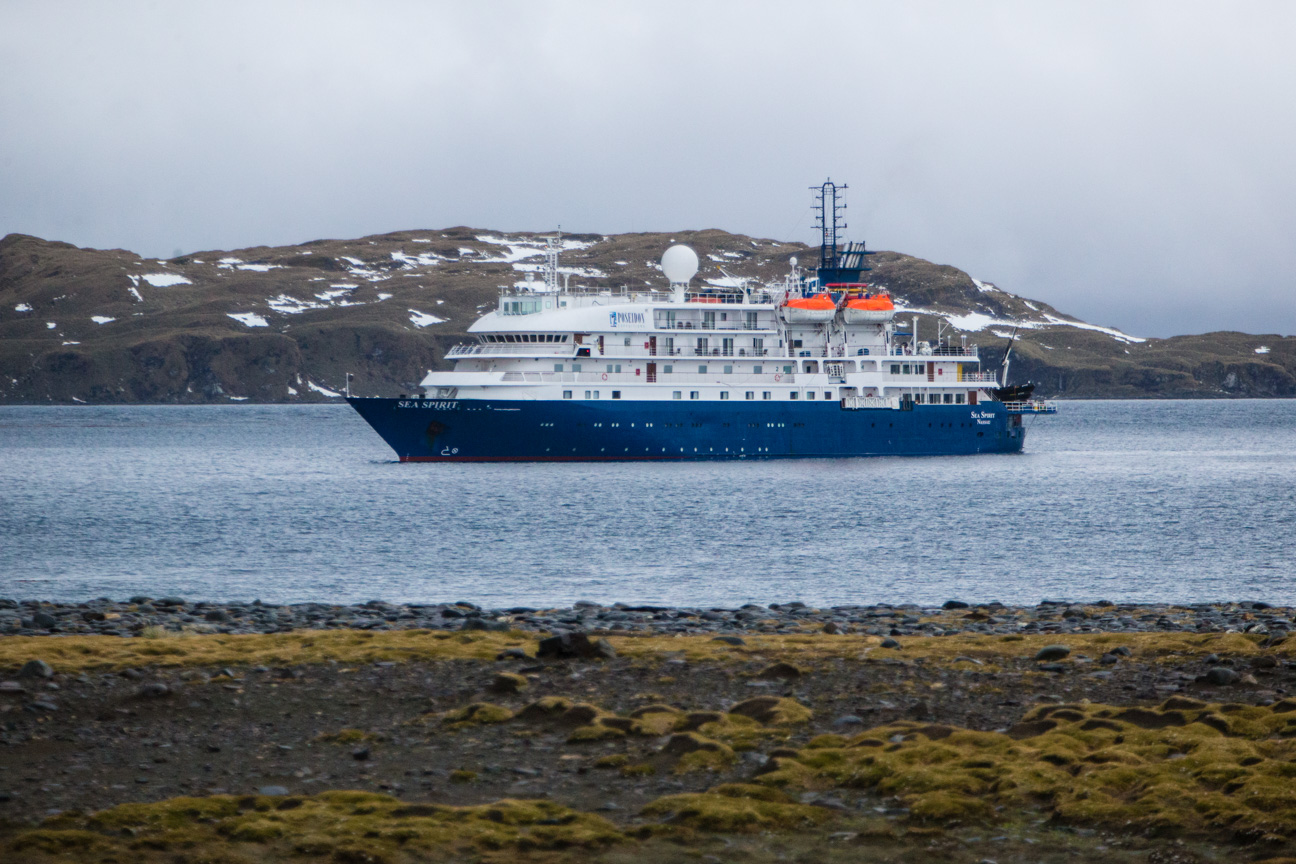
This was my home from Oct.22-Nov.6….It’s the M/V Sea Spirit.  It’s 297′ long and 50′ wide.  There were 100 passengers, 21 expedition staff from Cheeseman’s Ecology Tours and 68 crew members from the ship’s owner, Poseidon Expeditions.  It’s considered an all-suite luxury ship.
20161026-_g6t2642

Unlike Caribbean cruises, there was no shuffleboard, climbing walls, midnight buffets dancing penguins or a comic.  There was no swimming pool although there was a hot tub that may have been used by 10-15 people.  There was a bar and afternoon tea with appetizers was often served between 4-6:30. There was also a small library with mainly books on Antarctica and the southern ocean.  When dinner was over, most everyone hit the sack to be ready for the 4:30am wake up call many mornings.  We had a couple of late wake up calls at 5:30 while at a landing and the luxury of 8am while at sea.

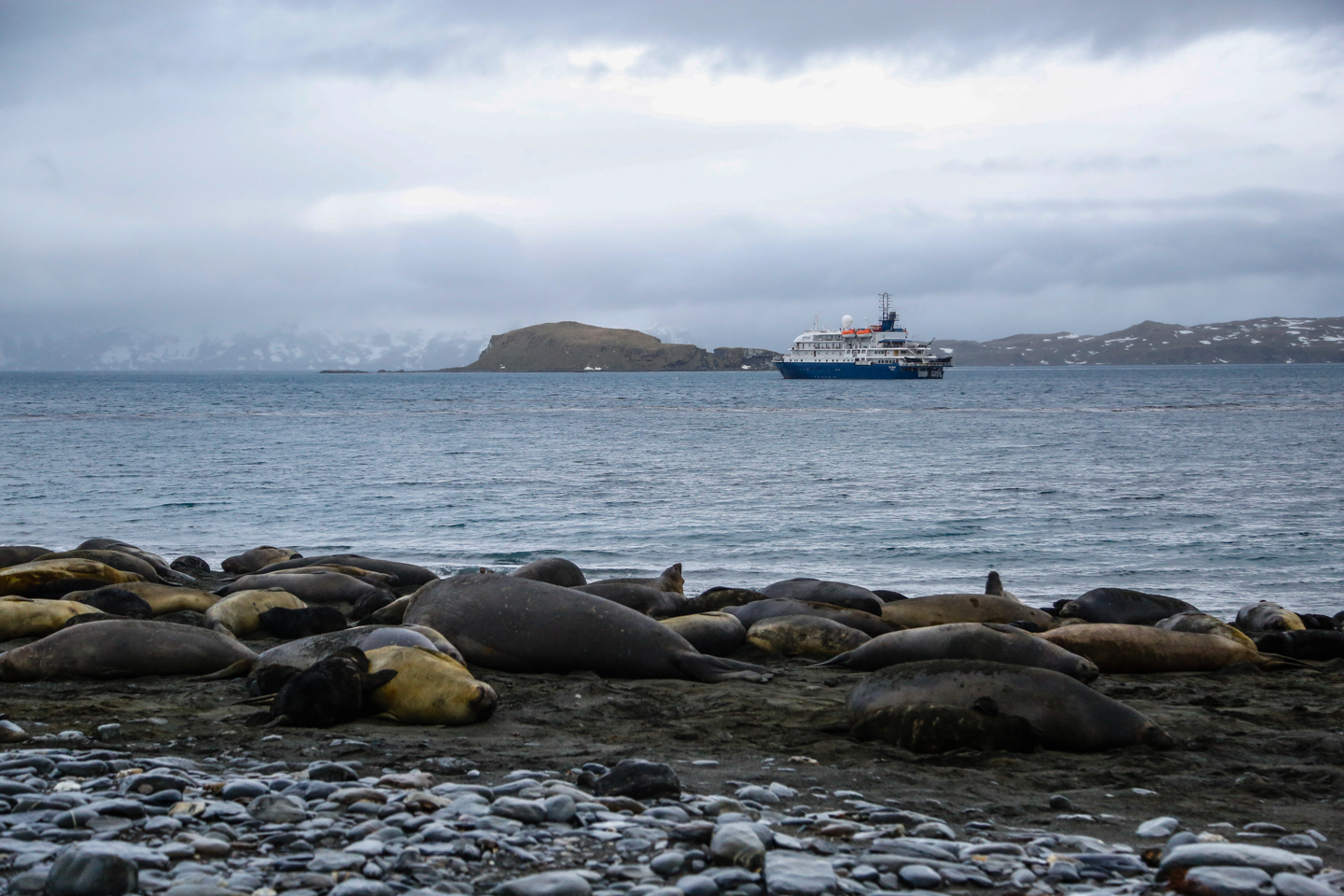
Here’s an image of the ship with elephant seals and fur seals on the beach.

20161026-_i3a8850

I shared a room with two others…Angiolo (pronounced Angelo) from San Francisco and David from New Zealand.  David had lost his wife to cancer in March and had decided to take this trip to clear his head.  Both were very great roommates.

There were passengers from Great Britain, Canada, New Zealand, Australia, Brazil, Switzerland, Hong Kong and, of course, most of us were from the US.

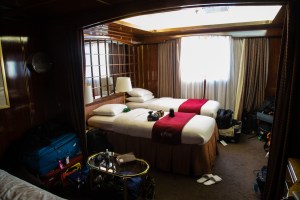
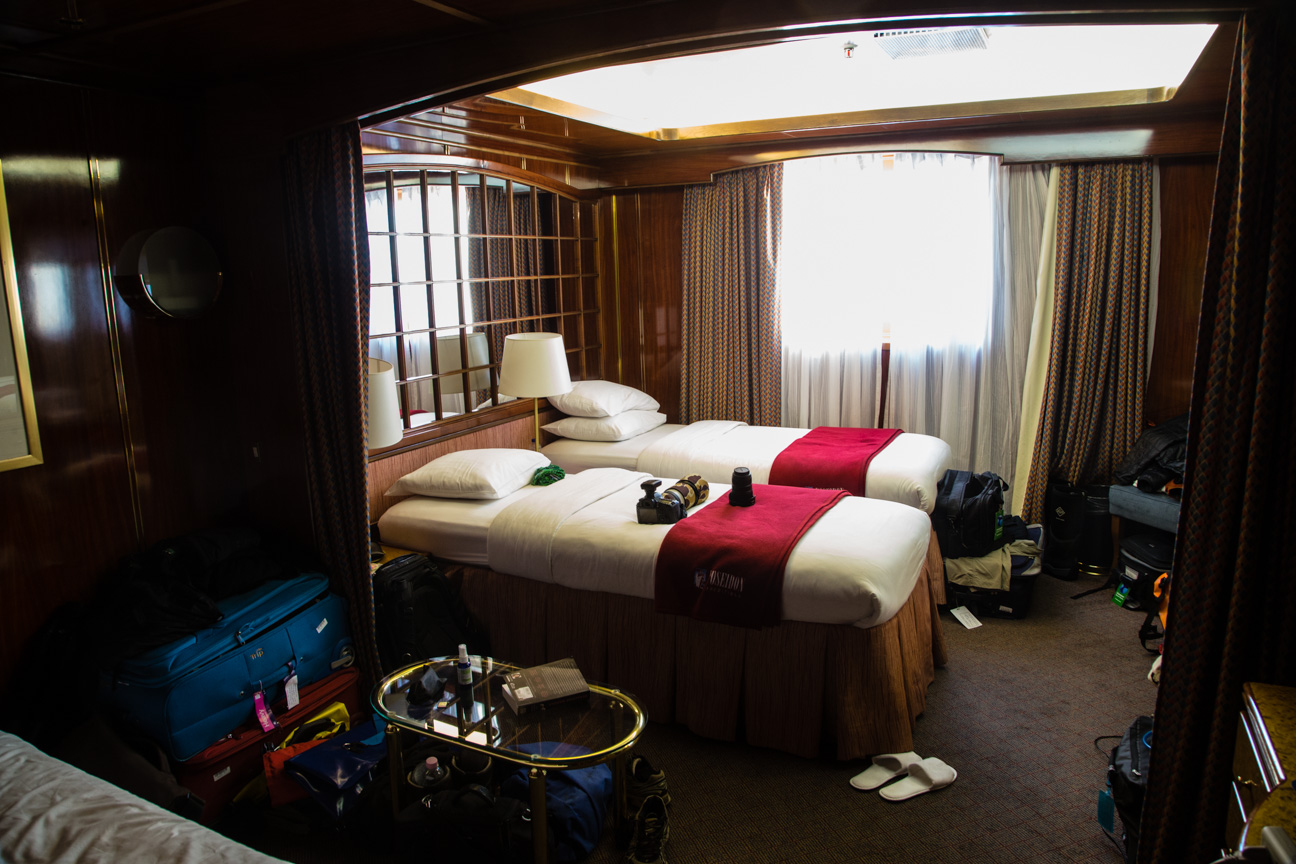
Our cabin contained two beds slightly narrower than a twin bed and a sofa sleeper.  We also had a large window.  At night, the ship was blacked out so that birds wouldn’t fly into the lighted windows.
20161101-_g6t5283

It was quite comfortable.  A twin room had the same twin bed setup and the sofa was setup as a sitting room.  There were a couple of cabins on the 5th and 6th deck with balconies.  We had a lounge set up for lectures with 6 large screen tv’s across the front and swivel chairs screwed to the floor.

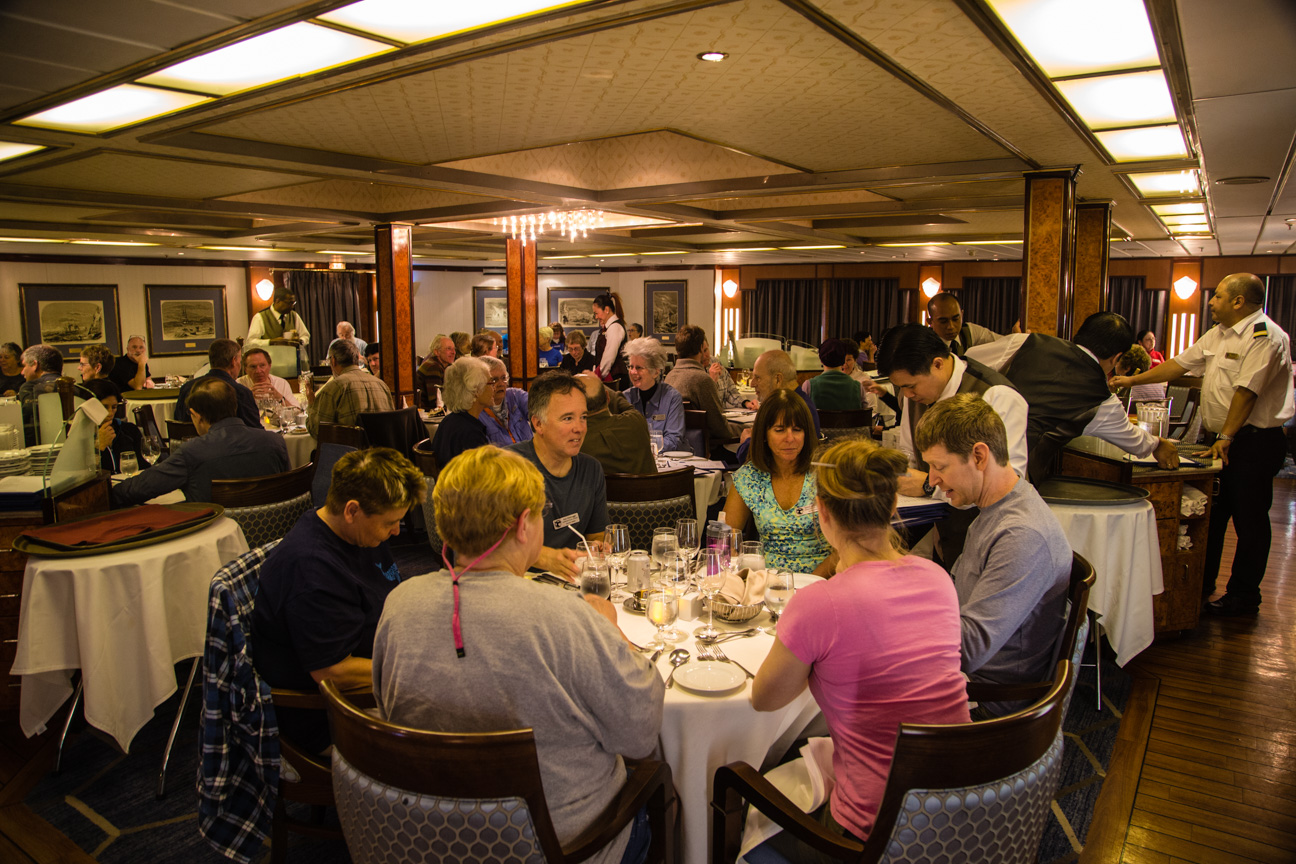
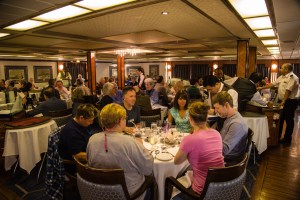
Meals were served in the dining room with seating for everyone at once.  Breakfast and lunch were buffet style and dinner was a sit down dinner.  Breakfast consisted of several dry cereals, bacon, scrambled eggs, ham, sausage, oatmeal, six different juice choices, assorted fruits, bread and sweet rolls, coffee and tea plus you could order the chef’s specials from the menu.  Lunch also offered multiple choices of main courses, sides, salads and two desserts.
20161101-_g6t5285

Dinner was ordered from a daily menu.  There was always four appetizers/salad choices, four main course choices including veggies and two desserts.  There were about 8 waiters at every meal.  The guy that served us breakfast at 5am also served us dinner at 8pm.  They became our friends.

Depending on our daily wake-up calls, which were often 4:30am – 5:30am, breakfast would be served from as early as 5am-6am to as late as 8am-9am when at sea.  Dinner was never earlier than 7pm and often 8pm after a full day on shore.  On two occasions we had packed lunches to take ashore while in the Falklands toward the end of our trip.  You always had the choice of returning to the ship for lunch and going back ashore if that worked for you.  The food was excellent with fish, steaks, lamb, pastas, pork and casseroles being offered at different times.  There was always a good assortment.

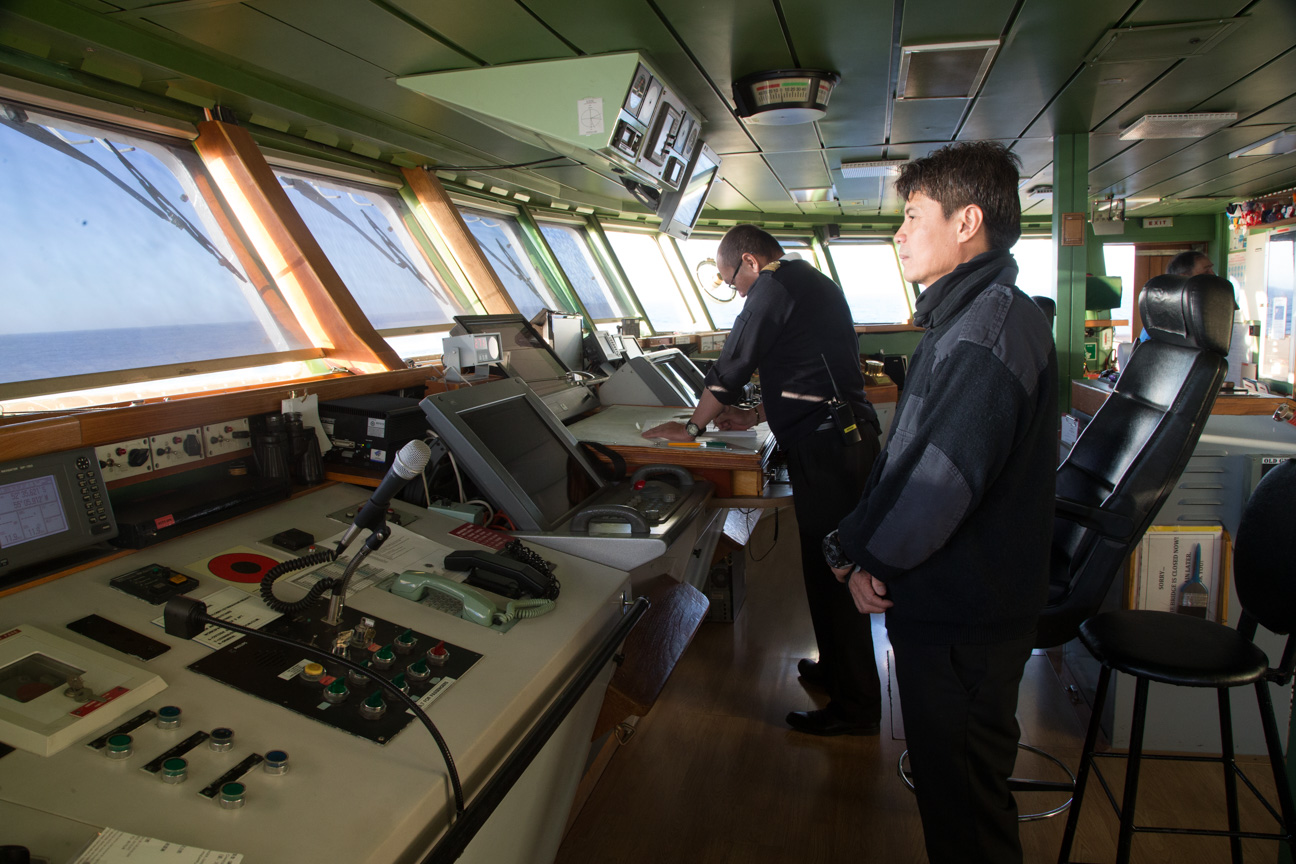
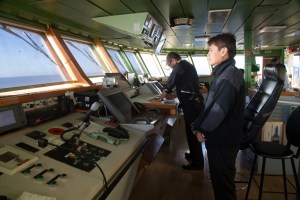
There was also an open bridge policy except when navigating into a tight situation.  There was a strict no smoking policy on the ship except on the bridge and there only the cigarette-addicted captain was allowed to smoke.
20161101-_g6t5279

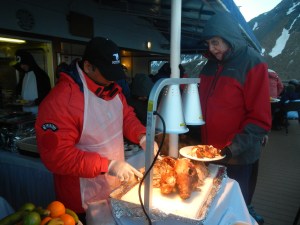
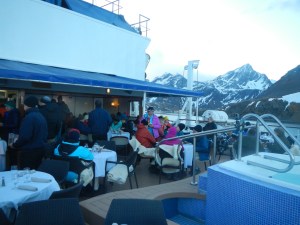
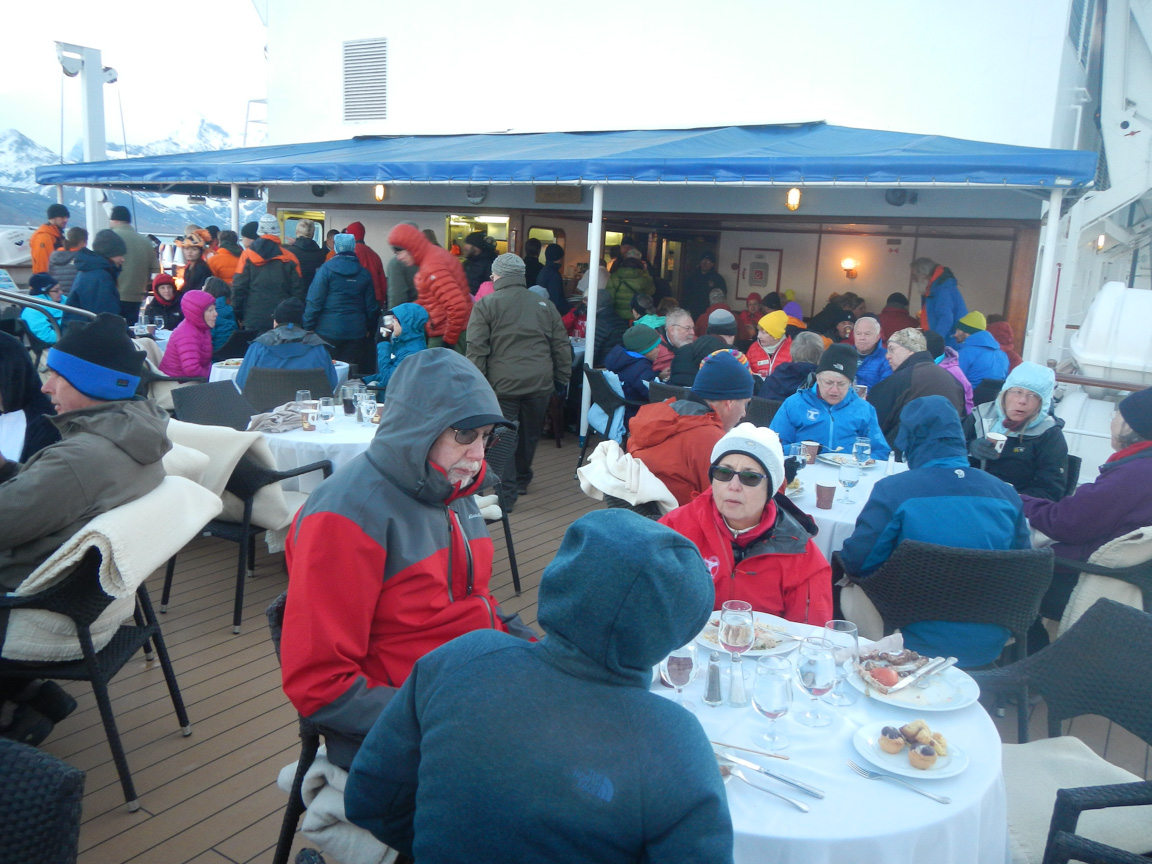
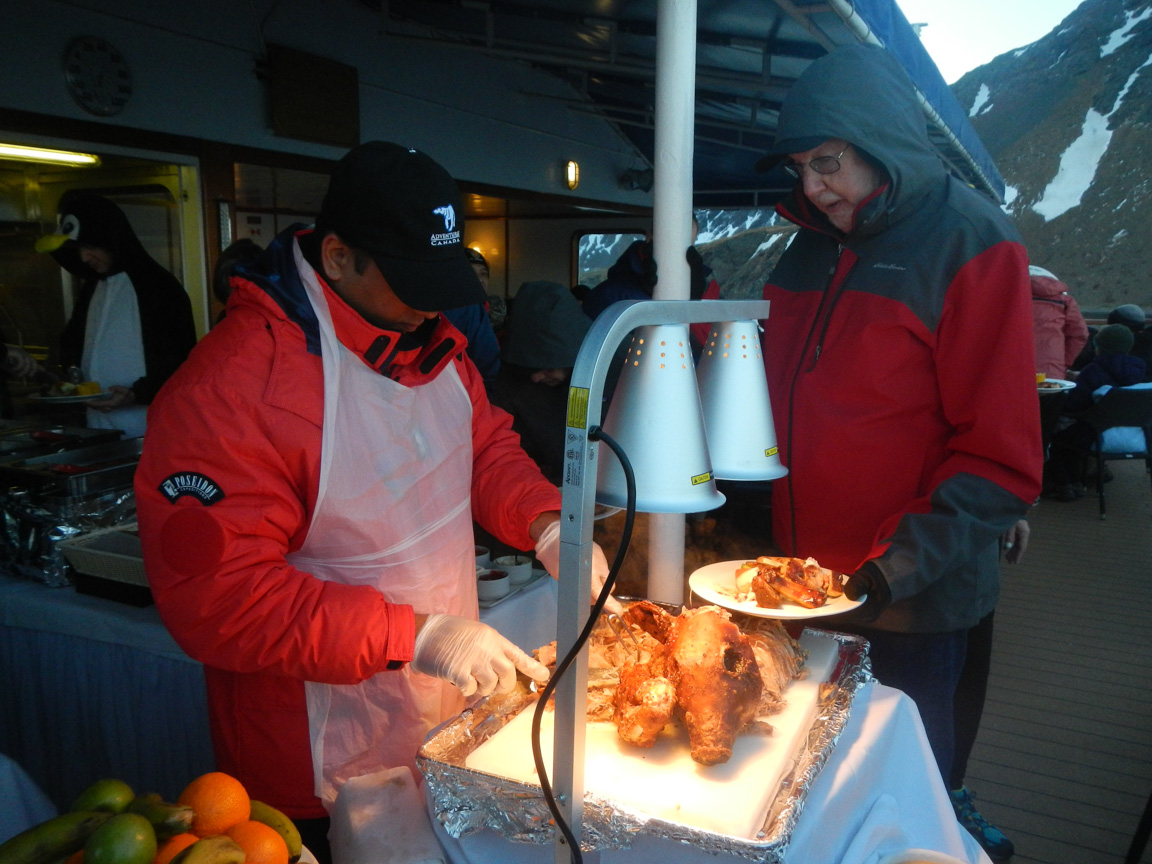
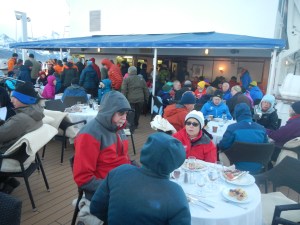
As I stated all meals where served in the dining room except for our BBQ night.  The food was good but it was served outdoors on the 5th deck.  As you can see, it was chilly….
20161027-dscn133420161027-dscn133320161027-dscn1331

Fun idea but not my favorite location.  I would have preferred to eat without having to wear gloves!  Everyone ate in a hurry.

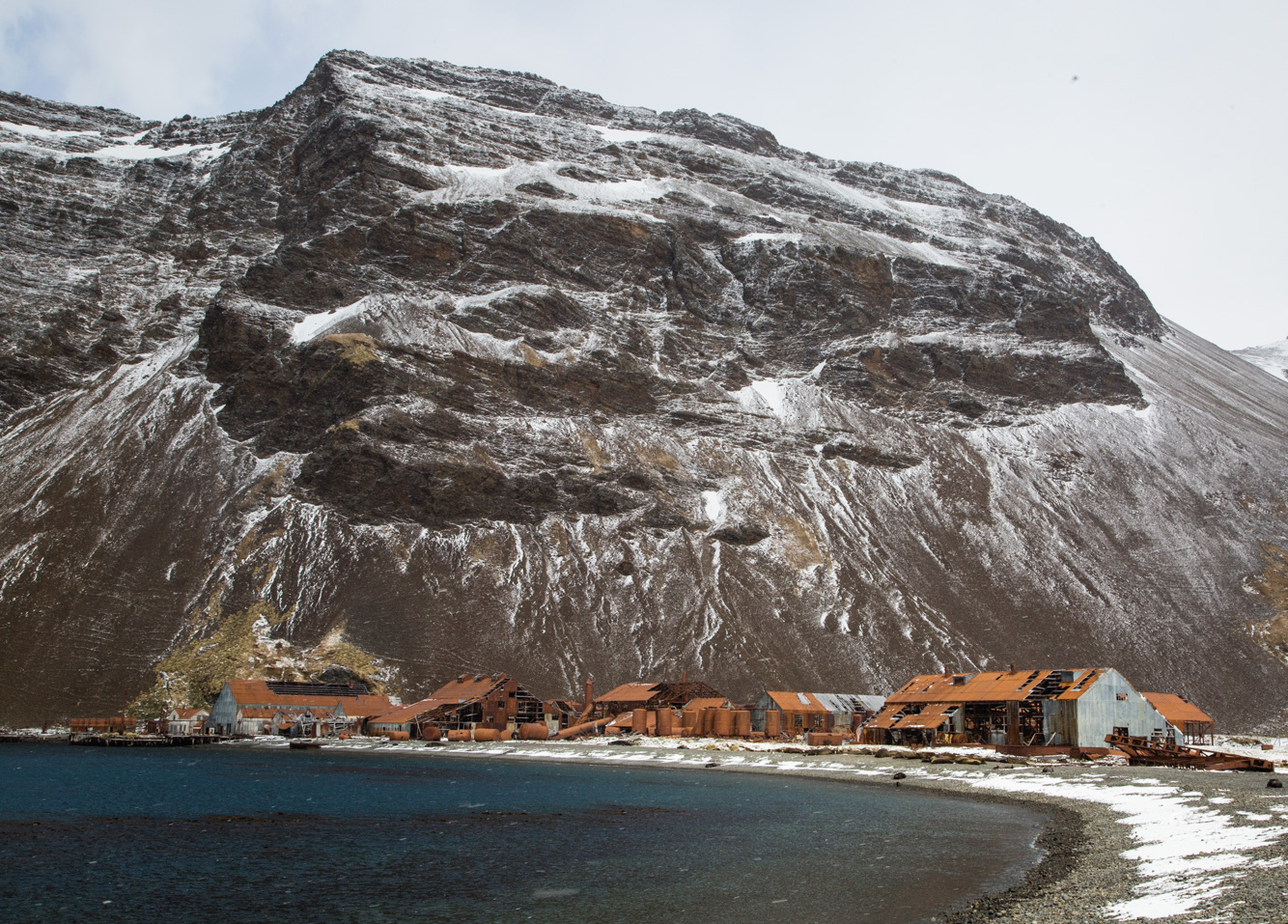
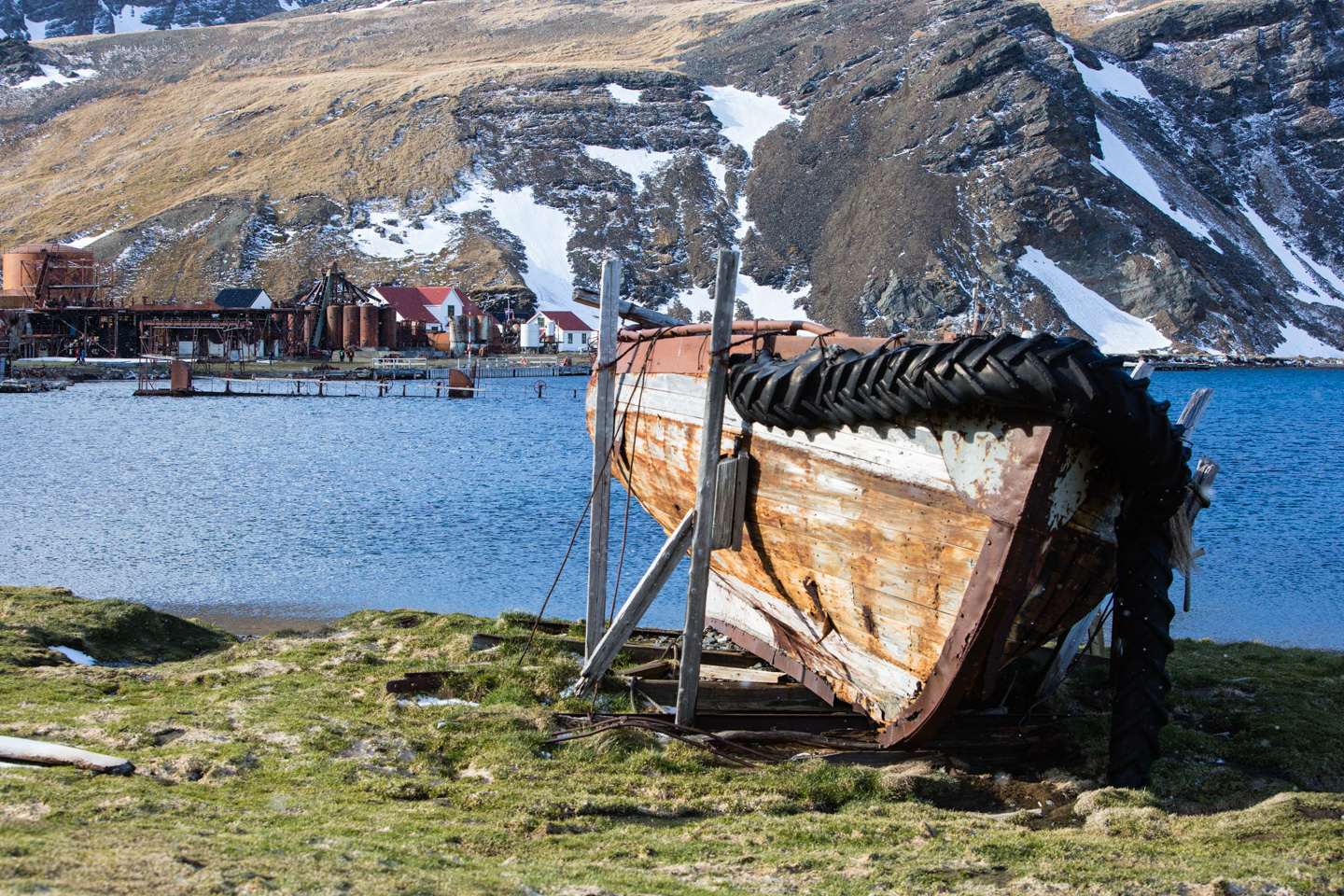
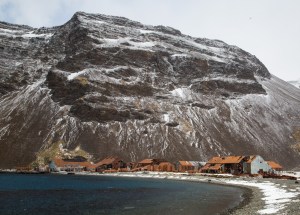
South Georgia Island was a whaling station.  In the mid-1800’s whaling was done on factory ships where whales where slaughtered, blubber melted and meat taken.  Eventually, the whaling moved ashore to whaling stations.  We visited two…Stromness…which had restricted access due to deteriorating buildings and Grytviken (grit-vic-un).  This is Stromness.
20161027-_i3a8871

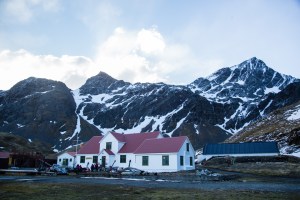
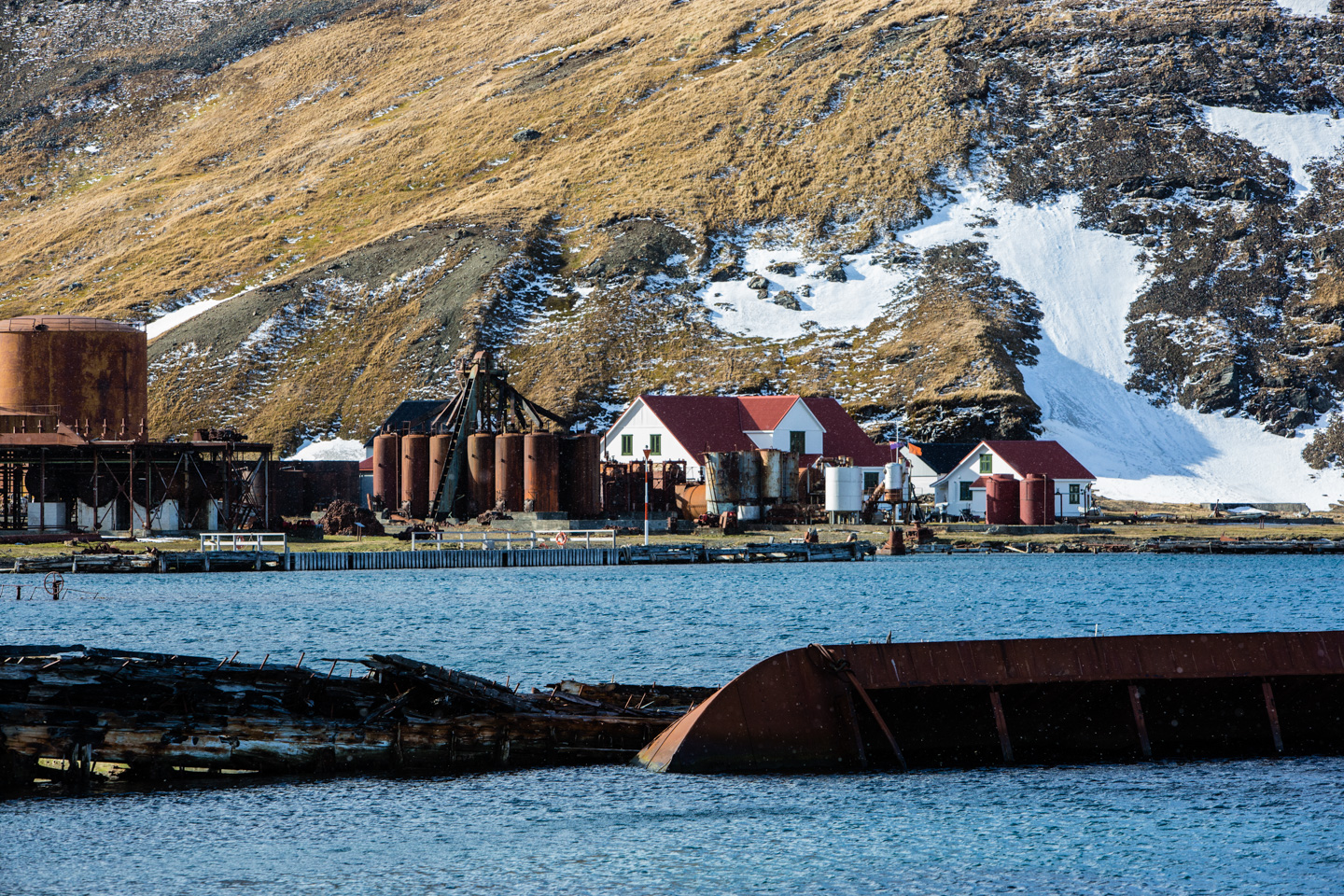
The main whaling station is Grytviken.  This is the only active location in South Georgia.   There is a British research station here.   There are no permanent residents.  There are three government officials at the research station including the lady who runs the library and her husband who is the customs officer.  South Georgia is a administrative protectorate, I think is the term, of Great Britain.  There is a governor on the Falklands who overseas South Georgia.  The research station has 7 people there during the winter and it swells to about 30 during the summer months.  We were the first ship of the season.  During their summer many other ships come here.

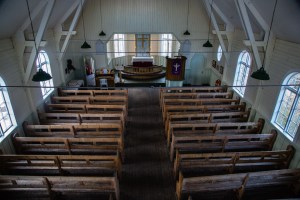
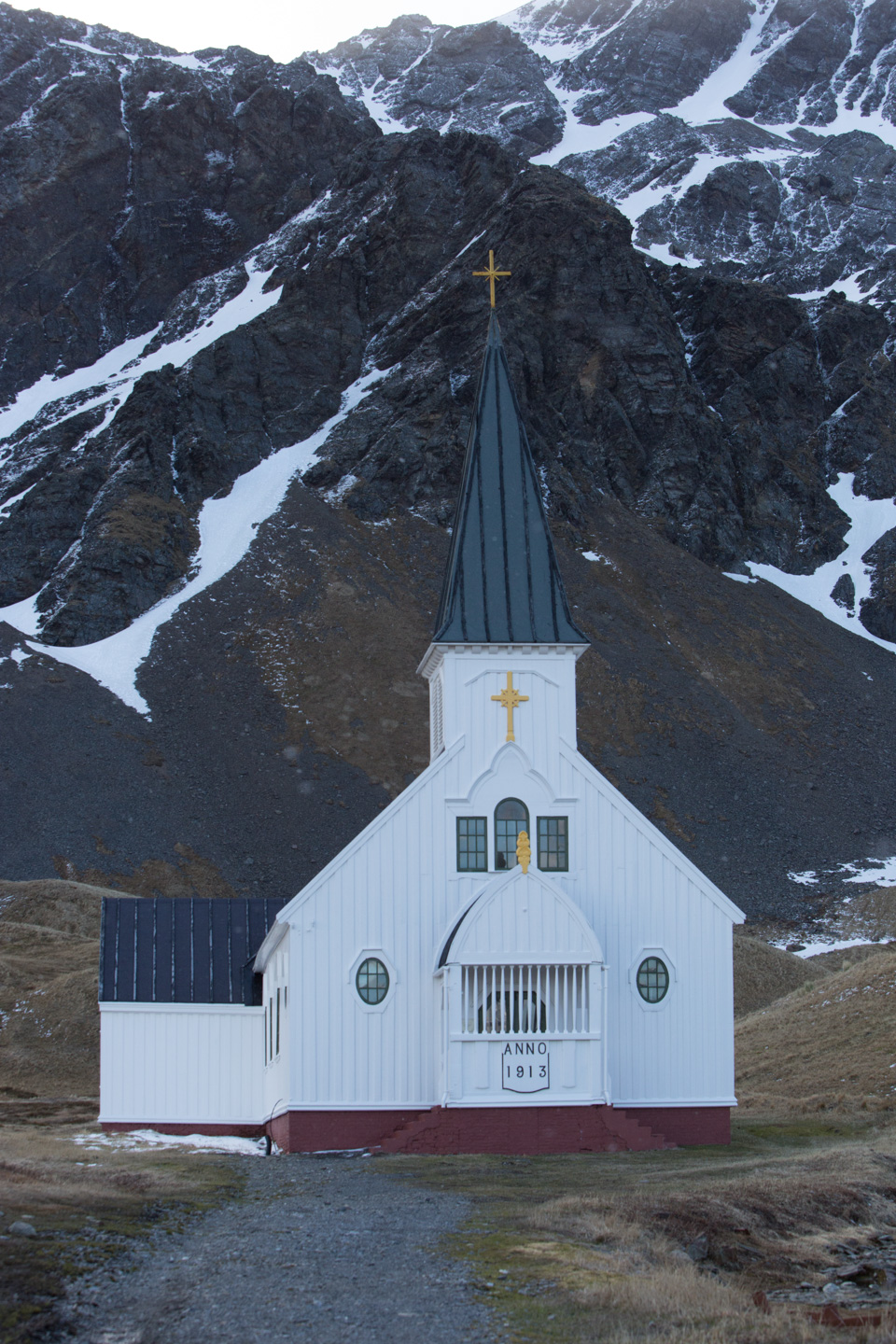
Grytviken has a church….
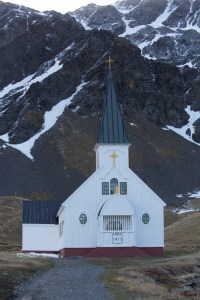
20161027-_i3a896020161027-_i3a8967

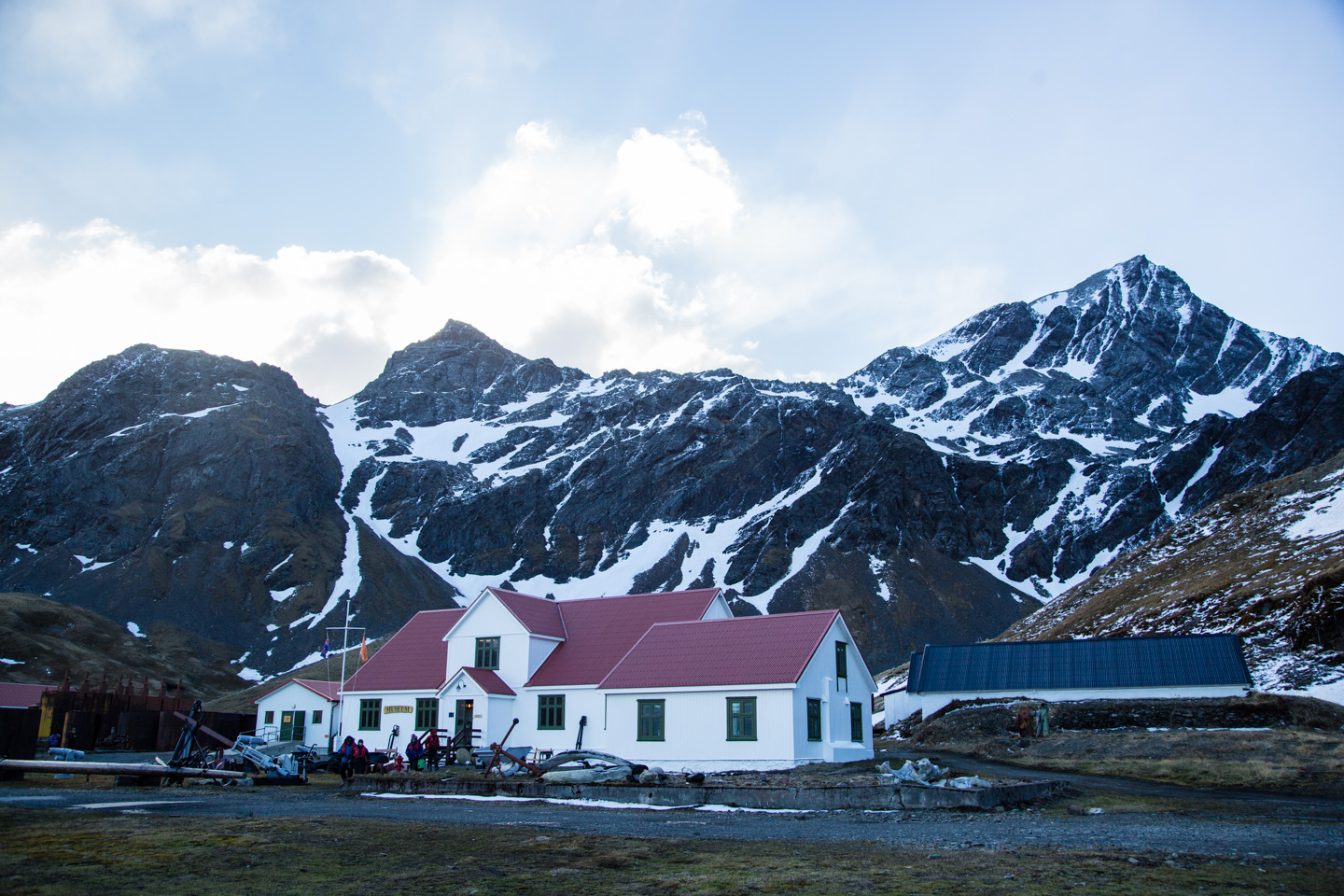
and a museum/gift store.

20161027-_i3a9014

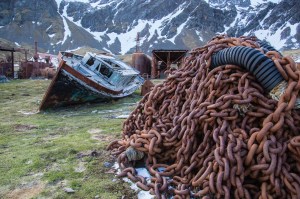
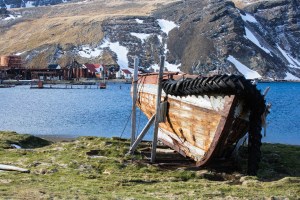
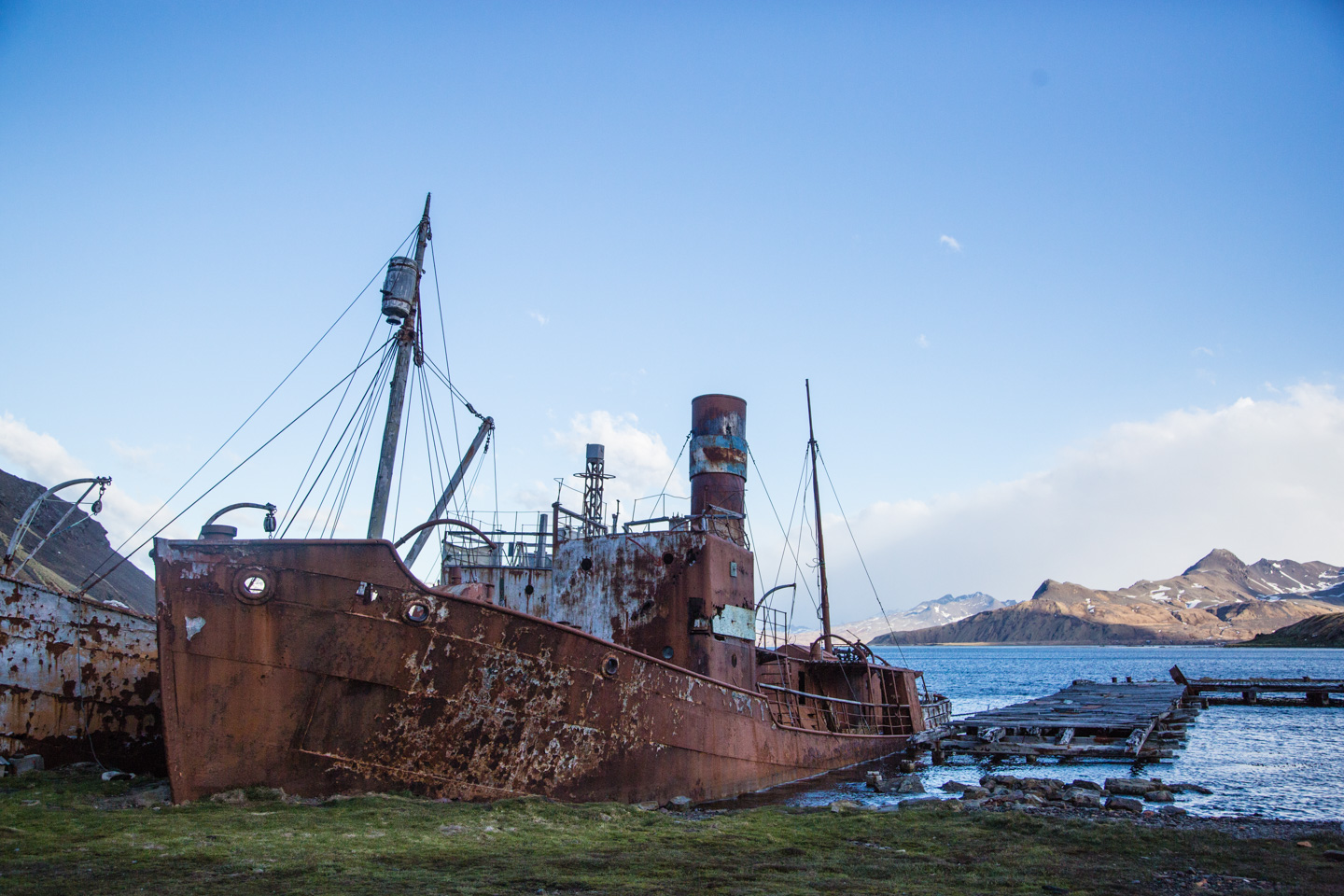
There are also some rusting whalers and tanks used for storing blubber.

20161027-_i3a900920161027-_i3a897820161027-_i3a894020161027-_i3a8936

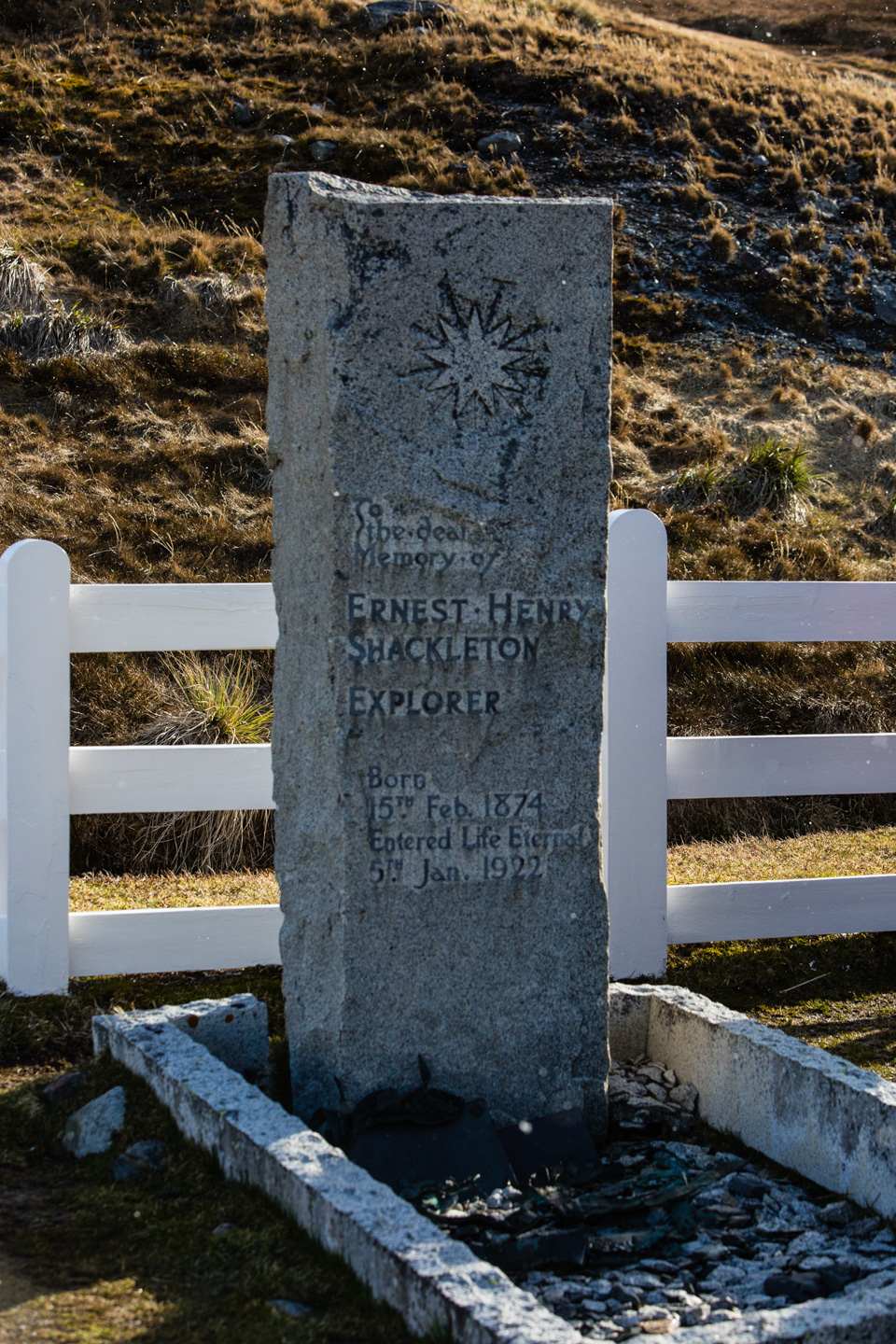
This is also were the British explorer, Sir Ernest Shackleton, and two of his crew are buried.

Shackleton and his crew of 27 departed Great Britain in 1914 on a specially-built wooded boat headed for Antarctica.  Their plans were to make a land crossing of the continent.  They became locked in ice in the Weddell Sea and their boat, the Endurance, was eventually crushed.

After months locked in the ice the men got onto an ice flow with three wooded lifeboats and floated for months until spring when the ice started to melt and they were forced to take to their boats.  Eventually, after more months they made it to Elephant Island.  Two of the boats were turned over and became shelters.

Again, months went by and Shackleton and five of his crew departed to look for rescuers.  They sailed to South Georgia Island but landed on the opposite side of the island from where the whaling stations were located.  Shackleton and two others decided to hike over the mountains and left the other three with the boat.  They eventually descended into Stromness much to the surprise of the whalers there.  They organized a rescue party to pick up the three left behind on the other side of the island and to go back for the others still on Elephant Island about 700 miles away.  It took four months and four attempts before he able to rescue them.  All of his 27 crew members survived.  They were rescued in 1916 two years after leaving Great Britain.  They had been living on seals, sea birds and anything else they could find.

Shackleton returned to Great Britain and was knighted.  He then set about organizing another trip to the southern ocean.  He died of a heart attack on board the ship in 1922 on his way back to Antarctica.  His wife wanted him buried on South Georgia.  Later, two other shipmates were buried beside him.

20161027-_i3a8930

When our group landed at Grytviken we gathered for a toast and group picture at Shackleton’s grave.

This brief description doesn’t do the story justice.  You can read about it in the book, Endurance, and supplied to us by our tour company prior to the trip.  It is a very interesting story.  The author is Alfred Lansing.  I believe the original book was published in 1986 but the copy I got was published in 2014.

Whaling continued at South Georgia until 1965.

Now, here’s a taste of what’s to come.  This is 9-image panorama I shot from a zodiac at St. Andrews Bay.  Please click on it for a larger, expanded view.
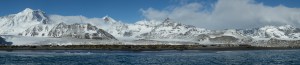
saintandrewspano

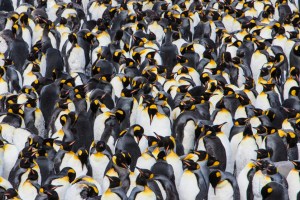
There are hundreds of thousands of penguins.  These are king penguins.
20161028-_g6t4368

20161028-_g6t4351

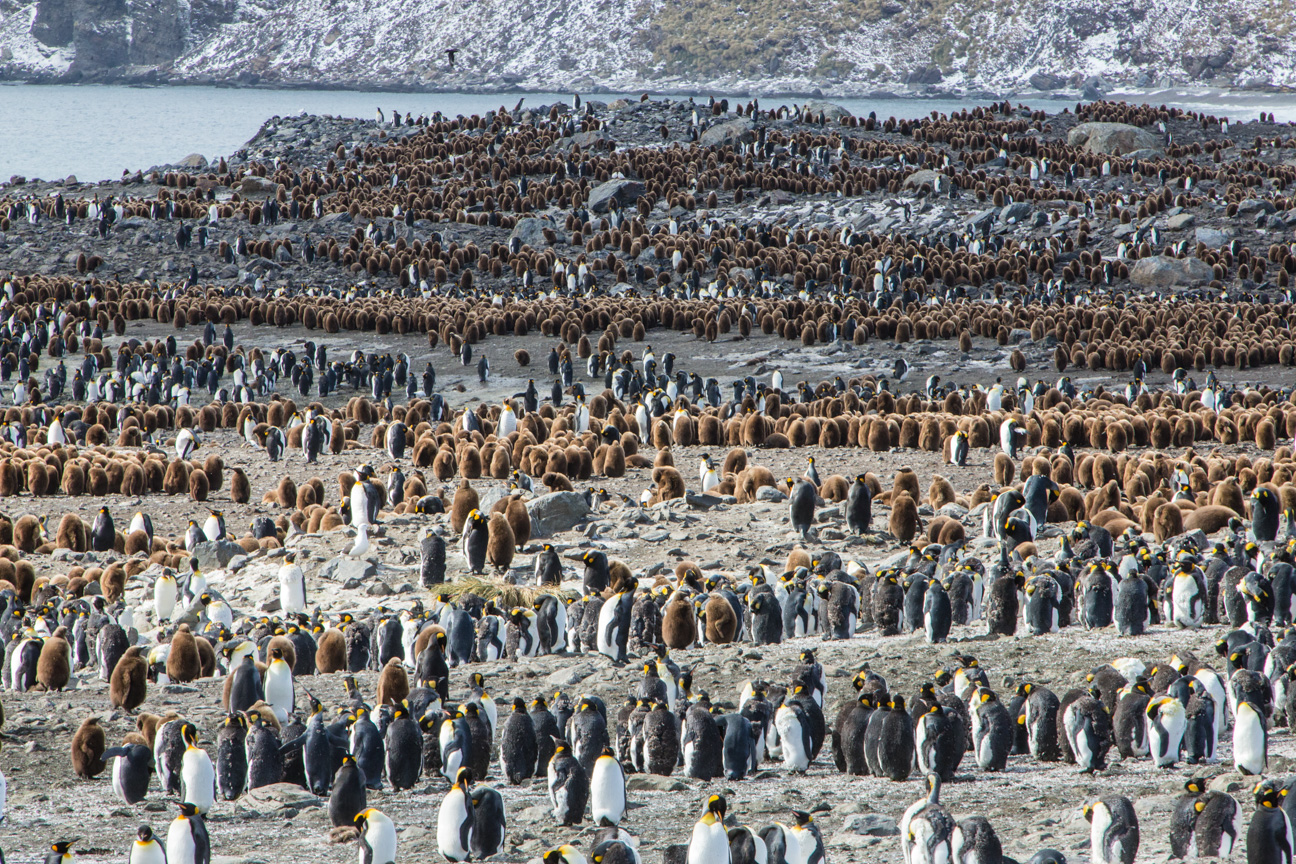
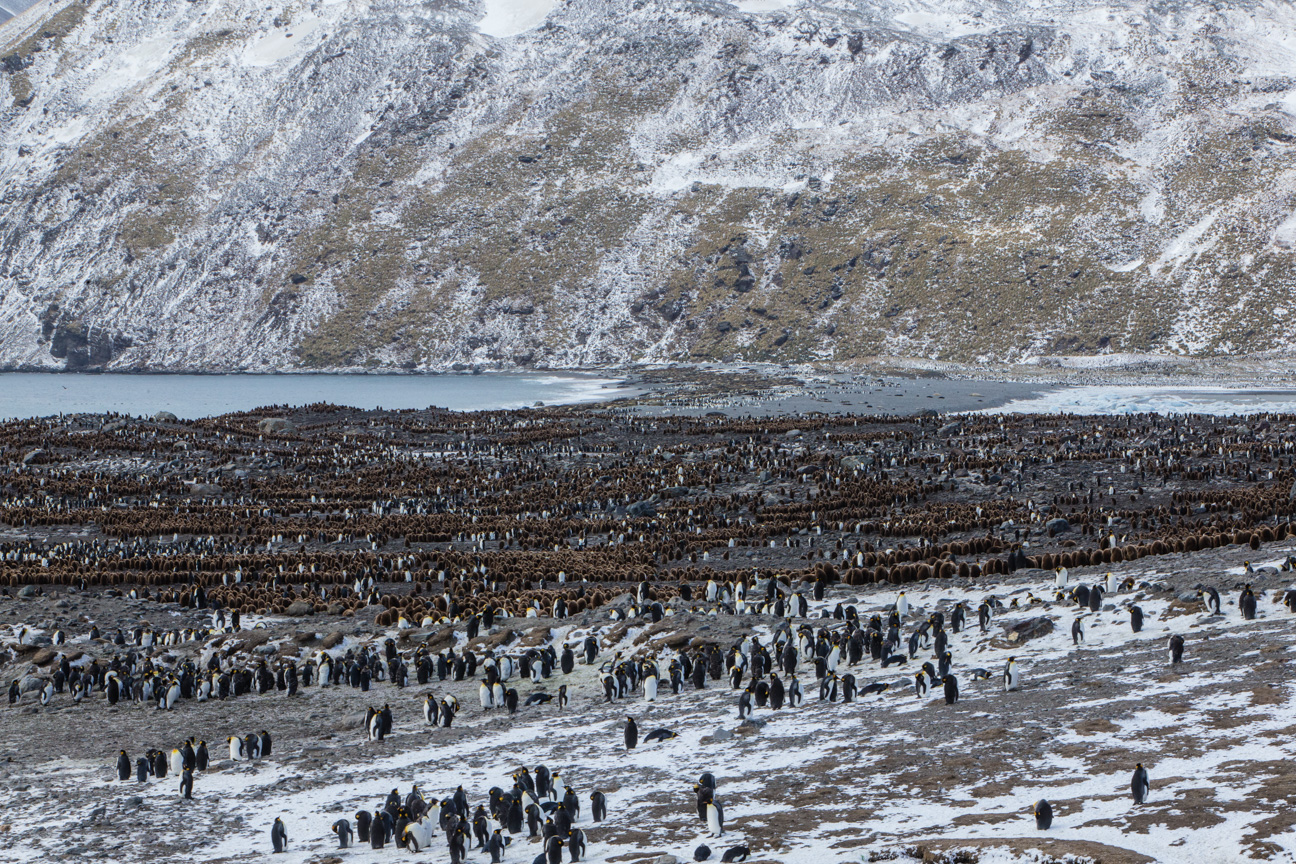
This is a view from a ridge of king penguins and their young.  The brown groups are the youngsters, called oakum boys.  In a couple of months, there won’t be any space between any of these birds….yes, penguins are birds.  The area will be wall to wall penguins.

More to come!

Ron


Posted in South Georgia and the Falklands | 1 Comment

South Georgia – The Trip Begins

I departed Kansas City on Oct. 20.  After an overnight flight, I arrived in Santiago, Chile at 6:30am the next morning ..Friday morning.  After clearing Immigration and Customs, it was a short walk across the street to our hotel.  I had met a couple, Paul and Anita DePratt, from California who was on my flight from Dallas.  Others were arriving about the same time. Since our rooms weren’t ready at that early hour we all headed to the dining room for the breakfast buffet.
After lunch, our group took a city tour of Santiago that found several places closed due to a municipal employees strike.  It was a chance to meet some of my fellow travelers before the late afternoon welcoming reception.  One of our group was the victim of a pickpocket that lifted his wallet with all his money, credit cards, etc.   Our tour organizer,  Doug Cheeseman, agreed to cover his expenses until he gets home to Australia.  Ironically, we were in a cathedral in downtown Santiago when his pocket was picked.

Saturday morning it was a 7am flight to Port Stanley in the Falklands.  It was 46 degrees with a wind gusting to 25 knots.  I don’t know what the wind chill was but it seemed cold.  After clearing Customs and Immigration we boarded two buses for the dock to board the Sea Spirit.  Our home for the next 19 days.

The Falklands are an interesting group of islands.  The island belongs to Great Britain but in 1982, Argentina laid claim to them.  That brought a very short war between the two countries that saw Great Britain winning.  There are still large areas that are closed to tourists because there are still a lot of unexploded land mines around.  They are working to clear them but it isn’t done yet. (I guess they haven’t found enough people who want to walk through the fields stomping the ground. 🙂 )  We got enough time in town to hit one gift shop near the dock.  We were supposed to depart after dinner for South Georgia but high winds and waves predicted to reach 50 knots and 25-35 feet waves delayed our departure until Sunday morning at 8am.  We’ll be back to the Falklands for three days at the end of our trip.

Our Sunday started, as did every day, with a fantastic buffet breakfast.  The winds and waves were still pretty good.  They got worse as we entered the Drake Passage.  During the morning, we had several mandatory lecture series in one of the lounges on biosecurity (more on this later) and our behavior around the wildlife and an hour long required movie on South Georgia history.  The night before I put on a seasickness patch just in case.  After the lectures and movie, we all headed to the dining room for lunch.  I made it through the lunch buffet but I didn’t get to take a bite before I was headed out of the room.  I picked up a barf bag (pardon the reference) and made it to the first landing heading upstairs to my cabin before making use of it.  I felt a pair of hands on my hips from behind me.  It was our lady doctor, Dr. Lyn, who apparently saw me leave the dining room.  She assisted me the rest of the way up the stairs.  She pointed out the nearest lavatory.  When I exited the lavatory, she asked me if I’d like a pill.  I told her I had put on a patch but she repeated the question….Would you like a pill?  The answer was yes.  I took the pill and a one hour nap and was fine for the rest of the trip.  Unfortunately, I wasn’t alone.  Dinner wasn’t well attended Sunday evening.

Monday was another day at sea along with more lectures on South Georgia history, wildlife, and natural history.  There are 18 expedition staff on board and 68 members of the crew along with 100 passengers. I have two roommates….Angiolo from San Francisco and David from New Zealand.   Both are great guys and we got along very well.

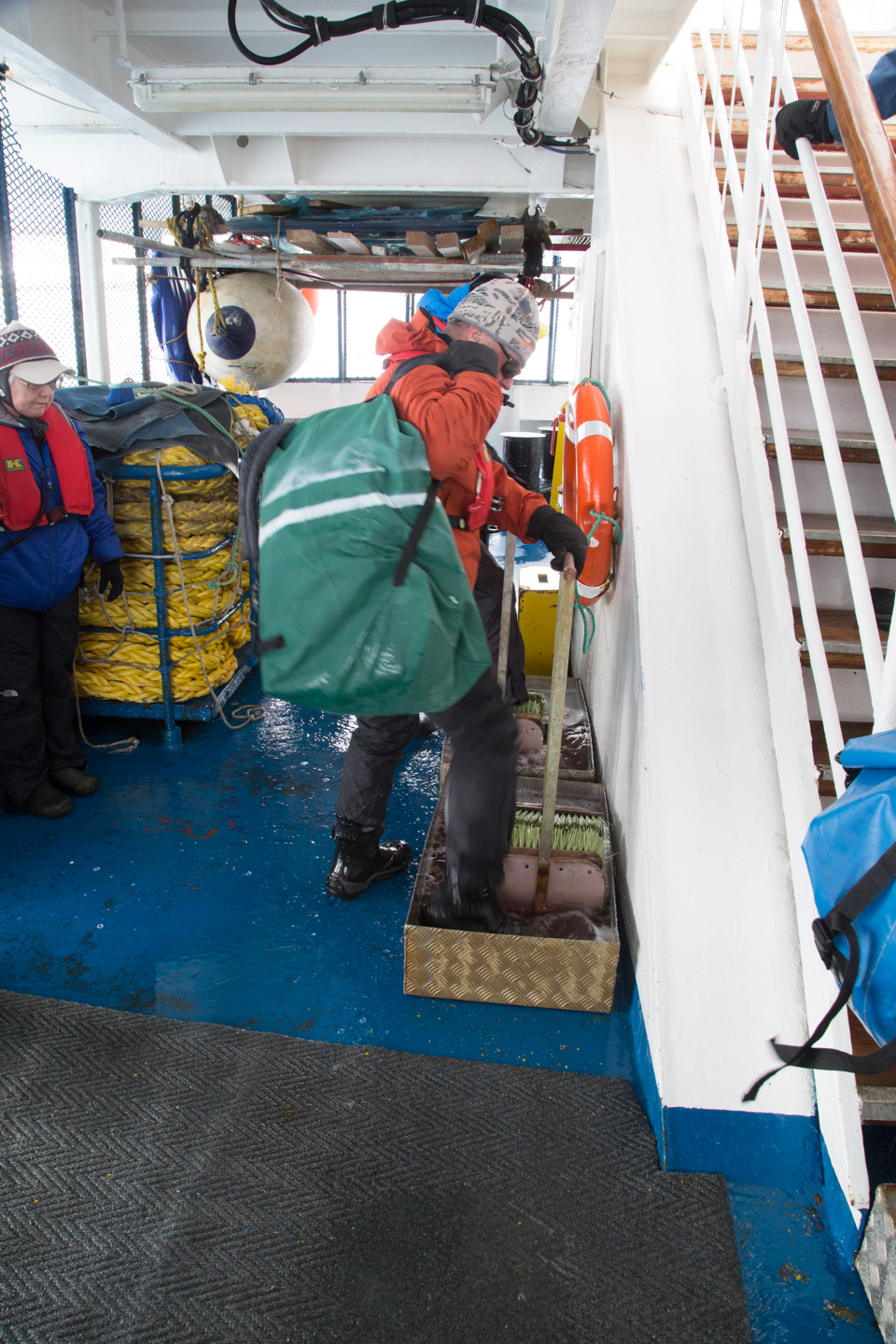
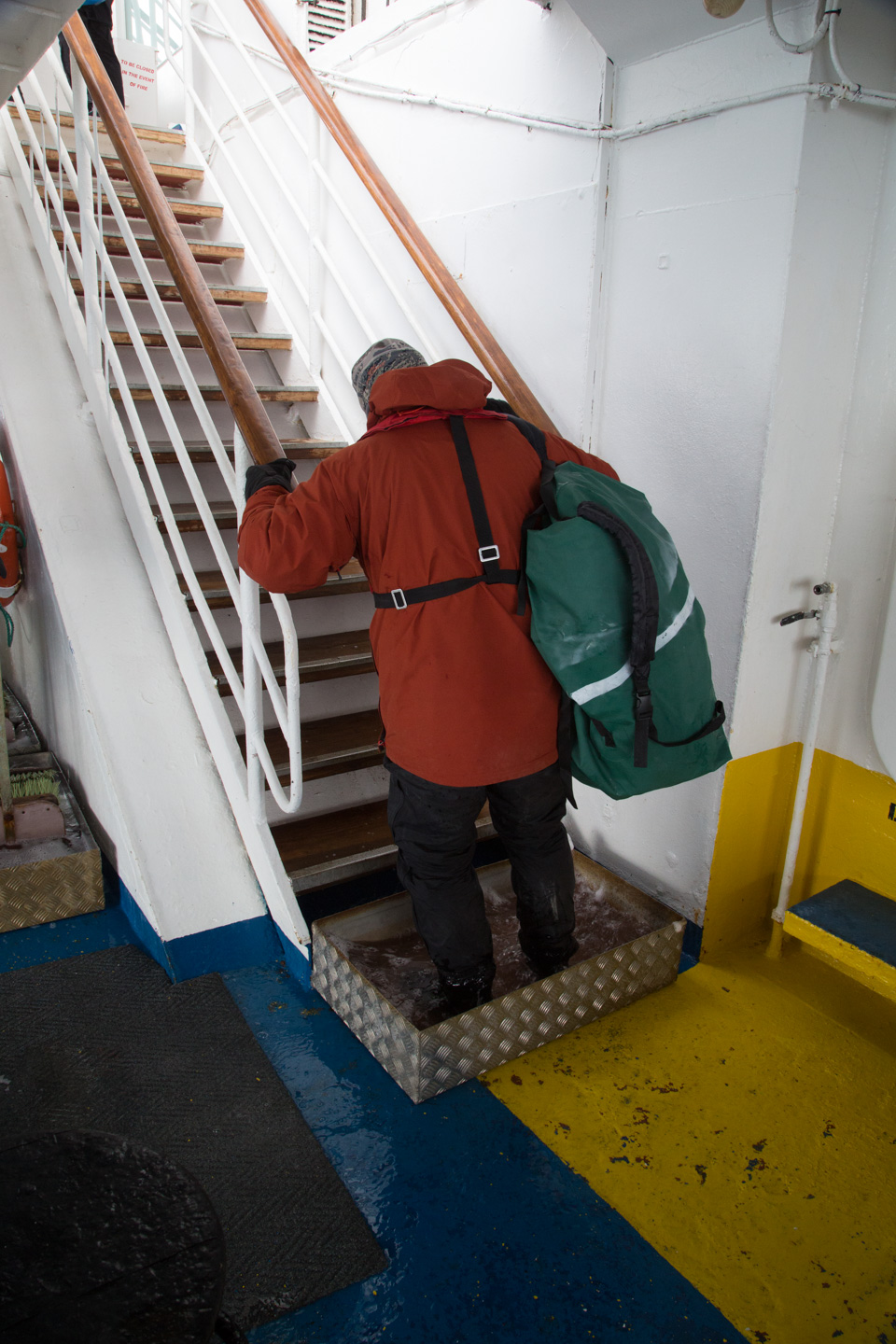
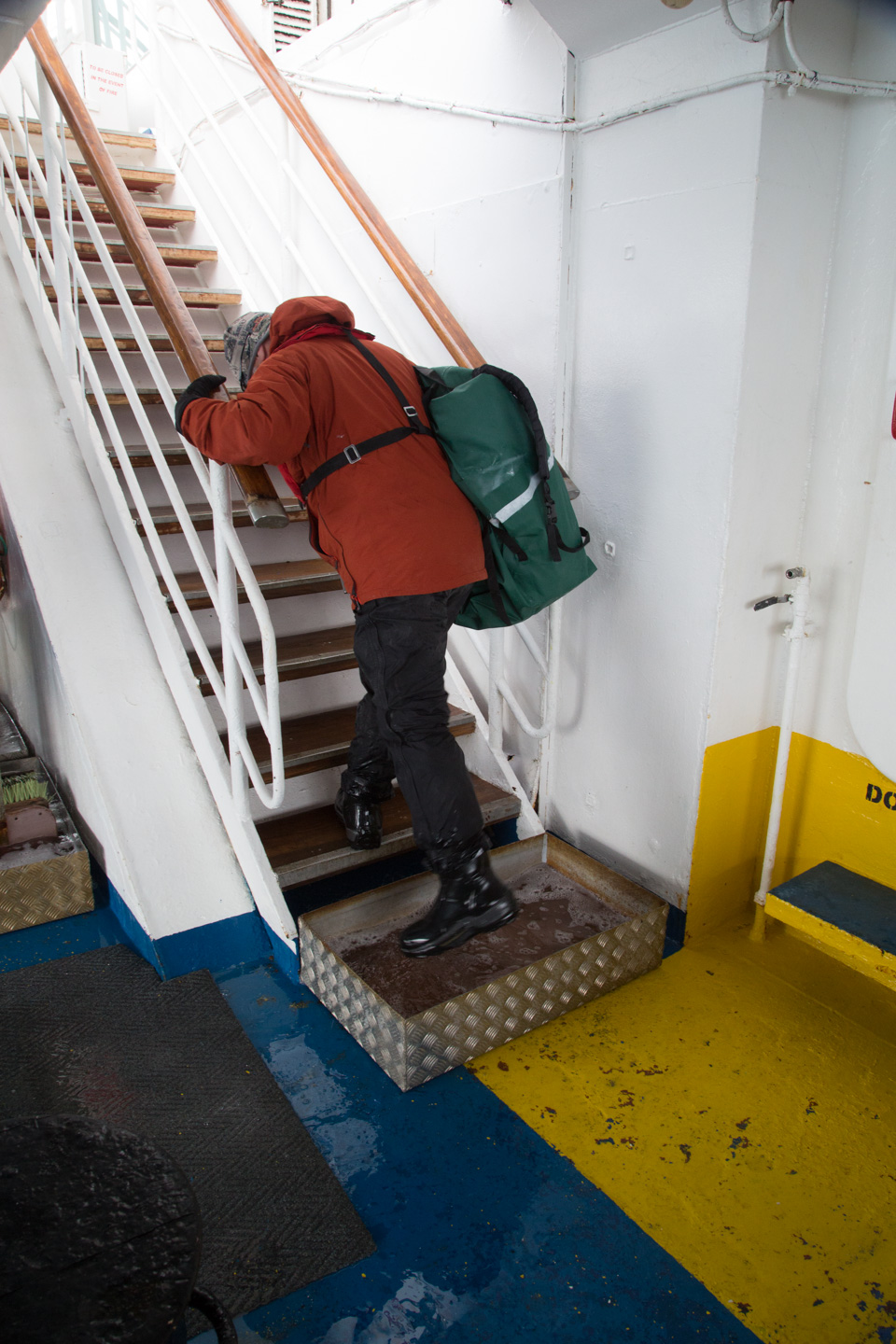
BioSecurity was a big deal.  Prior to arriving at South Georgia, we were required to have any item of outerwear or footwear examined for any foreign material…grass, seeds, etc. that could be caught in the Velcro closures on waterproof pants or jackets, for example.  You had to vacuum out the lint in pockets, as well as.  Camera bags that would be set on the ground were wiped with a vircon solution and tripod legs were dipped in the same solution.  Every time you went ashore you stepped in a pan of vircon solution as you headed to the zodiac.  When you returned to the ship from shore your boots were scrubbed and as you left the marine deck you stepped  in the pan of vircon.

20161028-_i3a9287-220161028-_i3a9274-2 20161028-_i3a9277-2 20161028-_i3a9278-2

We had numerous lectures while at sea.  Everything from history of South Georgia, information on the various wildlife….seals, penguins, birds, …and the explorer, Sir Ernest Shackelton, who’s buried on South Georgia.

Tuesday  morning was more lectures on photography and briefings on our anticipated first landing after lunch.  Hugh Rose was our expedition leader and is a professional photographer from Alaska.  Whenever we approached a landing, a team from the expedition staff took a zodiac and checked out the landing site to make sure we could actually land.  Our first landing that day  was cancelled due to high winds and rough surf.  The alternative landing was also cancelled for the same reasons.  We moved on.  So will I.

More in the next post.

Posted in South Georgia and the Falklands | 1 Comment

It’s Chile here…

Landed in Santiago, Chile at 6:30am local time this morning, Friday….that’s 4:30am CDT.  It’s hard having dinner at 9pm after departing Dallas and a breakfast snack this morning at 3:15am.

I met one of the couples on my trip that was on the flight from Dallas to Santiago.  We visited while waiting to board but did not talk again until landing in Chile. Our flight was about 50% full.  The plane was three seats on either side and the middle section was three seats across. There was one guy in the row in front of me and one in the row behind me and two in our row.  I was able to lay my seat back all the way without crushing the guy behind me.  That made it a little more comfortable to try and sleep.

Our hotel, a Holiday Inn, is right across the street from the airport so it was easy to walk out of the terminal and into the hotel.  No cabs or shuttles.  It’ll also be good in the morning when we start boarding our flight to the Falklands at 6:55am.

As expected, our rooms weren’t ready at 7:30 this morning so we headed to the breakfast buffet  and began meeting many of the other 100 folks on this trip.  It was a little surprising the number of people who’ve been on other trips with this same company…Cheeseman’s Ecology Safaris.  The couple on my Dallas flight are making their fourth trip and a number of others I’ve met have also done multiple trips.

We have a city tour scheduled for 1pm today then a reception this evening and dinner.

I’m going to try to get a short nap first to make up for the lack of sleep last night.

Probably won’t have another post until after Nov. 7th.

Ron

Posted in South Georgia and the Falklands | Leave a comment

Home from Africa

It ONLY took 31 hours to get home.  Left Windhoek, Namibia, at 9am Monday, CDT, and arrived in Kansas City at 4pm on Tuesday.  Changed planes in Johannesburg, Frankfurt,  and Toronto.

Here’s a map of the trip beginning on the right.  The dates are written by each overnight location.  The map doesn’t include South Africa so the first night is inside Botswana.  Kassie was with me until the 11th when she had to return to the US.

20161006-_i3a7748

Our diesel cost was approximately $.75 per liter in Botswana…that’s roughly US$2.80 per gallon in Namibia it was approximately US$3.09.

There aren’t many tarred roads in either country.  There were two spares in each of the two trucks.  Luckily, no flats.  In Botswana there are “A” roads that are tarred. Others aren’t.  Those are primarily gravel or rock.  In the national parks in Botswana 4×4 is absolutely required.  Those roads are deep ruts of loose sand.  In Namibia, the best roads are “B” roads and there aren’t many of those.  “C” and “D” roads are gravel or rock.  On a “C” road you could usually drive 80kph and a “D” road the top speed you could drive was around 40kph and often had to slow down due to washboarding of the road.  Again, luckily no flats.  One can drive almost everywhere in Namibia with a 2-wheel drive vehicle.  The roads in the national parks were all gravel but they were generally good roads that were about three lanes wide.  Very dusty but easy to drive.

My biggest adjustment to driving in Africa wasn’t driving on the left side of the road.  I picked that up pretty quickly although Kassie suggested a couple of times that I needed to swing a little wider making a turn to get to the “wrong” side of the road.  My biggest adjustment was remembering that the turn signals are also reversed.  They’re on the right and the windshield wipers are on the left.  It took me two days before I had that mastered.  Meanwhile, we cleaned  the windshield every time we turned.

One of the other little things I noted was the cancer warning on the cigarette packages.  While on a cruise I noticed this pack of cigarettes belonging to our captain.

20160926-_i3a7191

That got the point across!

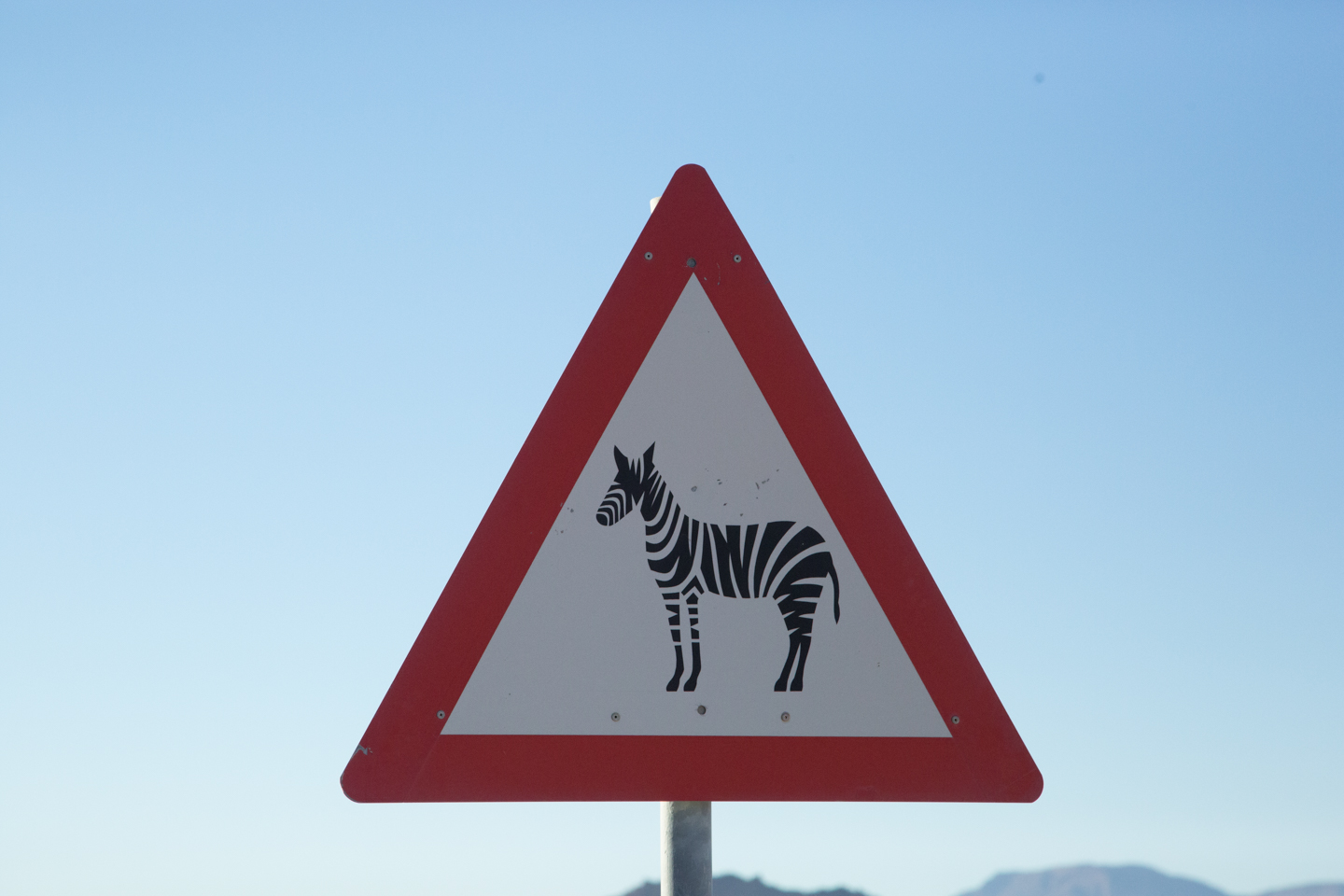
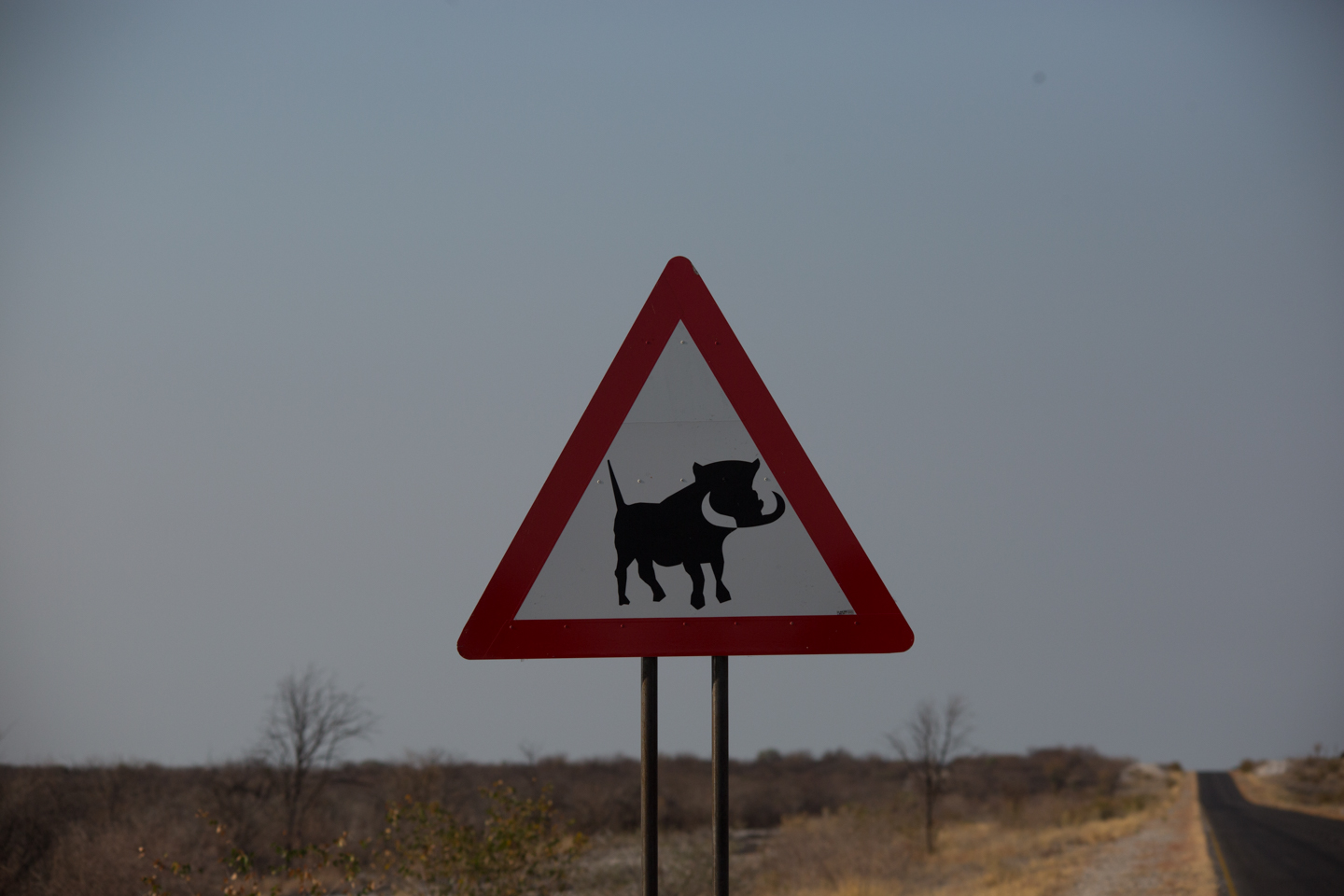
We also had to beware of wildlife crossing the road.  It wasn’t uncommon to find cattle and goats grazing beside the road.  And there were warning sides for them, too, but here are a few others we encountered.

20161001-_i3a7677 20160929-_i3a7635

Brown Hyena

20160929-_i3a7588 20160929-_i3a7586 20160929-_i3a7584 20160923-_i3a6937

Gemsbok or Oryx depending on which country you were in.

20160923-_i3a6931

Wart Hog.

I’m home for two weeks then leave Oct. 20 for Santiago, Chile for one night.  I’ll meet up with a group of about 100 photographers for my next trip.  On Oct. 21 we’ll fly to the Falklands and board the Sea Spirit for our trip to South Georgia Island.  The island has about 30 residents and is approximately 1000 miles straight east of the southern tip of Argentina in the middle of the Atlantic Ocean.  I won’t have internet on this trip so I’ll do a blog or two once I get home.  The primary wildlife here are hundreds of thousands of seven different kinds of penguins and elephant seals.  We’ll also spend three days on different islands in the Falklands before ending our trip at the very southern end of Argentina on November 6.  I get home on Monday, November 7th.

I hope you’ve enjoyed this blog and the photos we’ve shared.

Until the next one….

Ron


Posted in Botswana/Namibia | 1 Comment

Kassie’s Photos

In this post I wanted to feature some of the images that were made by Kassie.  When we started this trip Kassie’s photographic experience could be classified as “point and shoot”.  She took pictures to document events and people in her life.  I loaned her one of my cameras and a couple of lens before we left for Africa.  We had one brief photo shoot together.  When we got to Botswana, most of her images were shot with her point and shoot camera or her phone.   None of these images are from her phone, though.  One of the events on our schedule was four trips (two on a boat and two game drives) where Pangolin Photo Safaris provided everyone that wanted it a Nikon camera and a Sigma 150-500mm lens to use.    They then gave them the discs out of those cameras.  She learned a lot from out guide, Charl, on this part of our trip and, I believe, it helped her get more great shots later.  All of these images are from those two sources.  She also shot some, especially the lions in Chobe National Park, with one of my cameras and my Sigma 150-500mm lens.

All of these images have been treated just as I would have treated my own.  Some have been cropped a lot, some a little and some not at all.  All have had some minor other adjustments to improve the image.  These are purely my choices and they aren’t the only good ones she shot. I ran through her images and selected these.  In fact, these may not even be Kassie’s favorites.

So here are Kassie’s photos….  Remember, you can click on any image and make it larger.

20160904-dsc06097 20160904-dsc06092 20160904-dsc06088 20160904-dsc06075 20160904-dsc06068 20160909-_g6t6810 20160908-dsc06271 20160908-_dsc8255 20160908-_dsc8245 20160908-_dsc8217 20160908-_dsc8205 20160908-_dsc8141 20160908-_dsc8096 20160908-_dsc8093 20160908-_dsc8063 20160907-dsc06238 20160906-dsc_5369 20160906-dsc_5357 20160906-dsc_5342 20160906-dsc_5167 20160906-dsc_5137 20160906-dsc_5048 20160906-dsc_5041 20160906-dsc_5008 20160906-dsc_4968 20160906-dsc_4916 20160906-dsc_4891 20160906-dsc_4856 20160906-dsc_4851 20160905-dsc06207 20160905-dsc06189 20160905-dsc06182 20160905-dsc06167 20160905-dsc06161 20160905-dsc06144

Not bad, huh?  One of the points here is that you don’t have to be a professional or even a serious amateur, like me, to get great shots.  We both have a lot of shots that no one will ever see.  They’re out of focus or show the back end of birds, animals or the framing is terrible, etc.  But this type of photography isn’t studio portraits.  You photograph what you are given and how your boat driver or game driver can set you up by getting you in position for better light or a better angle.  Unfortunately, you can’t direct the wildlife to pose to way you’d prefer.

Kassie was a great partner to travel with.  We traveled on a budget.  Of the 11 nights she and I were together, she spent four in a hotel/chalet, five in a tent on the truck and two in a tube (airplane flying here and home).

I hope you enjoy.  More to come.

Ron

Posted in Botswana/Namibia | 1 Comment

Smoked Kudu for dinner tonight…

Tonight is my last night in Namibia.  Tomorrow afternoon I start my long trek home.  I leave Windhoek, Namibia at 4pm and fly to Johannesburg.  Then it’s on to Frankfurt, Germany followed by our leap over the Atlantic to Toronto and finally home to Kansas City.  Thirty-one total hours on planes or sitting in airports.

Tonight I treated myself to a nice dinner at Joe’s Beerhouse.  Appetizer was Smoked Kudu, followed by a garden salad and the main course was deep-fried Hake fillet.  Hake is a flat fish without the fishy taste.  I’ve had it several times.

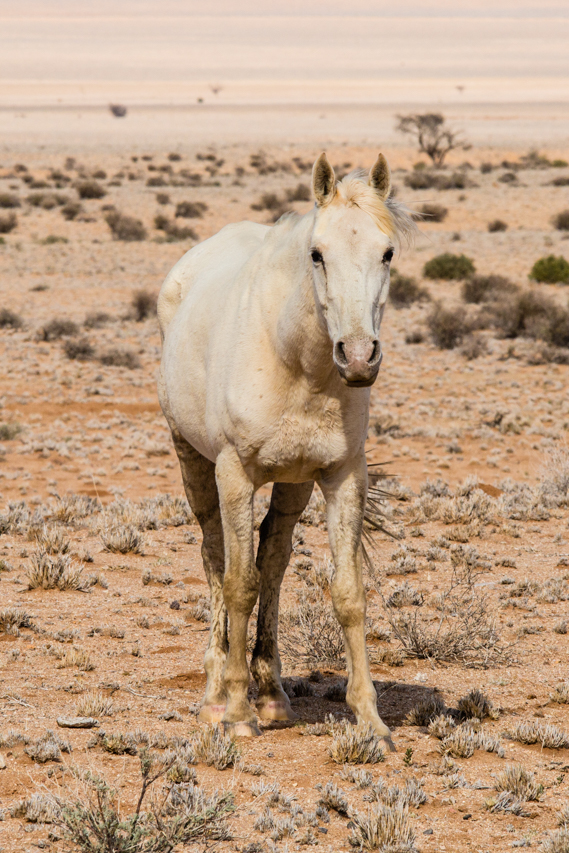
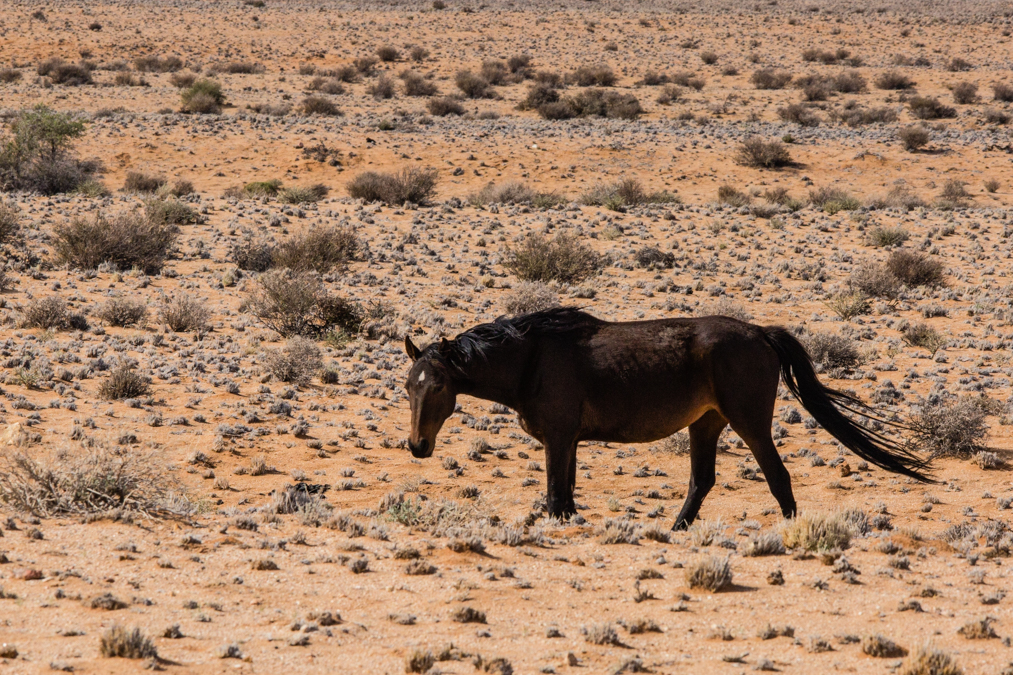
Yesterday I drove from Luderitz to Quiver Tree Forest.   About an hour east of Luderitz is an area know for it’s feral horses.  There are several theories on where these horses originated.  One theory is they came with the German Imperial Army in 1915…another that they came up with Nama raiders and another is that they were part of a ship-wreck of horses being taken from Europe to Australia.  In any event, they have adapted to the harsh conditions and reportedly can go up to five days without water.  There are reportedly about 100 on them living in the area.

20161001-_i3a770720161001-_i3a769220161001-_i3a769820160929-_i3a7631

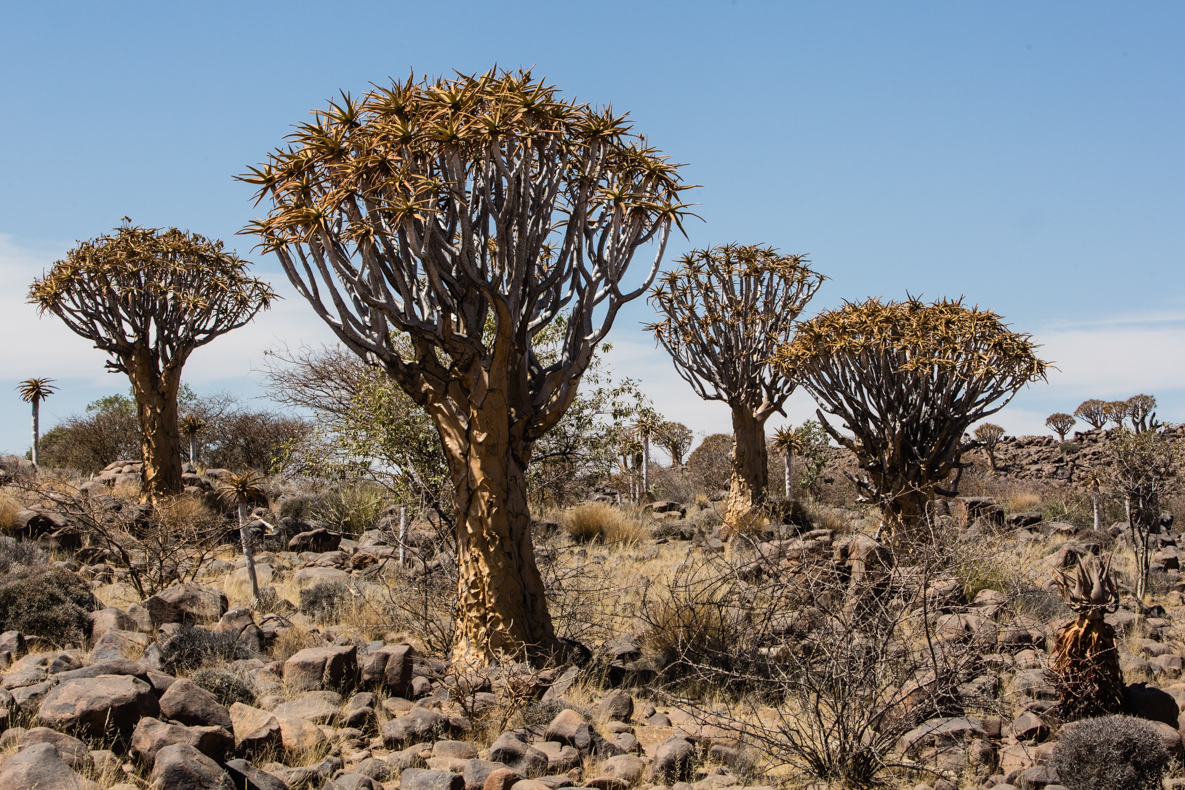
From there it was on to Quiver Tree Forest.  The quiver tree is also called Kokerboom.  Actually, it isn’t a tree but an aloe plant.  It’s up to 28′ tall and nearly 36″ wide at the base.  The plants grow individually but some grow in groups and thus the term, forest. These trees are supposed to be 200-300 years old.  The trees in the forest are natural.  None have been planted by humans.

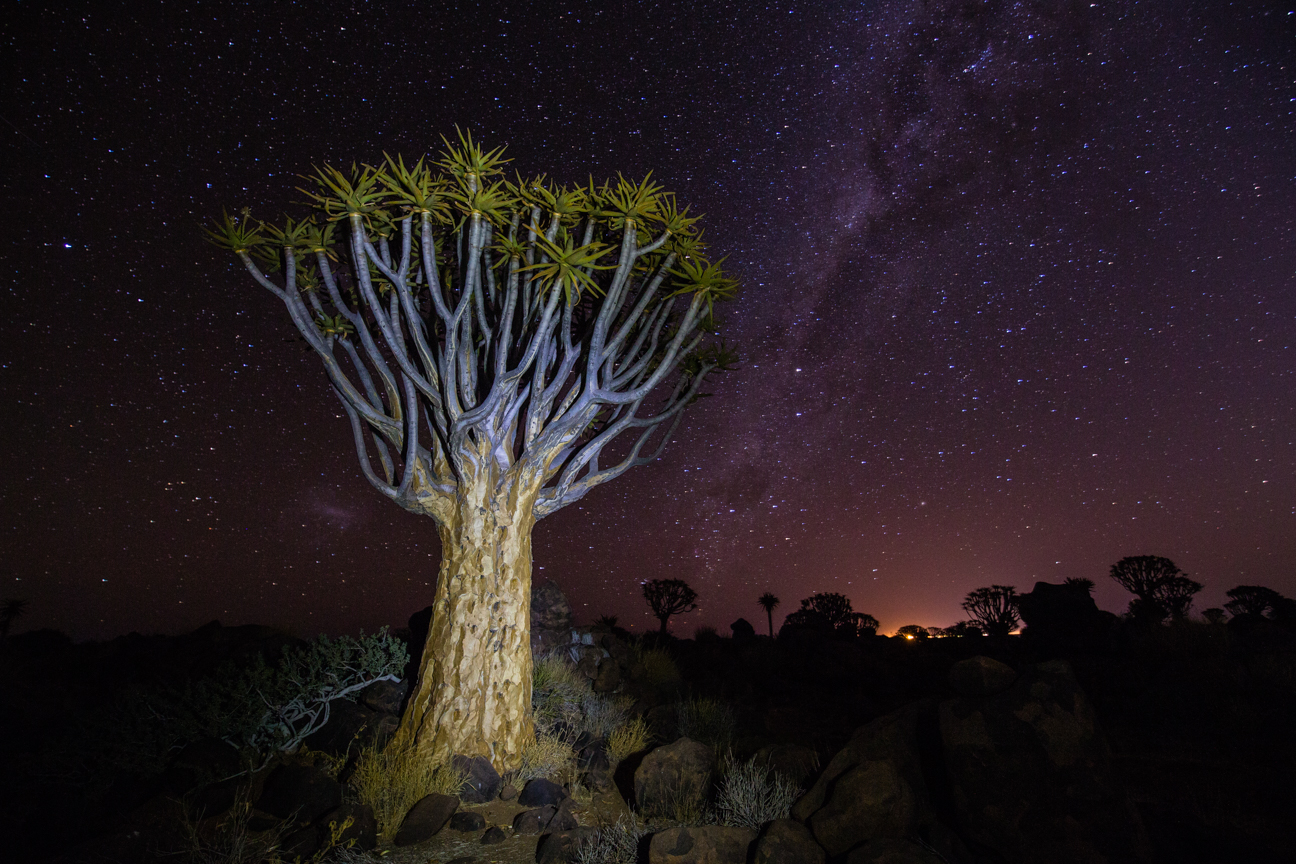
Here are a few images from yesterday afternoon.  Then last night I went out after dark to try and capture the night sky and all the stars…and paint the trees with light.  This was my first attempt at this kind of photography.  First the day time pictures.

20161001-_i3a771220161001-_g6t7087

Then the nighttime shot.

20161001-_g6t7106

Today, I drove to Windhoek, the capital of Namibia.  I’m staying at a hotel pension.  I turned in my truck this afternoon and tomorrow I start my trip home.

I still have a couple of posts to do.  Hopefully, I may get that done tomorrow.

Until later….

Ron


Posted in Botswana/Namibia | Leave a comment